Personal Reflection on the Language of God- Part 2

In a previous post I reviewed Francis Collin’s book, The Language of God, and explained that it was instrumental in helping me form or solidify my own views on science and faith.  Last week I gave a quick run through of my own story and how I came to appreciate the complexity of the faith and science issue.  Here I will finish the trilogy by explaining the range of views among scientists and Christians on creation and evolution and the strengths and weaknesses of each.  In doing so, I will explain my own views here.  To keep things simple, I have identified four groups and will explain their positions on this controversy and the attending complexities.

Unbelieving Scientists

This group understands the world strictly through the eyes of science without the need for a belief in the supernatural.  The strength of this position is that it is clear-eyed and only believes what can be measured and verified.  It is less easily fooled.  I listen to a podcast called Skeptoid, and recommend it.  The podcaster is a fact-seeking skeptic who must be shown the facts and is an exemplar of this worldview.  He routinely debunks myths that I once thought were true.  It is refreshing and a bit embarrassing to find out that something I held near and dear for many years is probably malarky.  Just as a recent example, he clearly showed that the ban on plastic straws and plastic shopping bags that many believe will help the environment will do almost nothing to reduce plastic waste in the environment.  It is good to have scientific skeptics like this around.

The downside is a view that has been called scientism, the idea that science alone can solve all our problems.  It can’t.  What the world needs is good science but also love, patience, kindness, and a whole lot more that science cannot measure and is no basis for.  The other obvious downside is that most of these folks are not believers in Christ, an unfortunate oversight that misses a fuller and more joyous view of the world and a firmer foundation for moral absolutes.

Photo by Chokniti Khongchum on Pexels.com

Then there are things that are just complicated.  Where does homosexuality come from?  Is it inborn or learned?  There were strong arguments on both sides up until recently.  Now the scientific answer seems to be neither inborn nor learned.  Science can certainly research this and other aspects of sexual behavior.  For example, we have learned from carefully documented experience that one cannot unlearn gayness and that groups that try to do this are more harmful than helpful.  So, science has been helpful here, but there are limits.  What about this magical thing we call romance?  Should you marry that sweetheart that you “love” (whatever that is), science cannot say.  Sorry science.  Can science help us in our huge ongoing national debate over abortion?  Only so much.  And then we are beyond science.

Young Earth Creationists

This is the extreme of creationist positions that take Genesis 1 and 2 literally and believe in a 7-day creation about 6,000 years ago.  Few people today go this far but there are many aspects of this position that still are resident in the American population.  About half of Americans do not fully accept evolution as the source of all diversity of life on earth, especially the source of humans specifically.  The strength of this position is in the simple and firm belief in the straightforward reading of the Bible.  These folks are firm in their faith in the God of scripture.

There are a few problems here. First is the science of the Bible.  If one understands that the Bible speaks both spiritual and physical truths, then we need to take the view of nature that the Bible has and look at the world around us to check this out.  We start with Genesis and find a disagreement between what science says and what the Bible says.  Some folks reject all current science on the last 14 billion years and hold firmly to seven days.  With that stake in the ground, let’s look elsewhere.  The writers of the Bible had a firm understanding of cosmology, the ordering of the heavens and the earth.  This cosmology faithfully showed up in their writings.  Gen 1:6 says that God created a vault or firmament to separate the water above from the water below.  The ancients understood that there was an ocean below that the sea creatures lived in and a huge ocean above a solid firmament that occasionally opened and rained on us.  The Hebrew word for this firmament, raqia, comes from a word that means to be hammered out as a brass bowl.  So here is my point:  If a person firmly is committed to the science of a 7-day creation, then to be consistent in their beliefs, they must also firmly hold to a solid firmament with sun and stars below and an ocean above. This is the science of the Bible.  Any takers?  If one insists on accepting the science of Genesis 1 at face value, then one must accept the whole package.

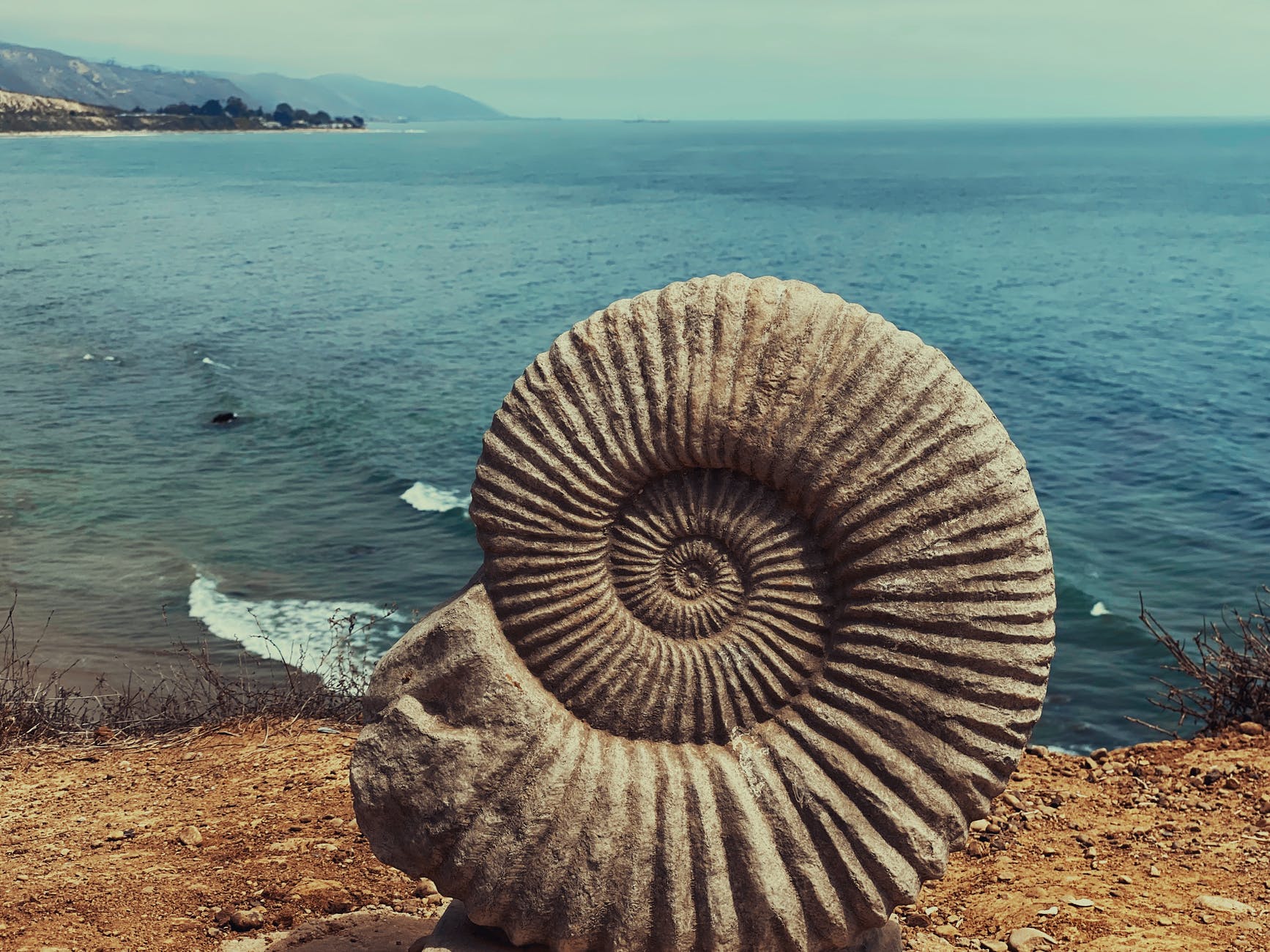
Photo by James Lee on Pexels.com

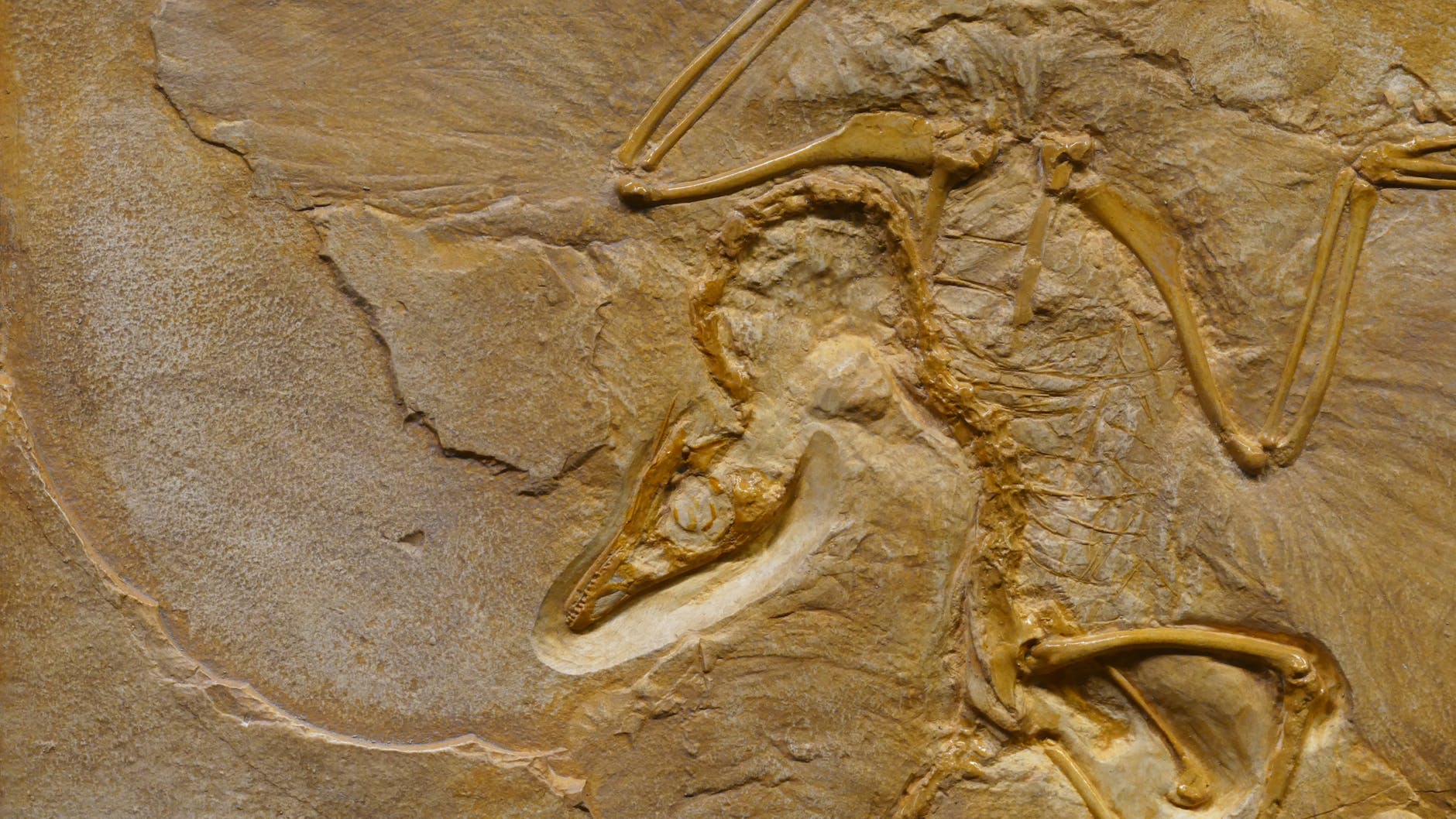
But that was too easy.  What is more challenging is all the actual science that has accumulated about the history of our universe and the history of our planet and the evolution of life.  What to do about the millions of fossils that have been found?  Collins directly addresses this in his book.  Some folks in this creationist camp claim that these fossils were put here by God to tempt us to possibly doubt the 7-day creation.  They are a test of our faith.  The fossils appear old and appear to support evolution to tempt us into unbelief.  As Collins asks, what sort of God is this?  Is this the trustworthy God of the Bible or some devious trickster?  Science is backing these folks into a corner.

Intelligent Design

This group takes a halfway position, that God created everything by evolution, but at certain key points of particular difficulty, he had to help it along with a little nudge.  These folks look with true wonder, as we all should, at the marvels of creation such as the human eye.  There are several parts of creation like the eye that are so complex that it is hard to imagine how they got created one piece at a time through evolution.  Another example is the flagella of the bacteria.  This little motorized propellor has numerous protein pieces.  If any one of them was missing, then the whole thing does not work.  Working backwards through evolution it is hard to imagine how it got made.  This awe is something we should all share and is a strength of this perspective.

However, the genomics age has changed all of that, just as Francis Collins has taught us.  In his book, he showed how easily through evolutionary time, a gene can get duplicated into two copies of the same gene.  Now one copy carries on the original task and the second copy is free to slowly evolve into some new task.  As we look at the proteins in the flagella, we can clearly see the genetic trail of these duplications and mutations and new functions. No mystery left here for a needed Godly nudge.

The real problem is what we call the god-of-the-gaps problem.  These folks point out problems or gaps they see in evolution.  They say that we can’t figure out how evolution did this and so it must be God, or an Intelligent Designer, in their words.  The trouble is that science is very good at solving these problems and closing these gaps.  Scientists have largely solved and closed the gaps on the flagella story.  Another gap that has been an issue for some time are the gaps in the fossil record.  In the past, we could see the evolution of the horse from older and smaller dog-like creators up to larger more recent creators like the horse.  But there were large gaps in the record for many years that were embarrassing to paleontologists.  However, in the last couple of decades an explosion of fossils has come to light and most of the gaps have been filled.  Another one was the so-called missing link in the human fossil record.  More recently, this gap has been filled with so many hominid fossil species that this gap has turned into a forest.  One gets the impression that across East Africa a million years ago these creatures must have been constantly stumbling over each other.

Theistic Evolutionist

This is the camp that Francis Collins and I occupy.  This group accepts evolution and all of science as a reasonable method for an increasing understanding of the physical world.  We are Christians who understand scripture to speak in different styles from different times with a clear and consistent message of the goodness of God and of his creation. Genesis 1 and 2 tells us that God spoke an orderly universe into existence and all of animal and plant life into an amazing and intricate existence in their times.  It is now clear that evolution is the tool that God used to do it.

The strength of this approach is that it accepts each book of God, the book of God’s physical creation and the book of God’s word for the purpose for which they were each intended, the first to display God’s glory in creation, the second to tell us about who God is and how to live.  There are some complications to this approach.  I have given them some thought, and I want to explain them a bit.

The question arises as to who Adam was and whether he actually existed as a real historical man.  Some will say that God created Adam in real time to look exactly like the homo sapiens that existed at the time but gave him a soul and a conscience.  This would, of course, be impossible to prove scientifically and some would argue that it is unnecessary to the tale told in Genesis.  C.S. Lewis calls some of these biblical stories true myths meaning that the truth in them is true even if the story is not from real life.  But Jesus and Paul both refer to Adam.  This is a bit awkward if Jesus himself is referring to someone that is from a story.  For me this comes to the serious question of Jesus’s humanity.  Was he a real first century man or just God dressed up as a man?  Here is a funny question to ask yourself.  Did Jesus know about the Periodic Table of Elements?  I suspect not.  In which case, would his knowledge of Adam have been any different from others of his century?  I think not.  Does it lessen my faith if I doubt the physical existence of Adam?  As a 21st century man myself, I can sit through a sermon on the sins of Adam and the redemption in Christ and take seriously the lessons invoked without needing to firmly answer the question of Adam’s actual existence.  The true myth of Adam and Eve helps me understand who God is and what he requires of me.

The Fall of Man by Peter Paul Rubens, 1628–29

Another complication of possibly throwing out Adam is how to understand the rest of the apparent history of the Bible.  If Adam is a myth, then what about Enoch, or Noah, or Abraham, or Moses, or David?  This can be unnerving and a bit awkward and a bit complicated. I am speaking a bit irreverently here and I am sure that some thoughtful theologian has given this some effort.  I am only pointing out that involving evolution to the point of removing Adam creates other problems.  To me, these are complications that I am willing to live with rather than choose one of the other options above with even more difficult complications that question the science.

Can you or I live with complications and questions that do not have easy answers?  I would contend that this is part of what it means to be an adult Christian.  Do you want to take your faith out of Sunday School and apply it to the real world, then it is going to get complicated.  Ask Dietrich Bonhoeffer or C. Everett Koop or Francis Collins.  While definitely not putting myself in the same category as these men, I would definitely like to know how to vote in these divisive times, or how to relate to my LGBTQ neighbor, or whether to contribute to a political candidate, or write a blog on some controversial issue.  How then shall we live?  We work out our salvation with fear and trembling. And prayer. It’s complicated.

Personal Reflection on Language of God- Part 1

It’s complicated.  That is my new mantra.  When I first became a Christian, 52 years ago, it all seemed so clear and straightforward; Jesus was Lord, heaven was up, hell was down, and there was no in between.  I tended to gloss over the parts of the Bible that did not make sense.  I doubted the faith of anyone who asked too many questions.  If something looked confusing, then I said that I would understand it later.  Well, it is now later, and I find that it is complicated.  If you also find that it is complicated, then you are welcome to join me as a faithful Christian who is still asking questions and finding that I need a more nuanced understanding of the world and of our faith. 

This is a follow up blog after my review of the book The Language of God by Francis Collins.  In summary, I liked the book and recommend it as a clear explanation of the intersection of science and faith by a faithful scientist.  My goal in this second blog is to explain my own evolving view on science and faith, a major milestone of which was my reading of The Language of God.

My Story

Briefly, here is my story.  I grew up in a wonderful family.  My father was a high school math teacher; my mom was an elementary school librarian.  From first through tenth grade we lived overseas while my father taught in the overseas military school system in Japan, Germany, France, and Turkey.  Practically every holiday and vacation we went and visited someplace extraordinary.  I finished high school in a suburban school outside Albany, NY.  We were a religious family in the traditional sense, and always went to church and Sunday School every Sunday.  After my senior year, our denomination had a summer camp on a lake in the Adirondack Mountains that I decided to attend.  My motives, as I remember them, were somewhat less than pure.  There were a lot more girls than boys who went to that camp.  I was also a budding intellectual.  I had my own subscription to the New York Times and was reading On Walden Pond and other hip books of the day.  Much to my surprise, the Holy Spirit had other plans and dropped like a bomb on that week of the camp and many of the campers, including me, gave their lives to Christ.

Photo by Element5 Digital on Pexels.com

Within weeks I went off to college at Cornell University, quite a secular school, and was faced with a dramatically different environment.  I joined a couple Christian groups, failed Biology, met my future wife, lived a year in a house of Christian men, got married just before my senior year, and graduated with a degree in Biochemistry.  My first real experience of the possible conflict between science and faith came in my junior year when I took my first biochemistry class.  One day our teaching assistant in the course was sick for our study section and the professor of the course showed up.  The subject of the day was the glycolytic pathway.  She expounded eloquently on the amazing intricacies of this most phenomenal subject.  We were all completely awestruck.  As the class came to a close, she wrapped up her lesson, acknowledging our interest by saying, “Yes, this is a fascinating topic.  Isn’t evolution amazing.”  Well, I was thunderstruck.  As a Christian it was very clear to me that God and not evolution was amazing.  But I came to see that by squinting a bit and reading between the lines, that Genesis 1 could look like a progressive creation and that both God and evolution were amazing.  That was good enough for a while.

I gradually became aware of the larger debate between science and faith.  I have since come to considerable embarrassment that the first president of Cornell University, Andrew Dickson White, was the primary protagonist of the modern supposed war between faith and science with his book The History of the Warfare of Science with Theology in Christendom in 1896.  This book is filled with so many falsehoods that it would take another book or two to set the record straight.  Here is one falsehood still in common usage. It is still widely believed that the Catholic Church in the days of Christopher Columbus believed the world was flat and for that reason opposed his expedition to India.  A complete and unsubstantiated falsehood that first appeared in White’s book.  He is also responsible for the equally fallacious notion that the medieval Church forbade human dissection.

My own experience was quite different.  After graduation, our family joined a wonderful church that was just getting started.  I went to work as a research technician, first in a Cornell Entomology lab, and then in a Nutrition lab.  The work was deeply satisfying as I got to see every day new data on God’s creation get recorded in my lab book and get published.  I came to understand what motivated many scientists of the past who were also clergymen.  They found that investigating nature did not diminish, but actually expanded, true worship of God.  The question I repeatedly asked myself was whether knowing more about God’s creation increased or decreased worship?  Obviously, science, properly understood, should increase our wonder and praise of a creative God. 

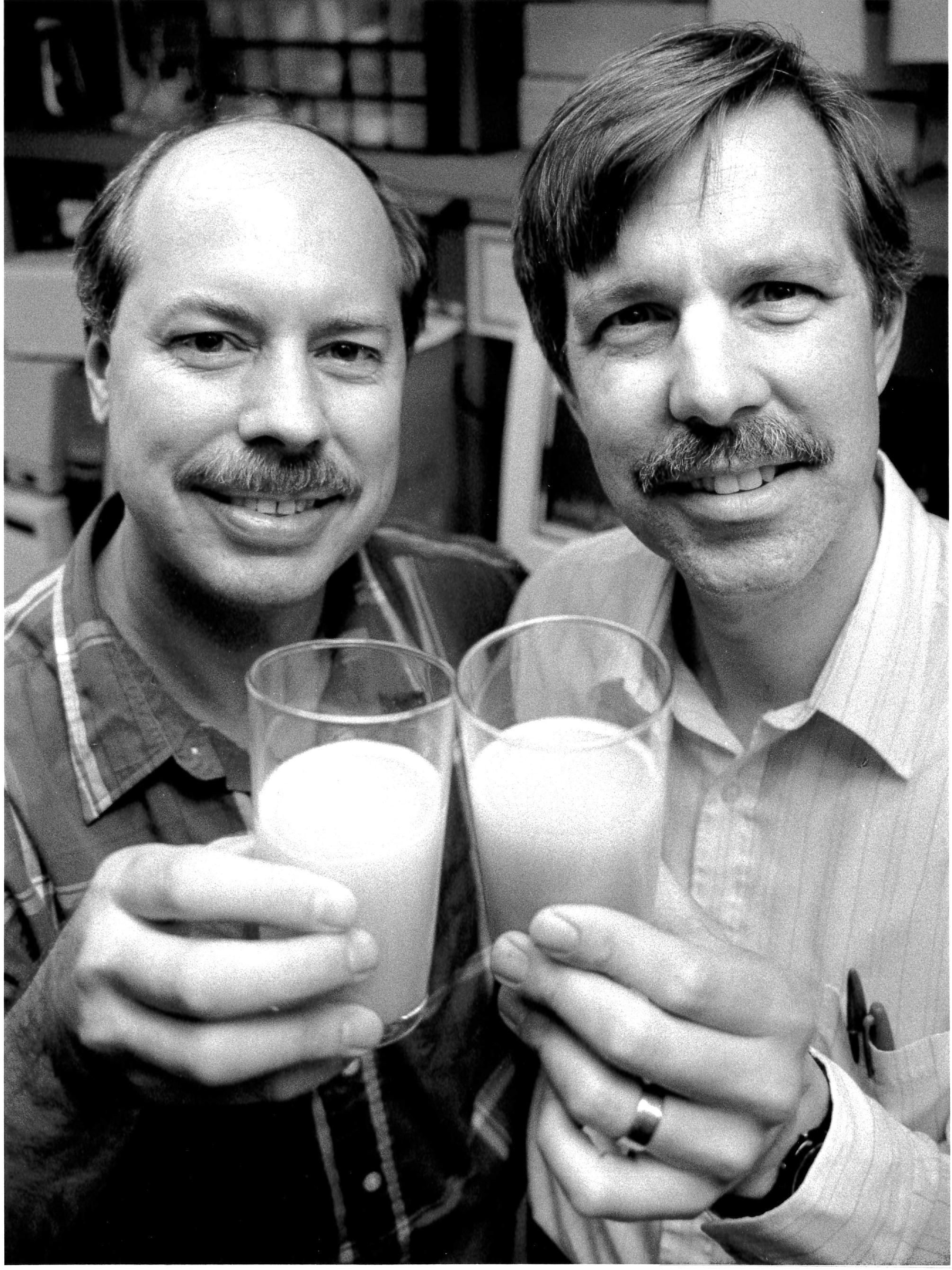
Robert Parker, a professor at Cornell, and me.  We did research together on the effect of orange juice on cancer in rats.

At about this time I was also introduced to the American Scientific Affiliation.  This is a fine group of Christians in the sciences.  These folks have their own journal and their own annual meetings.  They are very interested in the intersection of science and faith.  Topics that are often discussed include the evolution/creation debate (of course), creation care including climate change, medical and research ethics, chaos theory, extraterrestrial life, and more recently, artificial intelligence. Francis Collins has been a longstanding member and in 2018 gave the keynote address that was attended by a packed house.

Enter The Language of God into my life in 2006.  I had gradually come to the clear notion that evolution was incontrovertible and the Bible just needed to deal with it.  It was the Bible’s problem and not science’s problem.  While not speaking in such stark terms, Francis Collins, one of the most renowned scientists of our age, confirmed and supported my view.  To put it more humbly, I was deeply gratified that such a luminary as willing to take such a strong stand that I had been reluctant to take publicly.  I am now proud to stand in his shadow and say, “Me too.”  The real problem is with the too literal interpretation of Genesis 1 and 2.  Prior to Darwin’s appearance, theologians did not feel compelled to interpret that section so literally, per the long quote from Augustine in the first part of this blog.  This too literal view only hardened with the advent of fundamentalism in the early 1900’s.  Many Christian groups today, including the pope, have no trouble with a less literal view of Genesis and a more scientific acceptance of evolution.

But here is where it gets complicated, back to our theme.  I am really quite tired of people who see the world as black and white.  Yes, it is wonderfully simple and gratifying to know who and what are right and who and what are wrong.  But scripture and the world are more challenging and nuanced than that.  Case in point- creationism and evolution.  Each comes with complications that must be acknowledged and there is a spectrum of beliefs between these extremes that are complicated to explain and differentiate.  Dr. Collins explains some of his own progression of movement through this complicated area.  Another scientist and theologian who has traversed this ground is Denis Lamoureux.  He has spoken and written extensively on this topic.  Dr. Lamoureux and Dr. Collins both identify a range of commonly held views that cover the spectrum from hardcore creationist to hardcore evolutionist.  It is worthwhile looking at the different views and explaining some of the strengths and weaknesses, as I see them.  Since this post has gotten a little long and since this is a rather self-contained description of my own story, I will stop here and next week will spend more time explaining the range of scientific and scriptural view on creation and evolution.

So, to my friends and readers, here is my own view.  Science is a good tool for our expanding understanding of the world around us.  It can tell us what is there and how it works.  Our faith and the Bible behind it tell us why it is there and how to live morally in this world.  There are indeed occasional conflicts between the two but less so if one understands that the Bible is not a book of science but a book about God and faithful living.  It can still be complicated at times.

Language of God Review

Dr. Francis Collins is retiring as leader of the National Institutes of Health and is being lauded in many places and is granting a number of interviews.  He is the longest serving head of the largest health research agency in the world where he has served under three presidents and was key in overseeing the development program for the vaccinations for COVID-19.  He was Dr. Fauci’s boss and successfully convinced Congress over 12 years to raise the budget for the NIH from $30 billion to $41 billion.  He is also an outspoken and committed evangelical Christian and he is the author of The Language of God.  

Dr. Francis Collins

In this two-part blog I will review the remarkable life of this amazing Christian, review this seminal work of his, and use this as a springboard for an explanation of my own position on the important question of how science and faith interact.

Biography

I often jokingly refer to Dr. Collins as Saint Francis due to my extremely high regard for the man.  He is both an exemplary scientist and a model Christian and he is also quite a character.  He loves to ride his Harley-Davidson motorcycle and he plays guitar fairly well and loves to compose and sing songs in public for almost any occasion.  Given his position of influence, he is remarkably humble and transparent in his interviews.  He was born into a rather counter-culture nonreligious family and was raised on a farm in Virginia.  He did well in school and majored in Chemistry in college and went on for a PhD in Physical Chemistry.  He really enjoyed the math of quantum mechanics and so the first thing you learn about Collins is that he is a very very smart man.  Towards the end of this period, he began to wonder about the significance of this work and turned his attention to the human side of things by applying to and being accepted in medical school at UNC Chapel Hill.  As he tells the story so well in his book, he was rather moved by the patients he met.  Many were terminally ill but were at peace about this by way of their deep Christian faith.  One patient in particular talked to him at length about her own faith and then asked him the question, “And what about you Dr. Collins? What is your faith?”  This sent him on a quest that included an encounter with Mere Christianity by the famous Christian author C.S. Lewis.  Collins found that Lewis seemed to have known every question he was going to ask and already had an answer.  After much reflection and many questions, Francis Collins eventually became a Christian.  The larger and much more interesting version of this story is in his book, The Language of God.

Collins was fascinated with medical genetics at just the right time in history as the tools and opportunities were becoming available.  After a number of years of hard work, he and his team sequenced the cystic fibrosis gene and found the flaw that caused the disease.  This led to the opportunity to take the lead of the Human Genome Project that became a huge international project to sequence the entire human genome.  That was accomplished successfully in the early 2000s.  Thanks to Collins and thousands of collaborators, we are now in the genomics age with a full knowledge of the 3.1 billion base pairs of the human genome.  He then started an organization called BioLogos, a Christian group dedicated to the intersection of faith and science. Shortly after that he was invited to be the Director of the NIH, the central health research arm of the federal government.  At the time of his appointment a number of folks were skeptical that an evangelical Christian should lead such an agency.  The impression among many in the field was that people from this religious tradition were anti-science and certainly anti-evolution.  Over the course of his tenure at the helm of this powerful agency, “St. Francis” seems to have proven his critics wrong based on the numerous accolades he is now receiving.

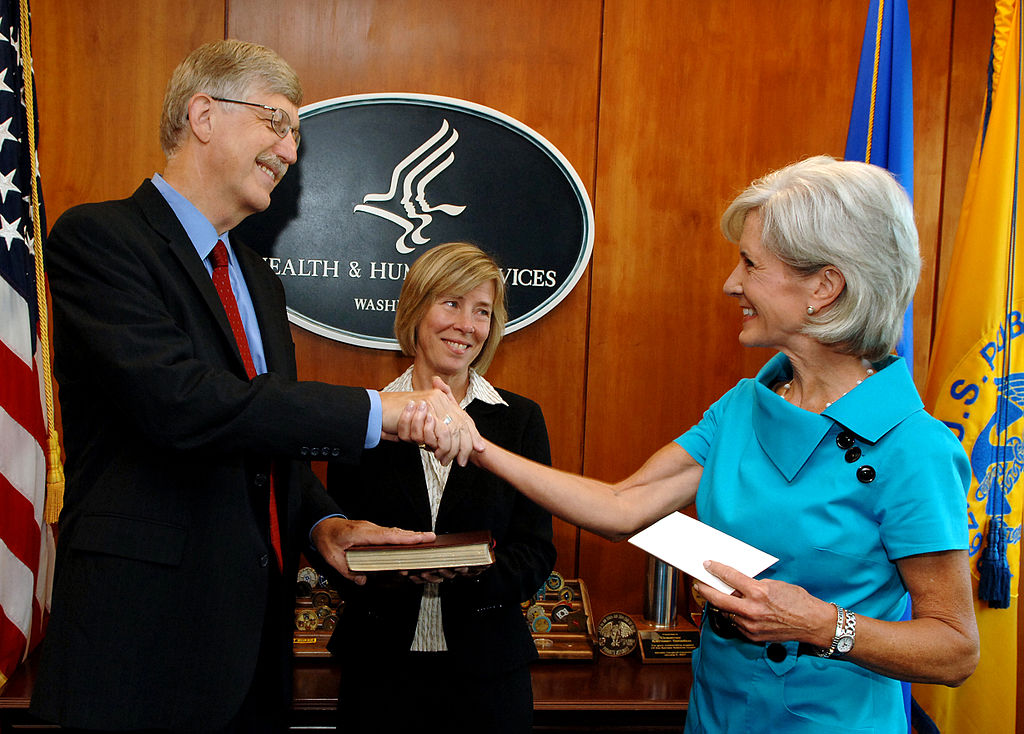
Collins with Health and Human Services Secretary Kathleen Sebelius after swearing-in ceremony

Review

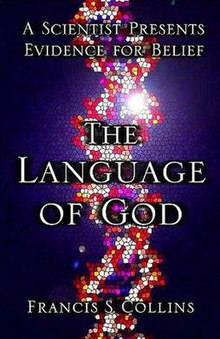
As his time at the Human Genome Project was drawing to a close, Dr. Collins published The Language of God.  The book was favorably received.  The book has several parts, several goals and several intended audiences.  This is a gamble to take for an author.  One might please one audience and annoy or bore another audience.  Dr. Collin’s personal story tends to tie the book together and his clear and lucid writing makes for interesting reading.

The Language of God

The book starts out with the story of his own conversion, explained briefly above.  He takes pains to make sure we know that his progress to faith was slow and deliberate as one might expect from a thoughtful scientist.  Collins then takes most of the first half of the book explaining some of the reasons that it is reasonable to believe in God.  He emphasizes several times that there will never be a proof of God’s existence, only signposts that it is not unreasonable.  A step in faith is always needed.  Two of the more important reasons to believe for Collins are the Moral Law and the Anthropic Principle.  C.S. Lewis is a key guide for Collins and he quotes Lewis often in the text.  Lewis’s explanation of the Moral Law was a key factor in Collin’s conversion.  Every one of us is endowed with a strong sense of right and wrong.  This universal sense seems to transcend race, creed, epic, and geography.  It is hard to imagine it hardwired into evolution and yet it seems to bind us together as humans.  Lewis points out that you might meet someone being particularly rude or selfish on a particular occasion.  If you were to confront that person for their behavior, their response would not be to say, “Hey, I will do whatever I want.  Who are you to tell me right and wrong?”  More than likely, the miscreant would try to justify his misdeeds with some twisted version of right and wrong as he sees it.  This shows that even when people are doing what is clearly wrong, they still justify their action by the universal Moral Law.  Doesn’t this universal law suggest a universal Lawgiver?

Collin’s second argument is based on the extremely fine-tuned universe we live in.  Without going into the details, he explains how the physical constants that brought about the universe the way it exists are very very lucky.  If any of these physical constants were off by fractions of a percent, the universe or the chemical elements would not exist as they do and by extension, we would not exist as we do.  This is known as the Anthropic Principle.  We would not be here to even appreciate this if it were not for this string of absolutely amazing coincidences.  Again, while not a proof of God, it certainly supports this idea nicely.

In other sections Collins takes on other hard questions that people often ask such as the question of evil in the world.  If God is so good, then why is there so much evil and suffering in the world.  In three chapters, he addresses this evidence from three points of view, atheist, agnostic, and Christian.

Collins then takes a turn and addresses the apparent conflict between science and faith, particularly Christian faith.  He draws extensively on his own experience with the decoding of the human genome to stress the beauty of God’s creation.  He sees the human genome as speaking the language of God, hence the title of the book.  The scientific certainty of evolution is explained in clear language.  He explains how the loopholes that Darwin himself was confused by have been amply and thoroughly addressed in the last couple of decades and quite directly resolved by the decoding of the genomes of numerous animals and plants.

This then leads to difficulties for some Christian believers who want to trust in a more literal interpretation of the early chapters of Genesis.  But not all Christians.  Numerous denominations, including even the pope have made clear statements that they see no conflict between a proper interpretation of scripture and a right understanding of the science of evolution.  Collins presents an interesting argument by bringing in the voices of faithful Christians who predated Darwin, in other words, folks who were not prejudiced by the threat of Darwin and his theory in formulating their theology.  Among the most notable is Augustine, the fourth century bishop of Hippo in North Africa.  He spent much time studying Genesis and concluded with these remarks: “In matters that are so obscure and far beyond our vision, we find in Holy Scripture passages which can be interpreted in very different ways without prejudice to the faith we have received.  In such cases, we should not rush headlong and so firmly take our stand on one side that, if further progress in the search for truth justly undermines this position, we too fall with it.”  Collins takes four chapters to examine this controversy from the perspective of a literal view of scripture, an accommodating view of scripture, an atheist view, and a theistic view that Dr. Collins calls a biologos view, his preferred view.  He shows the weakness of each of the first three and the consistency of the last view.  

In a final chapter the author reaches out to all his diverse readers and with a final story from his own experience encourages deep humility when it comes to questions of science and faith.  He finishes the story of his walk to faith with the final step, his own encounter with Jesus Christ, the one who holds it all together.

This is a remarkable text.  It is the journey of one man to faith and in the process the story of the unity of science and faith as a testimony to the greatness of the creator and the greatness and wholeness of his creation. I can strongly recommend this book to both potential audiences, unbelievers and skeptics who are interested in who this remarkable man is, and also to Christian believers of every stripe who want to see how this famous scientist married science and faith without compromise.

I have deliberately chosen this book review as a preamble or even maybe a pretext to share my own story of science and faith.  I will do that in the next post of this blog.  I will draw amply from Dr. Collin’s book.

How did we get so fat? Part 2

Last week we discussed our rising obesity epidemic, why it is important to all of us to consider, what are some of its causes and what are some of its effects.  This week we will pick up the discussion with a broader consideration of the social context of the issue.

Photo by Ella Olsson on Pexels.com

So where are we socially as Americans in our relation to food?  We have largely forgotten how to cook or eat together.  We snack all day long, especially at work and from vending machines.  We use the drive-thru regularly for meals with their increasingly large portion sizes.  We quench our thirst with quarts of sugary or alcoholic beverages.  We rely increasingly on the freezer case at the supermarket for complete meals. Regular mealtimes are a thing of the past.

Researchers have found some interesting demographic trends that are perpetuating our epidemic.  Basically, obesity begets obesity.  Americans are having kids at an older age.  Kids of older moms tend to be larger at birth and stay larger through life.  Moms who are obese tend to have larger babies.  Older babies tend to be heavier moms.  Obese moms tend to have more children than thinner moms.  An interesting effect in dating and marriage.  Obese folks tend to attract each other.  Children of obese parents tend to become obese.  If one parent is obese there is a 50% chance a child will become obese, 80% if both parents are obese.  All of this increases obesity and the obesity genes in our population.

Basically, obesity in America perpetuates obesity.  We are coming to understand the biology of this effect.  Folks who are obese become insulin resistant.  This means that glucose levels in the blood build up.  This glucose is taken in by the liver and turned to fat.  Obesity also leads to leptin resistance.  Leptin is the hormone our fat cells secrete to tell the brain that we have plenty of fat and we should stop eating.  But at a certain point, the brain basically goes deaf to those messages and no longer hears the “stop eating” message.  Endocrine disruptors are also disrupting these messages.  We are also fundamentally changing the flora of bacteria in our large intestines with these changes in diet over time.  We are now learning the important nutritional effects these are having that tend to push the fat building mechanisms of the body.

So back to our question.  Is there blame to be placed?  It is easy to blame McDonalds and school lunch programs.  It is easy to blame the box of Krispy Kreme on the counter at work or vending machines full of snacks or social media.  Schools don’t have gym classes anymore or my town doesn’t have a playground for my kids.  TV shows have too many ads.  All those drink companies put too much sugar in their drinks, and nobody gets enough sleep.  We can blame farm subsidies to corn farmers.  And don’t get me started on processed foods with all those preservatives and chemicals.  Believe it or not, we are actually living in great times in relation to food availability.  In the 1950s about 25% of family income went to food.  Today it is just over 10% and half of that is now getting spent outside the home at restaurants and the like.

Photo by Robin Stickel on Pexels.com

This is clearly larger than one obese person.  It is hard to blame Mary or Beth or Joe or Frank for their obesity when we look at all these forces at work around us.  We need to work very hard not to stigmatize folks caught in these cyclical conditions.  The causes are clearly larger and seem embedded in our culture and our environment.  Heck, almost 40% of adults are obese and another 30% are overweight.  That means that normal weight folks are the minority. Be careful who you insult.

We are surrounded by these cultural and environmental influences that are so pervasive as to be almost invisible.  But they have this huge impact on us.  So, I want to slow down a bit and think about what we mean when we talk about culture and a cultural influence.

I did a lazy thing.  I looked up “culture” online.  Here is a nice definition that I found. 

Culture (/ˈkʌltʃər/) is an umbrella term which encompasses the social behavior and norms found in human societies, as well as the knowledge, beliefs, arts, laws, customs, capabilities, and habits of the individuals in these groups.

Culture is really hard to think about in the abstract.  It is like looking in the mirror and asking is this how I look to other people?  Is this really how others see me?  If we want to talk about our American culture, it is almost too big to grasp.  Americans are so different.  Ages, ethnicities, parts of the country, urban, rural, recent immigrants, different religions.  That said, what if we asked how Americans are different from Europeans or South Americans?  In comparison with other groups, we might have a way to draw some generalizations about what we Americans have in common.

So, we have this American culture that we can barely define, but we observe that those who live in that culture have been getting progressively more overweight over the last 60-70 years or so.  This has occurred across the whole range of Americans from the Arctic Circle in Alaska to Key West in Florida.  So, what do we have that makes our American culture, those social behaviors and norms, so prone to obesity?  Back to our definition. Culture is the knowledge, beliefs, arts, laws, customs, capabilities, and habits of the individuals in these groups.  So, culture is the accumulation of all us individuals.  We are each part of and saturated with our American culture.  Think about a concert.  You pay to go to see and hear a great band.  You contribute, literally contribute, money to an expression of American culture in the concert.  But then you walk out grooving on the great music with your friends, having absorbed and been saturated with some specific aspect of American culture.  So, is this culture something that we inherit or something that we create?  Clearly, we absorb it as we grow up.  Clearly, we like parts and dislike other parts.  Obviously, it is some of both inherited and created, but we don’t have to pass on the culture we inherited.

Blame

So, we have an obesity-prone culture.  Where is the blame if any for our obesity prone culture?  We inherited this culture.  We enjoy this culture.  We fight with parts of this culture.  How do we participate in this culture?  With all of us in thousands of micro decisions we make every day.  Who bought the 2-liter soda for the apartment?  Who knows that lady at the Wendy’s drive thru on a first name basis?  Who doesn’t even own a frying pan or a whisk or know how to make mac and cheese from scratch?  Who doesn’t have a single fruit in the house, but always carries 3 granola bars in their backpack?  Who took the bus instead of walking that 1-mile commute, or binged on some stupid show all weekend instead of getting outdoors?

There are hundreds of small ways to change our personal cultures.  A bag of apples instead of a box of Krispy Kremes.  Speaking out when the next Farm Bill comes up in Congress.  Do we really need to go to the all-you-can-eat buffet tonight?  How about lingering a little longer in the produce aisle next time you are in the grocery store and less in the frozen dinner section?  Get a rice cooker.  Make brown rice.  It is amazingly easy.  Why are you really staying up to midnight, or 1 or 2 or 3, binging on some show?

The marketplace responds to our vote with our dollars.  How can we blame big companies when we eat their food and drive through their drive-thru windows?  They are only doing what we want.  I’m sure there would be helpful public policies and regulations that would be helpful, but what drives the companies to develop the products they do?  Our insatiable appetite does.  General Mills would love nothing more than to keep making the same old Corn Chex cereal for the next century and take in a comfortable profit on a low sugar breakfast cereal.  But us fickle consumers keep changing our demands and forcing them to change flavors and take out high fructose corn sugar (for no reason, but that’s another story) and make it gluten-free.  We play this rather odd game of make-me-happy but then we blame them when they add more sugar or salt or lower the fiber or add flavor enhancers with fancy names.  Now don’t get me wrong, there is plenty of blame to go around, but we as consumers should own our share.

So, who is to blame for our 60-year climb into obesity?  Our culture, yes.  But remember that we are all our culture and we all can change that culture.  We have met the enemy, it is fat and it is us, all of us.

So, what can we do about our problem?  Well, one thing we shouldn’t do is go on a diet in the usual sense.  Dieting in America is one of the hardest things imaginable.  All the forces, cultural and physiological, are arrayed against you.  What is needed is a healthier and more long-term perspective. 

Photo by Ella Olsson on Pexels.com

Here are some lifestyle suggestions that can change our individual cultures and may contribute to a change in our American culture.  I am partially drawing from two interesting sources.  A Psychology Today article from 10 years ago nicely diagnosed our social causes of obesity with some suggestions for change.  The NY Time just completed a January series called the Eat Well Challenge.

  • Am I really hungry?  We are regularly assaulted by food messages telling us to consume.  If you ate less than 2 hours ago, you are probably not actually hungry, even as you are looking hard at that doughnut right now.  If we stick closer to actual mealtimes for eating, this gets easier.
  • How long have I been on my phone?  Was it really necessary?  Phone and screen time does two things.  It makes us eat mindlessly and it keeps us from being active.
  • How about a smaller plate?  Portion sizes have increased over the last 50 years.  We can reverse this if we choose, by simply choosing a smaller plate or bowl or glass or by ordering one size smaller than usual at the drive-thru.
  • Does it have to be that sweet?  Our drinks are all sweet now, and some are astonishingly sugary.  It is easy to recommend just water, but even just looking at the label for something with half the sugar of your usual would be a great step in the right direction.
  • Did I enjoy every bite? Slow it down, put down the fork between bites.  Why the hurry?  Is eating a chore or a charm?  Mindful eating is a wonderful habit to cultivate.
  • Can I cook that?  One of the things we have lost is kitchen literacy.  But cooked food is family food. It is food we talk about and share.  Start simple with a few recipes.  Get the basic tools needed.  Also, as suggested above, get a rice cooker.  
  • How about another veggie?  Instead of removing some no-no food, just add another veggie to the table.  
  • But my diet?  Is the point being healthy or losing weight?  Obviously the two are connected but being healthy will lead to weight loss that stays.
  • Am I a hungry shopper?  You will be in a hurry and will tend to buy more snack food and less fruit.
  • Fruit and veggie check.  Do you have more fruits and vegetables in the refrigerator or more snack food on the counters?
  • Am I sleep cheating?  Anything less than 7 hours is cheating yourself.  What screen time should you give up?

Conclusion

The United States, and in fact most of the world, has an obesity problem that is increasing.  It is costing us a lot in terms of disability, disease, deaths, and dollars.  It is too simple and actually rather misinformed and wrong to point to overweight people as the ones to blame.  It turns out that we are all to blame because it is deeply embedded in our culture and our economy that we ended up this way.  We all actually really really like this obesity-prone culture with its low-cost drive-thrus and tasty snacks and sugary drinks.  The miracle is that all of us aren’t obese.  The good news is that since we are our culture, then we all have a vote.  We can buy apples instead of fruit roll ups and we can stay home and learn how to cook a real stew instead of another evening at the all-you-can-eat buffet.  This would be a win for healthy kids, healthy culture, and maybe even a few lost pounds.  So, buy a whisk and google “homemade mac and cheese” and change the world.

How did we get so fat? Part 1

We have an obesity epidemic in our country, in case you hadn’t noticed.  Over two thirds of American adults are overweight or obese.  But why should we be concerned about this in the middle of a COVID pandemic?  Here’s why.  Obesity and its cousins diabetes and hypertension are three of those “comorbidities” that are causing people to die from COVID when they might have otherwise survived.  Also, when this pandemic is over, the epidemic and its costs and consequences will still be with us.

Photo by Pixabay on Pexels.com

I would like us to look hard at what are the causes of this epidemic and consider where some of the blame can be placed.  This may help us in finding a way out.  In this first part we will look at the scope of the problem and how we got here.  In the second part next week we will look at the larger social context and some solutions.

It is difficult to place a starting date on the problem but if we put a stake in at about 1960, then we have had a problem for about 60 years.  At that time about 13% of adults were considered obese.  This would be a body mass index, a ratio of weight to height, over 30.  By 2018, it is now about 42% of Americans in that category and about 30% in the overweight groups with a BMI between 25 and 30.  As a real-life example, for a person 5’8” tall, obesity starts at 197 lbs by this definition.  America has seen a 3-fold increase in this category in the past 60 years. Childhood obesity has also risen.  For children above 6 years old, since the early 1960s the obesity rate has risen from about 4% to nearly 20%.  

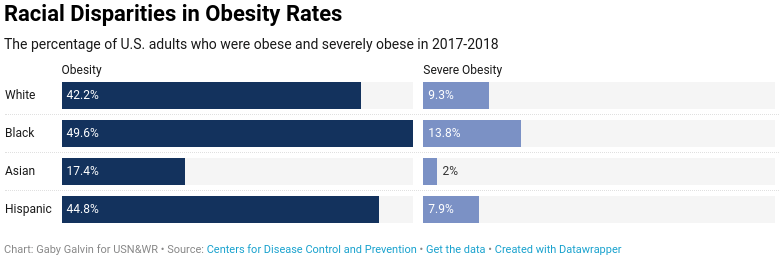
Obesity is not evenly spread.  About 50% of Blacks are obese; 42% of Whites are obese, 45% of Hispanics, and 17% of Asian Americans are obese.  We also vary by state, with Mississippi having about 70% more obesity than Colorado.  A more complex picture of obesity emerges when considering sex and race.  Among White men there is little difference in the obesity rate across income groups.  But among Hispanic and Black men and especially among all races of women, obesity is more prevalent among poorer SES classes.  The same basically holds true for education levels, with college educated women of all races having lower prevalence.

Obesity costs about $117 billion a year in direct and indirect costs, about half of that paid by taxpayers.  About 100,000 deaths in the US per year can be attributed to obesity.  The cost of obesity to our nation now exceeds that of smoking.

Dieting, as many of us know, is a lost cause, unless you are in the dieting business.  The global market for dieting products and services has grown to about $255 billion this year.  Of course, this includes the thousands of diet books available, diet foods that one can purchase, drugs one can take, supplements that are available, groups one can pay to join, and counseling one can receive. And probably over two thirds of folks who successfully lose weight will regain it in five years.

History

So, we Americans are in quite a pickle, but it wasn’t always this way.  We are familiar with the sin of gluttony.  Back when sins were sins this was serious business.  In certain societies obesity and gluttony were associated.  This was not true for every society and every era.  In Europe when class structure was more rigidly in place, it was expected that higher classes would be heavier and have fairer skin.  Both of these traits were associated with not being in the sun working all day and having generous quantities of rich foods.  Famous paintings of nudes from the time show women that would be considered rather large by today’s anorexic standards.  And in some non-European cultures, these perceptions of overweight and obesity in women still persist, including certain Arab cultures, in parts of Africa, and in certain Pacific Island cultures.

How did we get here?  You may be familiar with the concept of calories in and calories out.  If more calories go in as food than come out as physical activity, then weight is gained.  While there is indeed truth in this thermodynamic balance, there are factors inside and outside the body that have driven the dramatic increase in obesity over the last 60 years.  As we parse out apparent causes, we have to think about things that have actually changed over that time period.

Causes

Let’s start with two examples.

Genes.  We are now in the genomics age with the full library of the human genome and we have been able to identify at least 76 genes whose mutations can contribute to obesity.  So, are genes responsible for the obesity epidemic?  We humans have had basically the same genes for the past 10,000 years or so including these various obese-prone mutations, and yet we are only getting fluffier in the past century.  While we can show that folks with more of these mutations have a higher risk of obesity, there are still plenty of folks with lots of obese mutations that are normal weight.  These mutations might best be called obesity susceptibility mutations.  They only turn on the fat when they meet various internal cues that are facilitated by external factors like lifestyle and environment.

My second example- diet.  Has this changed over 60 years?  Yes, in fact it has.  Caloric intake has increased from 2880 kcal in 1961 to 3600 kcal in 2013, a 24% increase.  This corresponds to roughly 100 kcal of meat, 100 kcal of sugar, 175 kcal of starchy foods, and 400 kcal of vegetable oil used in snacks and other prepared foods.

Most food in 1960 was home cooked, had less sugar and salt, and few people ate out, especially at fast food restaurants.  Many families ate together.  Today, families rarely eat together, often eat out, and often eat pre-packaged foods and a lot more snack foods and sugary drinks.  Where we eat, what we eat, and how we eat have all changed.  Is it any surprise that our weights have changed?

Photo by August de Richelieu on Pexels.com

Then there are factors in our environment that have changed.  Our pharmacies are dispensing many more diabetes medicines, antidepressants, antipsychotics, and antihypertensives.  Many of these are known to increase weight, not only by their direct effect but also because they put us in better health and better moods.

We are sleeping less than in the past, between one and two hours a night and with much more shift work.  Epidemiologic and experimental work has shown that sleep deprivation adds pounds.

We are exposed to more endocrine disruptors.  These are chemicals that benefit us in some way but have been shown to have untoward effects on health including weight gain.  These include flame retardant polybrominated diphenyl ether (PBDE), and the plasticizer bisphenol A (BPA) and phthalates, DEET the bug repellent, and dioxins.

Air conditioning has increased since the 1960s.  In a counterintuitive way, bringing our homes to a steady 70 degrees or so year-round actually burns less calories.

We all have more screen time than in the past.  In the 60s it was a grainy black and white screen with 13 channels if you were lucky.  Now we have multiple devices for multiple purposes.  Our children spend 5-7 hours a day watching screens big and small.  Research has shown a clear link with obesity.  While watching screens, we are all less likely to be paying attention to the snacking we are doing.  We call this mindless eating.  We are also clearly not outdoors being active.  We are not eating home cooked meals with the family.  Kids see more food commercials and tend to have less sleep and more disrupted sleep.

Now for our diets.  Since 1950 we have consumed about 18% less fiber.  Since the early 1800s we have steadily increased our sugar intake by over a half a pound a year every year.  We now consume about 120 lbs per year or about 1/3 lb per day.  Most of this is in snacks and beverages.  It is amazing to walk into a convenience store and see the huge array of drinks and snacks available.

This problem has come on us slowly.  We can’t really remember a time when half the people we meet in the mall or on the street were too large to be healthy.  We don’t think it is unusual to walk into a gas station/convenience store and find it wall-to-wall with junk food.  Heck, when did gas stations and convenience stores first get married?  When did the size of McDonald’s drinks start to creep up?  We are surrounded by an obese culture that we are immune to.  Next week we will talk about this culture, where it comes from and what to do about it.

Dermatology vs. Nutrition, the Case of Vitamin D

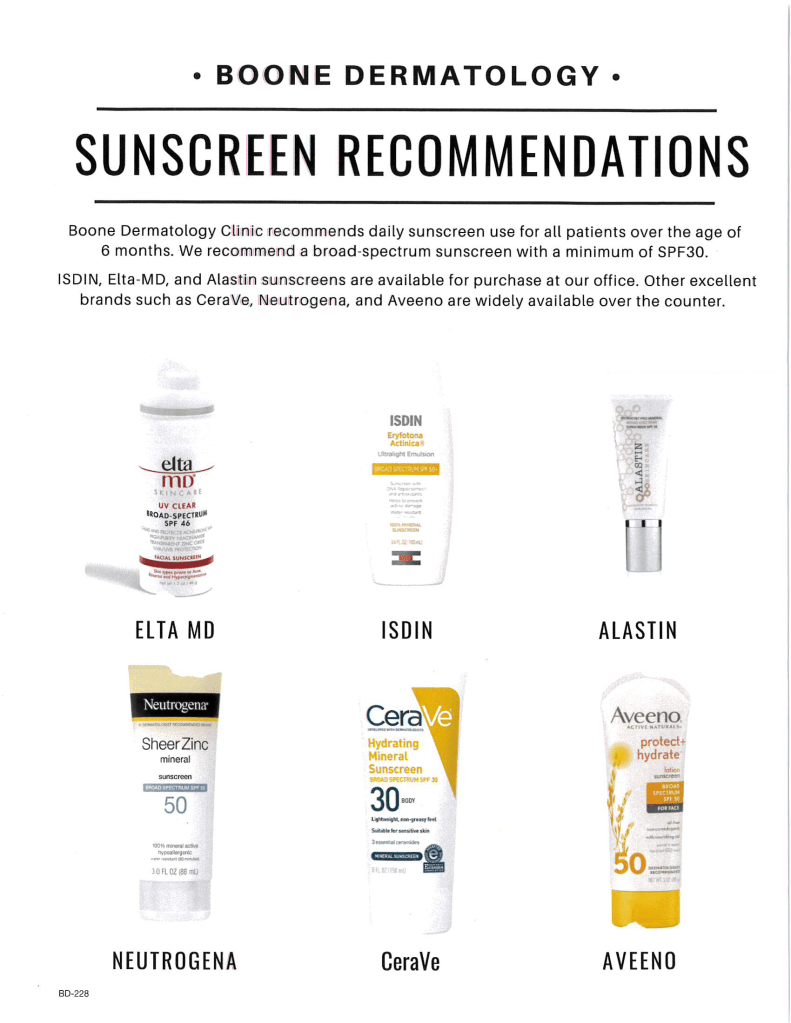
I went to my dermatologist last week for my yearly checkup, an experience almost as pleasant as my semiannual trip to the dentist.  I got checked over and we had a distracting conversation while he did his thing.  On the way out he gave me some paper instructions and an interesting flier that is the topic of this post.  I have attached it below.  It is titled SUNSCREEN RECOMMENDATIONS and has this recommendation, “Boone Dermatology Clinic recommends daily sunscreen use for all patients over the age of 6 months.  We recommend a broad-spectrum sunscreen with a minimum of SPF30.”  It is important to notice how inclusive this is: everyone over 6 months with no exceptions, broad spectrum for all wavelengths, a SPF30 so that it is a complete blockage, and daily use with no exception for season or weather or time of day.  This apparently means all day.  Here is my problem with this statement as a nutritionist.  This pretty much guarantees that all their patients will be vitamin D deficient.

Here is what pretty much any textbook will tell you about vitamin D.  We get most of it from the sun.  It is called the sunshine vitamin for a reason and is barely even a vitamin in the usual sense.  The same UV radiation that gives you sunburns allows you to make vitamin D in your skin.  But any SPF greater than about 6 completely blocks vitamin D synthesis in the skin.  We only get the right UV from the sun between about 10AM and 3PM.  All latitudes north of about 35 degrees (think Atlanta, Georgia) is too far north to get sufficient vitamin D from our usual exposure to the sun.  Most Americans get almost no vitamin D from the sun in the winter both because the sun is too low and because we are so covered up.  Just imagine what this says about the vitamin D status of Canadians.  About 15 minutes in the full summer sun with bare arms and face will give most folks enough vitamin D for most of a week.  As a rule of thumb, if you aren’t worried about getting a sunburn, then you aren’t getting vitamin D.

Vitamin D deficiency is surprising common around the world, with about a billion people affected.  People who tend to stay out of the sun, people with darker skin, people north of Atlanta, and older people are all affected.  There is a threshold for sun exposure.  A sunbather on a sunny day in January in Boston could stay out all day and apart of the frost bite, would gain no vitamin D benefit. [1]  But, a White person exposing only arms and legs, thinks short and a tee, need only stand in the Texas sun for 15 minutes for all the vitamin D for a couple weeks.  A Black person would take about three times as long.

Now my dermatologist will counter that it would be so much easier and safer if we all just took a vitamin D supplement, and this is true.  So, the full recommendation is to slather every citizen every day all day with sunscreen and also take a vitamin pill every day.  How about this as an alternative?  Don’t worry about the sun for 3 seasons of the year if you live north of Atlanta.  In the summer, wear comfortable clothes and wait 15 minutes (if you are White and longer if you are Black) before putting on sunscreen in exposed areas. Easy to remember and will save you gallons of sunscreen.

Photo by Ben Mack on Pexels.com

The real issue here is the balance between the risks of melanoma, a very lethal skin cancer that is greatly enhanced by excess UV exposure, and the risks associated with vitamin D deficiency.  Yes, the risks of melanoma are real.  Recent data show that in the US there are about 106,000 cases annually with about 8,000 deaths.  This makes it the 12th most lethal cancer in the country.  Compare this to lung cancer with 235,760 cases and 131,880 deaths.  In contrast to the effect of UV rays on melanoma, research has shown a strong possible role for vitamin D deficiency in breast cancer risk.  A recent meta-analysis combining 22 studies showed that women with vitamin D deficiency had 91% increased odds of having breast cancer.  Those that said they took supplements had a 3% decreased risk.  So much for supplements. [2]  In fairness, another similar study of supplements and breast cancer mortality showed a 14% reduction with vitamin D supplements. [3]  The same study showed no effect on overall mortality. Others have found roles for vitamin D in possibly preventing colon cancer[4], prostate cancer[5], and lung cancer.[6]  If vitamin D can reduce the risk of these four big killers by only a small fraction, this might easily balance the effect of UV on melanoma.  A recent meta-analysis of vitamin D clinical trials suggests that supplements may cause about a 20% reduction in overall cancer mortality. [7]

Now this may sound like I am an apostle of vitamin D.  Not so.  I have been around the field of Nutrition long enough to see things come in and out of vogue.  Vitamin D was hot when we nutritionists and many in the general public thought it would prevent or cure everything from lupus to hangnails.  That day has passed and a more sober view is setting in.  Notice that I did not make any claims for vitamin D and COVID or for immune function.  These are rather dubious claims.  Even the 20% cancer reduction that I quoted above has been challenged. [8]

So, should we slather and supplement or just delay slathering and only in the summer?  From the public health perspective, I think delaying in the summer is the better message because it has the added advantage of getting people outdoors where they can play, exercise, breath fresh air and lower risk of COVID. Some have suggested that insufficient sunlight is responsible for about 400,000 deaths per year in the United States. [9]  While I personally think this may be an overestimate, it is interesting to compare this to the 8000 known melanoma deaths per year and the slather and supplement regimen my dermatologist recommends to prevent them.

Looks like I may need to have a talk with my dermatologist.

Photo by Skitterphoto on Pexels.com

References

1. Hollis, B.W., Circulating 25-Hydroxyvitamin D Levels Indicative of Vitamin D Sufficiency: Implications for Establishing a New Effective Dietary Intake Recommendation for Vitamin D. The Journal of Nutrition, 2005. 135(2): p. 317-322.

2. Hossain, S., et al., Vitamin D and breast cancer: A systematic review and meta-analysis of observational studies. Clin Nutr ESPEN, 2019. 30: p. 170-184.

3. Zhang, Y., et al., Association between vitamin D supplementation and mortality: systematic review and meta-analysis. Bmj, 2019. 366: p. l4673.

4. Mahendra, A., et al., Vitamin D and gastrointestinal cancer. J Lab Physicians, 2018. 10(1): p. 1-5.

5. Trump, D.L. and J.B. Aragon-Ching, Vitamin D in prostate cancer. Asian J Androl, 2018. 20(3): p. 244-252.

6. Wei, H., et al., Associations of the risk of lung cancer with serum 25-hydroxyvitamin D level and dietary vitamin D intake: A dose-response PRISMA meta-analysis. Medicine (Baltimore), 2018. 97(37): p. e12282.

7. Manson, J.E., S.S. Bassuk, and J.E. Buring, Principal results of the VITamin D and OmegA-3 TriaL (VITAL) and updated meta-analyses of relevant vitamin D trials. J Steroid Biochem Mol Biol, 2020. 198: p. 105522.

8. Manson, J.E., et al., Vitamin D Supplements and Prevention of Cancer and Cardiovascular Disease. N Engl J Med, 2019. 380(1): p. 33-44.

9. Alfredsson, L., et al., Insufficient Sun Exposure Has Become a Real Public Health Problem. Int J Environ Res Public Health, 2020. 17(14).

Is America a Democratic Country?

Photo by Element5 Digital on Pexels.com

I am asking my readers to consider what may seem like a rather obvious question.  We Americans are quite proud of our democratic foundations as an example to the world.  But, compared to other nations and other systems, we may find some deficiencies in our system of government.  Herein, I will give you five examples to consider that show some weaknesses in our current system.

In light of much of the news lately, I want to make clear that I am going to discuss institutions and systems.  There is a lot of divisiveness and certainly a great weakening of public discourse that has weakened our democracy, but that is a subject for another time.  If you are interested, a fine editorial in the NY times addresses this issue nicely and dispassionately with solutions that we can all embrace.

Before we start, let’s see if we can define what we mean by a democracy.  To me, democracy is a system of government that allows a majority to be fairly chosen to rule, while still allowing substantial rights to the minority.  It is important to remember that our founding fathers, when writing our Constitution, had no concept of political parties or the immense loyalty they would derive and wield.

Photo by Karolina Grabowska on Pexels.com

Here then are institutional factors that have for years deeply flawed our democracy.

The Electoral College 

Yes, that system by which we elect our president and vice president is quite undemocratic.  We have this mantra from voting rights that we occasionally pull out, “One person, one vote.”  But consider the reality of the process of the electoral college.  The state of Wyoming has a population of 581,075 and 3 electoral votes.  The state of California has a population of 39,613,493 with 54 electoral votes in the 2024 election.  That means that the voters in Wyoming have 3.8 times the voting power for the president than voters in California.  Some democracy!  Of course, this could be fixed with a constitutional amendment, but do you think that Wyoming will approve that?  States could partially solve the problem themselves by apportioning electoral votes in proportion to the popular vote.  But would California approve that if Wyoming doesn’t.  We are in a stalemate.  Others have reviewed the situation with similar conclusions.

The Filibuster Rule 

This is the complex rule by which every act that does not involve money must pass the Senate by a 60-vote majority.  This is very unlikely in that evenly divided chamber.  And so, apart from budgets (and Supreme Court appointments), nothing substantial gets passed in Congress.  The filibuster is also widely misunderstood, even by senators.  While I favor protecting the minority party, I would also like a government that solves problems and advances the welfare of the country.  With our deeply divided political parties who consistently chose party over country, we all are the losers.  Compromise is no longer possible.  This rule has to go.  There are also various ways that it could be reformed.

Voting Rights 

In some of the most shameful legislation of the past two years, many states have passed laws limiting the ability to vote.  They use conspiracy theories and fake news to create barriers to the very people who might vote them out of office.  This transparent raw use of political power is an embarrassment to our founding fathers and the many who have sacrificed for our freedoms.  The only direction in which voting legislation should go is to create more access, more freedoms, less barriers, and more openness and transparency in the process.  The John Lewis Voting Rights Act is before Congress at this point and would correct many of these problems but has little chance of passing.

Gerrymandering 

The apportionment of voting districts has become a blood sport for state legislatures.  The sole purpose is to stay in power by any means possible.  My own state of North Carolina is an example.  Our state is fairly evenly split with 36% registered Democrats and 30% registered Republicans, but you wouldn’t know it with our congressional representatives being 9 Republicans and 5 Democrats.  How was this done?  Our state house is 69-51 Republican, and our state Senate is 28-22 Republican.  Gerrymandered districts have been in court almost continuously for the last couple of decades.  The Republicans will do whatever it takes to stay in power, even as they lose the edge in the popular vote.  If you think is just a Republican phenomenon then check out Maryland where the opposite is happening. 

Lobbyists 

This is the quietly undemocratic arm of government.  If you don’t have a lobbyist working for you then you aren’t getting the benefits you deserve from your government.  What?  You say that you have a congressional representative?  Sorry, that doesn’t count in the halls of power.  You may think your vote brought your representative to Washington, but it was actually lobbying money.  Technically, any citizen can walk the halls of Washington and plead their case.  But there are several factors that tips the scale in undemocratic ways.  Most obviously is the complexity of the governmental apparatus.  Who do you go see and specifically what do you ask for?  So, who benefits most from our current lobbying process?  The most likely to be engaged are those with the most to gain and with the concentrated wealth and focused need to make the investment.  That would include specific industries with specific policy and legislative needs.  Who loses?  That would be large unorganized groups with vague needs that have no organization or time to organize.  That would include poor people and consumers of the products from said industries.  These also tend to come from certain localities, think rural, and certain minorities, think Hispanics.  So, lobbying tilts our democracy in favor of those with money and a knowledge of the apparatus of government, not those who often need the protection of their government.

A Democratic Solution? 

Is there a possible fix to these issues that might improve the democratic nature of our “democracy”?  It is not an easy fix.  We would need lobbyists to fix lobbying and new legislatures to undo legislative gerrymanders that set legislatures in stone.  We would need representatives who would be willing to give voting rights to their possible opponents and undo the legislative barricade known as the filibuster.  And can anyone see Wyoming and California agreeing on anything?  This is how empires slowly rot from the inside and collapse.  I am of the baby boomer generation.  We grew up singing, “If I had a hammer”, thinking that we would change the world before we were 30.  Sorry gang.  It looks like even in retirement we still need to be swinging that hammer if we want to see our grandchildren in a more democratic country.  GenX and Millennials, you’re up next.  It will be a long fight.

Book Review of Theistic Evolution

Theistic Evolution, A Scientific, Philosophical, and Theological Critique. Edited by J.P. Moreland, S. C. Meyer, C. Shaw, A.K. Gauger, W. Grudem. Crossway, Wheaton, Il. 2017

Cover of book

A pastor friend of mine gave me this tome of 1007 page and 31 chapters because he knew my interest in the topic.  It was very generous and thoughtful of him.  I will admit that I did not read the whole thing but read substantial portions that fit my interest and expertise and gave me enough to form a clear opinion of the work.

First of all, this is an awesome work by an astounding number of accomplished authors and editors.  They are to be commended for the consistency of the work.  It is an intellectual tour de force.  It took me several months to get through what I did read, which was most of eight chapters.  It was engaging, mostly well-written, though occasional rather thick and incomprehensible.  I focused most on the two Introductions, some of the Science chapters, and some of the Philosophy chapters.  I avoided the Theology section.  As I was reading it, I reasoned that someone somewhere must have a written a scholarly review.  This might have come from the society of which I was a member, the American Scientific Affiliation, a group a Christians in the sciences.  With only a little searching in their journal Perspective on Science and Christian Faith, I found a 20-page article written by Denis Lamoureux, an ardent defender of theistic evolution, or as he prefers to call it, “evolutionary creation.”  As a scholar in this area who I greatly admire, he has done a far better job that I could of understanding and countering the arguments of the text, particularly on philosophical and theological grounds.  Herein, I can only add my modest insights as a working scientist and believing Christian.

What became very clear from the first few pages of the book was that this book was not really about theistic evolution.  It was about an alternative theory called Intelligent Design (ID).  ID posits that God specifically intervened in the creation or evolution process to direct or accelerate the development of life and species.  Theistic evolution (TE) by contrast says that God was sovereign over the whole process of creation and evolution but that it happened by entirely understandable means, i.e scientifically understandable means.  So, the overall purpose of the book was to criticize TE and thereby to validate ID.  From the outset, of course, this is a false premise and to say the least a false title to the book.  A better title might have been Countering Theistic Evolution in Support of Intelligent Design.  Putting down one theory does not prove another.

One of the greatest faults of the book was its failure to defend ID.  At no point in the eight chapters that I read, especially the philosophical chapters, was ID ever really clearly defended.  Much ink was spilt in trying to tear down TE arguments but not one shred of positive evidence was given to support the ID view.  In the scientific chapters, much time was spent on why current evolutionary theory was wrong.  But not a single positive verifiable testable case was given for ID.  I ended up taking a bookmark and writing this on it, “Where is any verifiable evidence for intelligent design?  An absence of support for other theories doesn’t count.”

The book spends 17 chapters tearing down the current scientific understanding of evolution as false, erroneous and inadequate.  I skimmed most of these chapters.  They entirely miss the point.  Scientists follow science.  If it is all completely wrong, then the scientists studying evolution will just keep looking for scientific and natural answers.  Scientist love gaps in their science.  This is what motivates us to write grants and return to the lab every day.  In my own field of Nutrition, I could easily point out a number of things we don’t know.  Does this mean that I now need to call in a God Hypothesis to explain these?  No, it just means I need to return to the lab and write more grants.  Or let’s take the field of astronomy and the current puzzle about what dark matter is.  Astronomers are puzzled and intrigued.  Do any of them say, “Well, I can’t explain it so it must be God?”  No, they don’t.  They just keep working on it.  At one point there were gaps in the fossil record that some folks loved to point to as places where God obviously must have been at work.  But in the last couple of decades there has been an explosion in new-found fossils that has closed many of these gaps.  Where did God go?  He was always there to be marveled at and worshiped for his creatively and manifold mercies.

Photo by Marcus Lange on Pexels.com

The biggest criticism of ID is that it is a God-of-the-gaps theory.  This was addressed directly and woefully inadequately in the philosophy chapters.  The authors said that what scientists view as gaps, ID folks view as an opportunity.  This is wordplay that has and will come back to haunt them many times over, especially in this genomics age.

The most interesting arguments in the book were why God is excluded from modern science.  If we want to search for all Truth, shouldn’t we be willing to open any door and willing to hear any theory.  I can admit to the attraction of this simple argument.  The actual fact is that for the past 700-800 years of modern science, we haven’t needed the God hypothesis.  In fact, the folks who gave us modern science in Europe, mostly monks from the Middle Ages, were the ones who stood firmly on the foundation that all natural observable event should be explained by observable repeatable science without recourse to divine explanations.  While they understood that a creative and active God was the first and primary cause of all natural phenomenon, the duty of us humans was to search out natural explanations.  Until the advent of ID, we have been actively and aggressively shedding the God hypothesis with good effect.  If the ID folks could show even one conclusive verifiable example of the God hypothesis closing a gap of science somewhere, then maybe they would have an audience.  But they have not.  

Quite to the contrary, in the philosophy chapters they made some astonishing claims.  At one point, in an attempt to show that ID or any creationism was indeed a scientifically sound perspective, the authors argued that since Darwin himself argued against creationism in his scientific text, Origins, then creationism itself and ID derivatives must be considered science.  The argument is that you cannot argue against the science of ID without first validating it as a true science.  I laughed out loud.  Later it is argued that TE folks are not allowed to use theology since their science allow no God.  Therefore, ID is unassailable from either the science or the theology.  I was rolling in the aisles.

Finally, I turned to the Lamoureux review, which I do recommend.  He reaffirmed several things that I saw.  He especially drilled down on the God-of-the-gaps problem.  He showed how unscientific and how unbiblical it was.  He reaffirms the strength of the fossil record and the shrinking nature of scientific gaps.  He showed how genomic data confirms common descent in evolution.  But his biggest criticism was the surprising and newly revealed biblical nature of ID.  Previously, especially in the courts, ID folks have tried to wave their hands and declare that they have no theological interest in what or who the Intelligent Designer might me.  Now in Theistic Evolution they are explicitly Evangelical Christians with 4 theological chapters and hundreds of biblical references.  He calls out their concordism.  This is the belief that there is modern scientific information in the Bible.  A more flexible understanding is that the authors of the Bible understood the world around them using the science of the times.  The Bible reflects this with no special revelation of modern science.  Lamoureux has some great and rather shocking quotes that the authors have made elsewhere supporting unscientific views from scripture such as a seven-day creation and that the curse of sin, including thorns and diseases and earthquakes came only after Adam.  Lamoureux’s point is that if these authors accept concordism, then they have bought the whole field including the entire cosmology of 1000 BC.  They cannot believe in a seven-day creation and yet think that the earth revolves around the sun.  One is from the science of biblical times, and one is from the science of our times that is contradicted by the biblical text.

In conclusion, I found the book in part misleading, in part thought disappointing, and in part comical.  I came away with a stronger faith in science and in a mighty God and a savior Jesus who meets us where we are and takes us where we need to be.  Rightly understood, a biblical faith and a scientific understanding of the world do not need to conflict.

COVID from the virus’s point of view

Photo by Anna Shvets on Pexels.com

There are a lot of headlines and news and predictions about where COVID has come from and where it is going.  While lots of good studies have been done and lots has been learned, I want to suggest that a lot can be learned by just looking at this pandemic from the virus’s point of view.  While I am not a virologist myself, it is fairly easy to image how this can happen and what is to the virus’s advantage and disadvantage in surviving and thriving.

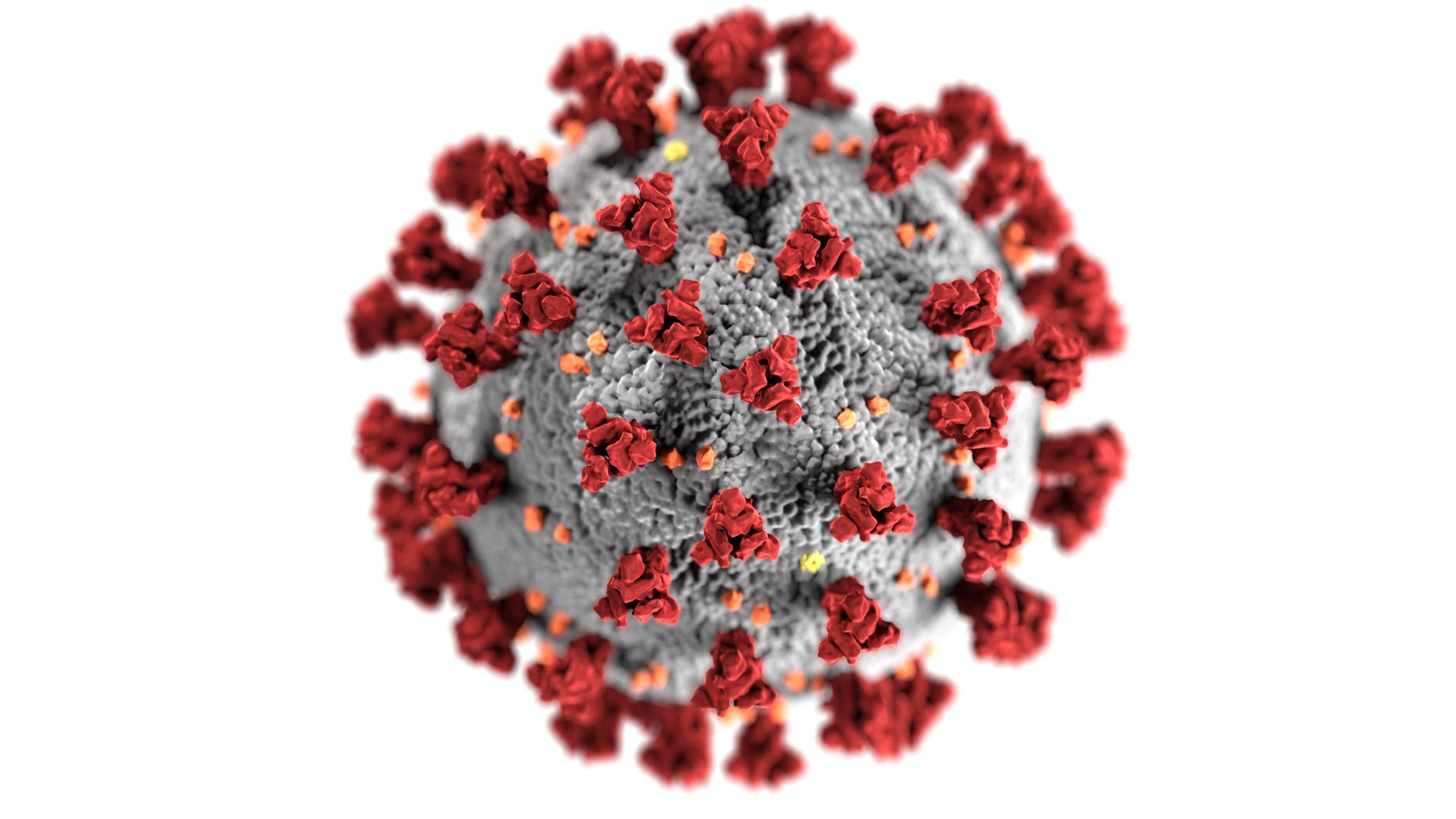
Let’s start with a pre-COVID virus in a bat.  From the virus’s perspective it is all about the success of propagating its RNA, its reproductive molecule.  A virus is barely more than an RNA molecule packed with a minimum of reproductive machinery and a protective coating that doubles as a docking molecule looking for a cell type in a host to attach to.  Success for a virus is spreading itself far and wide.  The more hosts the better, the more copies the better.  Its method of reproduction is fairly simple and fairly prone to error, which is actually to its advantage since this allows it to mutate to overcome various barriers to its spread.

So, a COVID-like virus in a bat is happily reproducing and mutating and spreading around among bats.  A number of these viruses end up in humans and chickens and pigs by the natural processes of moving through the air.  But this does the virus no good since those protective coats cannot bind or attach to any cell types in humans, chickens, or pigs.  But then, by random chance, its RNA gets mutated in just one or two places and the shape of the protective coat, we now know to call them the spike proteins, changes just enough to stick to a cell type in the lungs of pigs.  (Of course, I am fabricating some of this because we do not know the exact path of the evolution of COVID, but this is a common pathway for a number of these flu-like viruses.)  Now here is where it gets complex.  The $10 question is whether the pigs get sick?  Does it really matter to the propagation and success of the virus whether its host gets sick and maybe dies?  Only partially.  Think like a virus.  If the pig gets sick enough to cough and sneeze and spew clouds of viruses into its environment, then yes, it is an advantage.  It the pig rolls over and dies within two days of catching the bug without barely a cough, then it is probably no advantage to the evolving virus.  Hence, we see a lot of successful viral diseases that involve clear modes of dispersal such as the common colds with lots of sneezing or certain stomach bugs that cause copious diarrhea or vomiting.

Photo by CDC on Pexels.com

In another interesting and devious twist, consider when most of our viral diseases are most contagious.  Is it when we have been diagnosed and are sick in our beds and masked up and isolated?  No.  Most often, we are unknowingly spreading the disease in the earliest days when we don’t even know we have it, in the pre-symptomatic period.  If you are thinking like a virus, this is genius.

So, back to our pigs who are in close contact with their human owners and are being taken to markets with even more humans and pigs and are being sold and transported around the country.  You already know the next step.  Another mutation happens and those viruses that the pigs were transmitting to their owner without much problem suddenly become a problem because the mutated spike protein can now attach to the cells of the human lung.  It is amazing to think that this disease, now officially called COVID-19, probably came about by a change of one or two molecules with one or two viruses within one pig in China in the summer of 2019, or some other equally improbable event.

This first variant of COVID-19 that attacked humans may not have been very effective.  It might not have bound very well and might not have used the human reproductive machinery very well.  But slowly with additional mutations it probably got more effective until it reached the point of being recognized and being named the alpha variant.

Now we can see that in the lifecycle of the virus there are several problems to be overcome and optimized.  Hosts must be infected; viruses need to be reproduced efficiently, and they have to be spread widely.  To be infected, a host must take in the virus to the cell to which the virus attaches, and it has to attach firmly.  The fewer inhaled viruses that can kick off an infection the better.  The omicron variant seems to be particularly good at infection.  Next the host cells need to be co-opted to make more viruses.  The more the better.  Again, it appears that delta and now omicron have become increasingly productive of new viruses.  As for the spread, we are now learning that the R0 of omicron is probably higher than delta.  The R0, or R-naught, is the average number of people that one infected person infects.  Both delta and omicron seem to be running about 3-7.  These are wide ranges, but it means that if a person is infected with omicron, they will infect about 3-7 more before becoming non-infective.  This explains why COVID is traveling so fast right now.

But what about severe illnesses and deaths?  Doesn’t this matter to the virus?  It certainly matters to us.  As I explained above, it is all about propagation, and sickness only helps the virus if it helps propagation.  And dead people don’t propagate viruses.  So, this gives us some hint on how this virus might evolve.  If you were the virus, would choose to infect people and give them no symptoms while you went through your lifecycle and spread, or would you choose to kill off a large fraction of your hosts after they have been quarantined in a hospital for two weeks?  I vote for fewer symptoms and fewer deaths.  I suspect that the pre-symptomatic but infectious phase is going to get longer and longer while the sick but not spreading phase is going to get shorter and shorter.  Deaths that don’t help spread viruses will also probably go down.  This a conjecture, but I have read that most virologists agree with this probable scenario.  Omicron seems to be headed in this direction with more infections and less lethality.

But this should not make us complacent.  This is a very smart virus with a long-term plan to take over the world.  It will patiently lay in wait until we are not watching and then a mutant might spring up that is much more infectious and also, for a short time, much more lethal.  And we can also expect variants to emerge that resist or avoid the vaccines but are still very infectious.  Omicron also seems to be taking us down that road.

So, in thinking like a virus we have learned a couple things.  Viruses are wicked smart but not necessarily committed serial murderers.  They just want to take over the world.  Please keep up those vaccinations and boosters.  Please encourage worldwide vaccinations.  Please keep those masks up.

This link can help find a vaccine near you in the US.

Photo by Gustavo Fring on Pexels.com

Paleo, Keto, and Gluten-free Diets

A Nutritionist’s Perspective

Photo by fauxels on Pexels.com

First, a quick preamble. This is the first in what I hope will be a series of posts on food and nutrition.  This essay was adopted and updated from a talk I gave three years ago on my campus at Appalachian State University in Boone, NC.  I had great help from my graduate student at the time, Drew Hilton, in preparing this material.

I want to talk about diets and some of the problems with undertaking one to lose weight.  To make this more interesting and applicable I have decided to discuss three popular diets and to draw lessons from them that can be applied to all diets.  The diets I have chosen are generally considered fad diets and are not generally recommended by dietitians.  That will heighten the lessons we can draw.  I will try to be objective about the pros and cons of these diets.

A word of caution here.  I am not a Registered Dietitian, nor do I pretend to be able to prescribe specific foods and diets to specific people.  I am an expert in the biochemistry of nutrition and metabolism, and I tend to see diets from that perspective.  So, let’s get started.

I have chosen three diets to draw lessons from, the paleo diet, the keto diet, and the gluten-free diet.  Many people would call these “fad diets” because they tend to be out of favor with nutritional experts and their popularity waxes and wanes, but they still remain popular with many people today.  We will address them one at a time.  My goals here are not to discredit every diet out there or completely discourage you from undertaking a diet if you need.  I hope to give some sensible advice riffing off these diets that many of my readers have already tried.First though, why are so many people dieting?  America has been in an obesity epidemic for about the last 70 years.  And we have seen the consequences in rising cases of diabetes and hypertension and many other chronic diseases.  People are constantly worried about their weight.  About 43% of teenage girls admit to being recently on a diet. Dieting is a $43 billion industry with videos, supplements, books, mail order foods, and medications for dieters. A search for “diet books” on Amazon brings up 60,000 hits.  Recent research showed that half of all diet advertisements had at least one false claim.  Here is one of my favorites.  And for all of that, only about 5% of dieters are successful in keeping the weight off.

Photo by uff2cuff41uff52uff41 on Pexels.com

The Paleo Diet

The paleo diet is a diet loosely based on what our paleolithic ancestors may have eaten.  It eliminates dairy, grains, sugar, legumes, processed oils, salt, alcohol, coffee, and most processed foods. There was growing interest in the 80s and 90s, but Loren Cordain’s book The Paleo Diet in 2002 established the diet as a national phenomenon. The rationale is that we are evolutionarily adapted best to a diet prior to the development of agriculture in the Neolithic age.  Hence, agriculturally developed foods such as grains, dairy and sugar are discouraged on this diet.  If we return to this diet we will avoid the modern degenerative diseases- heart disease, diabetes, and cancers.  Characteristics of an ideal paleo diet include higher protein, lower carbs, higher fiber, higher unsaturated fats, higher potassium, alkaline load, and higher vitamins, minerals, antioxidants, and phytochemicals.  Prohibited foods include cereal grains, legumes, dairy, refined sugar, potatoes, processed foods, refined vegetable oils, and salt.  Promoted foods include grass-fed /free-range meats, fruits and vegetables, fish/seafood, eggs, nuts/seeds, and healthful oils (olive, walnut, avocado, coconut, etc.).  Obviously, the paleo diet tends to cost more than the usual western diet.

Here are some of the errors that I see in the philosophy underpinning the paleo diet.  We have a rather rudimentary understanding of what paleolithic people ate, but what we know for sure is that by that time humans were all over the world and eating all kinds of foods.  There is no single paleolithic diet.  Another wrong assumption is that the human genome has not changed or evolved since then and since the advent of agriculture.  One simple counterexample is the advent of lactose tolerance in some folks, allowing for the common practice of drinking milk.  This probably came about in more than one place by a genetic mutation about 10,000 years ago.  Also erroneous is the simple assumption that the foods our ancestors ate are the same ones available in the supermarket.  What our ancestors might have called “corn” or “carrots” bear almost no resemblance to those products today.  A true paleo diet would be almost inedible to the modern consumer.  Finally, the paleo adherent gives no credit to the marvelously flexible human digestive physiology.  Consider all the diets that currently exist around the world that humans thrive on.  We are truly a wonderfully omnivorous and adaptive species that seems to be able to do rather well on almost any diet.  My apologies here to my dietitian friends who are cringing at the thought of all their well-crafted dietary recommendations being subverted.

All that said, I’m not suggesting that you will die a short terrible death on the paleo diet.  Let’s take a quick look at some scientific studies.  There aren’t many of these, but we can draw some conclusions.  In a study titled, “Long-term effects of a Palaeolithic-type diet in obese postmenopausal women: a 2-year randomized trial”, the researchers ran a trial in which they trained half of the subjects to prepare a paleo diet and half a healthy control diet.  They concluded that, “A Palaeolithic-type diet has greater beneficial effects vs a [control diet] regarding fat mass, abdominal obesity and triglyceride levels in obese postmenopausal women.”  In another more comprehensive study titled “Paleolithic nutrition for metabolic syndrome: systematic review and meta-analysis” the authors summarized the results from four studies, “The Paleolithic diet resulted in greater short-term improvements in metabolic syndrome components than did guideline-based control diets.”

So, these studies support the benefits of the paleo diet as a weight loss diet that improves our lab numbers.  While this is encouraging for paleo enthusiasts, it is not surprising.  Restrictive diets tend to result in weight loss.  Also, diets that can decrease hunger pains are also helpful.  We know that foods higher in protein and fats tend to be satiating, meaning the eater feels full longer.  This diet and the keto diet both are higher in protein and fat than the normal western diet.  If I suggested a diet to you that removed all grains that began with the letters W and S and all vegetables and fruits and began with C and G, you would lose weight, if only because you would spend half your day in the grocery store, trying to figure out what not to eat.  The question I would pose to purveyors of these diets is whether the success is in the story they tell or the restrictions they impose.

Secondly, almost any diet that results in weight loss almost invariably results in improved metabolic scores.  This often puzzles the critics.  How can a high fat diet result in lower blood cholesterol levels or lower blood pressure?  It happens because the high fat diet is more satiating and results in weight loss that results in healthier cholesterol and blood pressure. 

So, is the paleo diet safe?  Three thoughts.  Safe compared to what diet?  First of all, we know that the standard American diet, shared by many around the world, is not exactly the epitome of perfect nutrition.  For starters, it has too much sugar, not enough fiber, is low in some key minerals and has way too much salt.  So, compared to that diet, many diets are better.  But compared to a healthy vegetarian diet, I would vote for the veggies.  Two, at what weight?  One topic I am not addressing here is who should be on a diet and why.  It would be (and might be someday) a topic for a series of blogs.  Let me say simply that the risks associated with obesity go up with weight and the benefits of weight loss and being on any diet that works go up with weight.  For normal weight folks, I would take you back to the faulty assumptions and the numerous restrictions and ask you to consider a more enjoyable and healthier alternative.  Finally, consider the cost.  For the extra cost you are giving up beans, beer, and bread.

Photo by Ella Olsson on Pexels.com

The Keto Diet

Having covered some of the common issues, these next two diets will go more quickly.  First is an issue with names.  The original ketogenic diet was a true medical diet that was quite extreme, with up to 90% of energy coming from fat and protein compared to the usual 50%.  It was used successfully to treat children with refractory epilepsy.  The so-called “Keto Diet” in modern use is nowhere near that in proportions.  Most keto diets are low-carbohydrate diets with about 20-30% compared to the usual 50-60% carbs.  The most famous of these diets is the Atkin’s Diet, named after the famous doctor who invented it.

These diets are very popular and much scientific research has been published on them.  One major study titled “Very-low-carbohydrate ketogenic diet v. low-fat diet for long-term weight loss: a meta-analysis of randomized controlled trials” summarized 13 clinical trials of 12 months or longer.  They found, “Overall, 37% dropout rate. Average 37% carbs, Keto diet had 0.91 kg greater weight loss, lower triglycerides, diastolic BP, and LDL and higher HDL.”  Several points to make here.  There is always a high dropout rate from weight loss studies.  Weight loss is hard and keeping people in the studies is hard.  Note the high carbs at 37%.  This is not all that restrictive.  Note the marginal benefit of 0.91 kg, about 2 lbs for the keto groups.  The benefits to triglycerides, blood pressure, LDL, and HDL, were equally small.

The physiology of the keto diet is intriguing and deserves some attention.  The basic idea is that if we can lower the incoming carbohydrates, then we can lower the blood glucose levels.  This will have specific benefits for people tending towards or in diabetes.  If the body gets low in blood glucose, which it absolutely needs to fuel the brain, then it has a backup system called ketogenesis.  In ketogenesis a group of metabolites call ketone-bodies can be produced from fats when sugars, like glucose, are in low supply.  Keto enthusiasts will emphasize at this point that burning up fat is what dieting is all about, so this state called ketosis and being fueled by ketone bodies is a good state to be in.  But the body still sees it as an emergency state, not the preferred state.  As an analogy, imagine working in a building where the fire alarm was sounding about half the time.

Is the keto diet safe?  Three concerns.  Based on the physiology I just described, certain folks should be concerned.  Folks who can run into super low blood glucose levels should beware of this diet.  That would include folks with diabetes who are on glucose controlling drugs such as insulin.  These ketone bodies, in high enough concentration can be acidic.  There is a small risk of ketoacidosis.  This takes us back to the original definition of the keto diet and the question of just how restrictive of carbs the diet is.  With moderate carbs at 30-40%, there is going to be little ketosis.  At low carbs of 10-20%, ketosis will be frequent.  When ketones are high and glucose is low, the brain says, “Hungry.”  This doesn’t sound all that pleasant.  So, what is the quality of life here, especially given the increased cost again, and the restrictive diet.  Remember, no doughnuts, drinks, or Doritos.  As stated before, any benefits we see from this diet are more than likely due to the restrictions that lead to modest weight loss that lead to healthier lab numbers.

Photo by Eva Elijas on Pexels.com

Gluten-free diet

Gluten is a protein in 3 grains: wheat, barley, and rye.  It is also found in processed foods such as soy sauce, salad dressing, food starch, beer, etc..  The diet was first developed for people with celiac disease, an autoimmune disease that affects the intestine and slowly blocks absorption of nutrients.  Untreated leads to death from malnutrition.  Here is an interesting full disclosure for my readers.  I have celiac disease.  I have been diagnosed for about 12 years.  While there are inconveniences to be sure, it is one of the least troublesome autoimmune diseases to have.

The fad diet we know today largely developed in the early 21st century with books Grain Brain and Wheat Belly, condemning wheat and other grains as bad for health.  People started diagnosing themselves with “non-celiac gluten sensitivity” and popularizing gluten-free diets for many health benefits.  The medical profession has been puzzled by this new condition and has slowly recognized it.  Gluten-free products are now a $15 billion food industry.

There is now a cross-over between gluten-sensitivity and the FODMAP diet and Crohn’s disease and irritable bowel syndrome.  Common symptoms include abdominal pain, bloating, and gas.  This is a very complex topic.  Suffice it to say that Crohn’s and irritable bowel are both mystifying intestinal conditions that are difficult to treat and may be diet related and may be related to the carbohydrates in the diet.  Gluten may be mixed up in there somewhere.  Others have suggested gluten-free diets as possible cures for schizophrenia, fibromyalgia, and endometriosis.  These have been largely disproven.

Gluten-free diets have not been taken up as often as the other diets for weight-loss.  To the extent that they have and to the extent that studies have followed up, it appears that the results follow our previously established wisdom that restricting a diet for any reason often means less calories, which generally means weight loss and improved number.  But if you are restricting wheat, you must imagine a diet that restricts donuts, cakes, and most office treats.  Imagining losing weight on that diet is not too hard.

Please allow me just a minute to elaborate on the common errors found in the popular book Wheat Belly.  Many of the benefits of eliminating wheat are due to weight loss, not to some toxic properties of wheat.  The book has many testimonials, but few clinical trial results.  While the author will point to the dangers of various constituents of foods, none of the dangerous properties were unique to wheat starches or proteins.  The author claims that dramatic changes to the gluten content of wheat varieties has happened over time, especially since the Green Revolution of the 50s and 60s.  However, recent research has clearly shown that no changes in wheat composition has occurred.  The connections between a large number of diseases and wheat are completely unproven.

Here are some concerns that nutritionists have about gluten-free products currently on the market.  They tend to be lower in fiber than their glutenous alternatives.  They are not necessarily fortified with B vitamins and iron.  They often contain more salt, fat, and sugar.  They tend to be more than two times as expensive.

Photo by Markus Spiske on Pexels.com

Overall Conclusions

We have seen some common threads through these three diets.  Let me summarize those for you here:

  • Most fad diets won’t hurt in the short-term.
  • Most diet benefits come from restrictions that lead to weight loss.
  • Long-term adherence is hard and may not be as helpful as one would like.
  • They are almost always more expensive.

If these three diets are not recommended in the long-term, what makes a good diet?  Here are some common-sense suggestions:

  • One you can stay on for a lifetime
  • That is balanced and minimally restrictive
  • That lowers metabolic syndrome and other disease risk factors
  • That moderates weight slowly

Best Diets Overall

Best Diet Advice from author Michael Pollan

My favorite food and nutrition author is actually not a nutritionist.  He is a journalist who has written several thoughtful books on the subject.  At the end of one of his books he give this advise for a good diet.

  • Eat (whole) foods
  • Not too much
  • Mostly from plants