It has been a while since I added to this blog. My apologies. I have been busy being retired. (A little joke there.)
Today I will correct that with a short piece in reaction to a recent article by Rand Paul in Imprimis. For those of you who are not familiar with Imprimis, it is an occasional publication of Hilldale College, a private, conservative, Christian liberal arts college in Michigan. About 6 million people receive this 4-page little pamphlet every month or so. For some reason, I got on their mailing list about a year ago. It makes interesting reading from a conservative Christian perspective, which I largely disagree with. I am glad to hear from the other side though, especially from this more scholarly perspective that doesn’t seem to be screaming.
But recently, I started to read their missives more carefully and have found an interesting problem. They are not always internally consistent. At certain points they can even be misleading. I think someone should call them out on this. Hence, this blog. My review will make the most sense to those of my readers who also receive Imprimis.
Today we will examine “Lessons From the Great Covid Cover-Up” by Rand Paul. It is impressive that Dr. Paul, an MD and US senator from Kentucky should contribute to such a small publication. I will try to give full air to Dr. Paul’s view here. Senator Paul (I am not quite sure how to address him. I think I will alternate between Dr. and Senator. I hope that is appropriate.) is concerned with the apparent cover-up by officials in our government of the source of the COVID virus, the role our government may have played in its creation, and in ways to prohibit other more dangerous viruses from being created.
My criticisms are threefold. Senator Paul misleads us about the source of the virus. He misunderstands how science and the NIH work. He places the blame on others for his (and the legislative branch’s) own failures.
First, a long quote from his article that first convinced me that Senator Paul was a scoundrel and I needed to say something. This is the third paragraph of the article (on the top of page 2 for those with copies). First some context: January 2020 was at the very beginning of the pandemic. I don’t think it had even been declared a pandemic yet. Fauci is, of course, Dr. Anthony Fauci, the longtime head of the National Institute of Allergy and Infectious Diseases and one of the Federal leaders in the fight against the pandemic. Also, the Wuhan lab was a lab in China very near where the virus was first identified that did research on viruses.
“In January 2020, Fauci was told that the Covid virus appeared “inconsistent with expectations from evolutionary theory.” He and his fellow scientists were worried that it may have originated in the Wuhan lab because they knew that the National Institute of Allergy and Infectious Diseases (NIAID) under Fauci’s direction had been funding work at the lab for years. They also knew of a paper by Ralph Bark and Shi Zhenli describing gain-of-function research – which involves taking two viruses and combining their genetics to create something more dangerous, more lethal or more contagious – on various coronaviruses at the Wuhan lab.”
Having read this over, I would like to ask my readers this question: Was the NIAID funding gain-of-function research at Wuhan? As I first read it, I said, yes, clearly that is why Fauci was worried. But read this paragraph more carefully. Senator Paul first states that NIAID funds research at Wuhan. Period, full stop. Then he states that an article on gain-of-function research came out of that lab. Period Full stop. These two facts may or may not be connected at all. But the Senator’s brilliant phrasing has deeply planted that supposition in our brains without any proof. Brilliant but misleading. And he will build on this fabrication throughout the rest of this article.
Senator Paul, and many other people, have a poor understanding of how science and the NIH work. The NIH is the sugar daddy of all medical research funding agencies, with a budget of $45 billion. Most of that is distributed through competitive research grants. The success rate for new research grant applications is about 20%. The grants are generous, usually starting at $500,000.
Scientists from all over the world compete for these grants. Many of my friends have tried and failed at obtaining one of these grants. They are extremely hard to get. Only the very best proposals pass muster. The fact that scientists at Wuhan virology labs got one or more of these grants is a testament to the excellent science that was being done there. The quote above gives the impression that Dr. Fauci was taking money from NIAID and giving it to Wuhan. No. Wuhan won an extremely competitive grant process and were granted the money. Did the Covid virus escape from there? We don’t know. The Chinese have been less than helpful in this matter. We may never know. What we can be sure of is that no gain-of-function research was funded there by the NIAID. Dr. Fauci must sign off on every grant from his agency. He would know better than anyone and in an angry televised confrontation with Senator Paul while under oath, he made it very clear that Senator Paul had no idea what he was talking about.
Another question for my readers: Can a scientist change his or her mind? Yes, of course, especially at the very beginning of a fast-moving national crisis when the facts are changing every day. Science is a slow-moving sport. It is poorly suited for the kind of crisis that befell our country and world in early 2020. Science works by increments, by gathering all the facts. Virologists knew a lot about the type of virus that the Covid virus was, but not everything. Dr. Fauci was derided for making some wrong guesses at the beginning of things. Did anyone know any more than him or his team? No. They were doing the best they could with what they had. And when they had more, they made better recommendations.
Dr. Paul, later in the article, again combines statements to raise an alarm that should not be there. He strongly criticizes research that is being done to identify all the known viruses out there. Dr. Paul then conflates this identification research with gain-of-function research. Baloney. How did we (scientists and society in general) know anything about this new virus? Because institutes such as the NIAID had been diligently researching new viruses and had some idea of what we faced. Did they know everything, such as its mode of spreading? No. But they knew a lot abut how viruses spread and took an educated guess.
This is how science works. It is slow and tedious and what it doesn’t know would fill volumes. But there are no better tools to find out things that can defeat a pandemic.
The senator makes an interesting claim that “no human vaccine has been developed in advance of a human epidemic.” Actually Dr. Paul, this happens every year with the flu vaccine that we are all familiar with. The newest virus strain is predicted, a vaccine is produced, we are vaccinated, and an epidemic is largely avoided. Every year. The doctor needs a yearly checkup.
Finally, Senator Paul spent the last third of the article bringing forward a new idea about how to regulate gain-of-function research at the NIH. This seems rather reasonable to me to debate at least. Brother, I say go for it. But wait, you are preaching at us about a policy decision that is within the realm of Congress to debate and to enact. Well, go do it if it is so important. So, why are you preaching to us instead of to your fellow Senators? They are the ones you need to convince. What, you can’t convince them? That’s what politics is all about, finding the right compromise to get good legislation enacted. Is this one of those many initiatives that did not make it into law because we have become too partisan? You could not reach across the isle and find a partner to move this through? Don’t blame us or Dr. Fauci for your inability to be a good politician.
One fact that the senator apparently got right. Oddly, Dr. Fauci was the highest paid federal employee at the time of the pandemic. First, he is an MD. Second, he had been the head of the NIAID for 38 years. That is a lot of incremental raises. And given all the grief he got from Senator Paul and others, I would say he deserved every penny.
While I appreciate Senator Paul taking on technically challenging issues such as gain-of-function research at the NIH, he does not need to besmear the good name of a respected public servant in the process or cast doubts on the beleaguered public health establishment of our country. I would expect more knowledge and respect for the process of science from a physician and better politics from a working senator.
I have been meaning to write a blog post on the errors of creationism and the sensibility of evolution. To this end, I tweaked my Facebook algorithm recently to be able read and understand the creationist view explaining how God made it all and that only atheists believe in evolution. I was very impressed by the depth of the scientific knowledge of the speakers and the passion behind their arguments. Over time, I started to list the fundamental concepts behind the messages that I was reading or watching. There were quite a few arguments that were being made, such as that no intermediate fossils have been found that can seamlessly connect “evolved” species; or that evolution was an untestable hypothesis and not a proven law of nature; or that the second law of thermodynamics prohibits the increased complexity of life.
I pulled my resources together and planned this blog post. But as I looked at the complexity and length of the things I was reading, I just got tired thinking about all the hundreds of arguments that I would have to counter. I gave up. Too hard. Then, as I was cleaning out some old files today, I stumbled on an article that I had cut and saved from 2002 about this very subject. It was called “15 Answers to Creationist Nonsense.” As I looked it over, the author, John Rennie, had addressed every one of the fundamental creationist concepts that I had written down. Fantastic. I no longer had to write a long blog from scratch. I could just point to a 24-year-old very well written article that shows the arguments creationists are using today are just recycled arguments from the past. They have nothing new and they have been rejected for a long time.
What I am going to do today is send you to that article from the Scientific American. You should read those arguments first, and then I will add several more of my own.
For those readers who may not know who we are referring to when we say “creationist”, here is a quick intro. The hardline positions of 6-day creationists are that Good created the world and all lifeforms about 6,000 years ago, as per Genesis 1. Sometime after that, a huge flood covered the earth, and all the animals were saved in a huge boat. This flood gave rise to all the geologic layers that we are familiar with. Since the late 1800s this view has conflicted with mainstream science about the origin of the universe, the geology of the earth and the creation/evolution of plants and animals.
I will start this section by explaining my own position, a view held by many Christians in the sciences.
I offer an alternative to 6-day creationism. It is the view that I, and many other Christians in the sciences, hold called Theistic Evolution. We hold to the Two-Book view of science and faith. Galileo is said to have remarked that the Bible teaches how to go to heaven while Nature teaches how the heavens go. Science has been pretty good at explaining how the heavens go and how animals evolve. We should turn to the Bible to learn about who God is and how we should live. We should not be turning to the Bible for scientific explanations.
Science is an awkward fit in the Bible. Much ink has been spilled over the meaning of “day” in Genesis and can it be stretched to cover millions of years of creation. Also, much debate has circled around the order of creation in the six days and how that matched current science. My own thought on this is that these are great moral teachings but poor science. Here is my somewhat snarky view. I think that the whole Bible is true, while some of it actually happened. CS Lewis is known to have remarked that much of the Bible is “true myth”, that is stories to believe in, learn from, and follow, but may or may not have actually happened. As a Christian, I believe that Jesus actually rose from the dead. However, I do not consider that a belief in a physical Adam is necessary to appreciate the lessons taught there.
Science as a tool of discovery of physical truths is flawed in some regards but it is the best way we have to explain physical phenomenon. One of my favorite podcasts is Skeptoid. Check it out. Every week the author debunks yet one more conspiracy theory or ghost story. Things that were once not explainable can now be explained. Or take a very current example of an unknown: dark matter and dark energy. These are known to exist but cannot currently be explained by science. Are scientists wringing their hands and in despair because they can’t explain these things. No! They know the answer is out there. They just keep working at it. Or closer to home, another example: how did life start? Well, we really don’t know. We have some working hypotheses, but no one is fretting. We just keep chipping away at it. We don’t have to invoke God, just because we can’t currently explain it. This is how science works.
I want to now add to the points that Mr. Rennie made in his article. Here are some statements made by creationists and my response to them.
The are many things that science can’t explain that make room for a God Hypothesis. This is the mainstay of Intelligent Design and irreproducible complexity. These contentions fall into the “God-of-the Gaps” problem. The general idea is that many things that cannot currently be explained by science can possibly be explained by divine intervention. This is very weak ground to stand on. Ever since serious science as a real thing started in the Middle Ages, many questionable and unexplainable things have been explained by advancing science. To stand on the ground of unexplainable things for the foundation of faith is a precarious and rapidly shrinking foothold.
Carbon dating is inaccurate. Therefore, we don’t know how old things are. Carbon dating is part of a larger field called radiometric dating. These methods rely on the known decay rate of radioactive elements in archeological samples to find out how old they are. Currently there are 20 or more radiometric dating techniques in use. In addition, radiometric dating itself is part of a larger field called chronological dating. Approximately 50 non-radiometric methods fall in this category. These methods include references to the geological stratum, the known reversals of the magnetic poles, dating of tree rings, and known transformation of minerals by fire.
The point is that there are now many ways to date a sample. Usually, good archeologists who are well funded will use two or more methods to date something. Over years of research, the quirks of these methods have been ironed out and matched against each other. This is one of the biggest problems for creationists to overcome because in their view the whole world was created about 6,000 years ago. Reliably dating a fossil to 3 million years ago creates difficulties for them.
DNA contains “junk DNA” that evolutionists don’t know how to interpret. Obviously, another God-of-the-gaps problem. The “essentially complete” DNA sequence of humans was announced in 2003. Understanding this “junk” DNA has been slowly unfolding, as it does in science. The sequences of many plants and animals have been completed since then. I believe that this information is the coup de gras of creationism. With this rapidly expanding information, biologists have been able to accurately map the order and sequence of evolution including the branching points and common ancestors.
Methodological naturalism (MN) is an atheistic invention to exclude God from the creation story. This will take some unpacking. MN is the philosophical view that all-natural phenomenon, such as the sun rising or cell division, can be explained by natural explainable causes without reverting to divine intervention. The basic understanding that all natural things have a natural explanation has been part of science since the beginning. Scientists have a very strong basic belief that the world has uniformly consistent physical laws that we can rely on. And since they are reliable, we can investigate this physical world and be confident that our findings will hold true over space and time. One of the attractions of science as a field is that we are uncovering universal physical truths.
However, creationists insist that God has intervened supernaturally in the creation of the world, and especially of plants and animals, apart from natural explanations. This is just not science. We could find another name for this field, but it is not science. Some prefer the name, “creation science”, but that is akin to phrases like “illegal police” or “nonviolent army.”
Interestingly, the creationist view has been slowly developing cracks where they have become divided in their views and where science seems to have prevailed. Here are several ways the 6-day creationists have yielded ground.
Creationists have become divided on how to reconcile Genesis 1 and current science. Here are some subgroups and their understandings.
Gap creationists accept the scientific age of the planet and consider that plants and animals were created by a combination of God and microevolution but still insist on a global flood.
Progressive creationists believe that humans were made directly by God, but other lifeforms evolved under the direct supervision of God, but no global flood.
Intelligent design proponents believe in numerous divine interventions in evolution to create the most complex of organs and creatures.
Theistic evolutionists fully accept the scientific view of the creation of life and of evolution while insisting that God had planned it all along and was behind everything.
Here are a few other places where creationists are in retreat. This list will probably grow with mounting evidence.
Even the most conservative creationist today seems to accept microevolution, the idea that small changes in form can occur over relatively short periods of time. The changing beaks of birds on the Galapagos Islands seems to be convincing. The widely varying breeds of dogs is another example.
Many creationists seem to now accept that Neanderthals were real humans created by God and worthy of redemption.
Most creationists, while holding a literal view of Genesis 1, seem willing to forgo other parts of what might be called Old Testament science. The ancients, including those who wrote the Hebrew Bible, had a very distinct view of the earth and heaven that was common among nearby civilizations. This included the layers of the heavens, including the waters above the heavens and waters below a flat earth. The sky above was called raqiya, or firmament. This was a solid object similar to a flat hammered sheet of metal. Few people, including creationist, still believe in this form of the cosmos while still holding to the “science” of Genesis 1.
The battle that creationists wage is across a broad range of sciences. As science grows, the battle lines grow. Creationists must win on all these fronts for their worldview to hold. Here are some of the fields in which the battle is fought.
Geology: Creationists believe that all landforms were created in the instantaneous creation and modified by the global flood. Modern understanding of slowly moving tectonic plates differs from this view. Here is a nice link to a refutation of a creationist view of geology.
Paleontology: Creationists believe that all animals were created at a single point in time and that fossils and extinct animals happened as a result of the flood. Current understanding is that fossils came from animals and plants that lived millions of years ago. Modern methods of dating these fossils confirm that understanding.
Meteorology: Creationists believe that a single devastating flood covered the whole earth and created many of the current landforms. Current meteorology understands that a global flood is impossible.
Archeology: Creationists believe that all ancient civilizations arose rather quickly from a single human couple and that all dating techniques are fallible. Modern archeology has found numerous humanoid fossils that suggest a slow evolution of Homo sapiens and that multiple dating techniques complement each other in confirming the evolutionary timeline.
Cosmology: Creationists believe that the whole universe came into being in 6 days about 6,000 years ago. Modern cosmology, including a firm understanding of the red shift and other measuring tools, has established the age of the universe to about 13 billion years ago and the age of the earth to about 6 billion years.
Scientific Method: Creationists, including those from the Intelligent Design group, hold to direct divine intervention in the creation of all lifeforms. Modern science holds that all-natural phenomenon, even that authored by God, can be explained by natural causes.
Genetics: Creationists believe that all lifeforms were created instantly with the nearly exact DNA code that they have today. Modern biologists and geneticists understand that the discovered DNA codes of plants and animals spell out in considerable detail the evolutionary process that gives rise to current existing species.
Mathematics: Creationists delight in explaining how the creation of a working enzyme from 20 random amino acids is statistically inconceivable. Evolution is currently understood to have progressed slowly through small progressive changes to existing and function lifeforms. No need to instantaneously create a new enzyme. There are much better probabilities.
Chemistry: Creationists believe that the second law of thermodynamics, that entropy or randomness, is increasing in the universe. This is violated by a progressive evolution with increasing complexity and apparently decreasing entropy. Currently, physical chemists understand that a closed system including the burning sun (decreasing complexity and increasing entropy) and the life cycle of life-death-decay is sufficient to meet this law.
Again, I hold that creationists must win all these battle fronts for their novel theory to hold.
In summary, let me use Occam’s razor to help pull this together. Occam’s Razor is a philosophical principle that holds that the best explanation of a physical conundrum of some sort is to start with the simplest explanation and work from there. Instead of doing battle on nine scientific fronts and slowly losing ground to splinter groups and overwhelming evidence, our creationist friends should choose the coherent modern scientific view for their explanation of the world and should use the holy scriptures for what they were intended. “All scripture is given by inspiration of God, and is profitable for doctrine, for reproof, for correction, for instruction in righteousness: that the man of God may be perfect, thoroughly furnished unto all good works.” 2 Timothy 3:16-17.
As we are in the heat of the presidential election this year, it has become increasingly clear to me that we don’t really understand some simple truths about these campaigns that might help explain what the candidates say or don’t say. These things are true of both current candidates and probably all future candidates. In this blog I hope to set more realistic expectations of these campaigns. Try these on for “truthability”:
The president has very little they can do about the economy. We often think that our president is the most powerful person on the planet. But the global economy is massive, and the president has very few tools that can affect real changes. It is like the tail trying to wag the dog. The Federal Reserve does have certain tools that are rather blunt for controlling the economy and inflation and those tools seem to work sometimes and very slowly. Most polls show that folks put the economy as their #1 issue in the election. This sets up unrealistic expectations. Neither candidate will actually admit that he or she has little control over the global economy. They would lose voters faster than a can of Raid in a beehive. So, they must make promises that they can’t keep or propose solutions that will have little effect.
Candidates are not very clear on their specific policy plans. Pundits, journalists, and their opponents clammer for more specific plans about what candidates will actually do when they are in office. But consider this. What would happen if candidate X were to make some very specific recommendations? For example, they might say they are going to ask the Navy buy two more aircraft carriers and also ask the USDA to increase funding for school lunches by 10%. What would happen? They would immediately lose those voters that think military spending is excessive and immoral. They would also lose the fiscal conservatives who would be opposed to more giveaways. So, the safe strategy is to “Make America Great Again” or pledge to build an “Opportunity Economy”, both rather vague terms that hide a lot. The simple truth is that there is no winning upside to being more specific about their plans.
Many of us take our religions seriously and vote accordingly. I am going to suggest that this is not a good idea. While faith should contribute to how we view candidates and platforms, many of the issues of our day are complex and religion can easily be brought in on both sides of the debate. We need to think more broadly and pluralistically. One of the strengths of our founders was their ability to compromise. They had strongly held beliefs but were willing to compromise on issues in order to find workable solutions for the good of the country. I worry that by blending religion and politics we often create ideological positions that we cannot compromise on. I would like to find candidates that understand how to compromise for the sake of workable solutions. In the context of our two-party system, that might be folks willing to cross party lines to get things done. I would also recommend that you not be a one issue voter. Not only is this simplistic and lazy, but also rather dangerous. If you are focusing on one issue, then you are missing many issues that you may regret later. Without getting into specifics, I was a one issue voter for many years. I now can see that I was unthinkingly voting for a number of policies that I regret now. I wish I had been a more thoughtful voter.
At this point you might think that I am rather cynical about the political process. Certainly, I am but I would like to think I have more realistic expectations. The truth is that no candidate is perfect. We should not expect them to be. They are people like us. But what we need are candidates that have a realistic chance of fulfilling the role of president where the balance sheet of all the pros and cons tips a little in favor of what is on our own wish list. The people that say that they don’t like either candidate are just being lazy and unrealistic. I say that they should do the hard work of finding out what you can about the candidates, make your own balance sheet and go vote. That means thinking hard about what is important to them and also what is important to the candidates.
The election this year will be decided by only seven states, the “swing states”. We each hope that our vote will really count in this election for president. The truth is that for most Americans it will not. It may certainly count for all the other down-ballot races but not for president. Our presidential election is a continuous reminder to the inequity of the Electoral College. My Republican friends in New York state have not helped determine a president since Ronald Reagan. My Democratic friends have not had a voice in Kansas since LBJ won there in 1964. I happen to live in one of those swing states, North Carolina. And we are enjoying it. Every week or two either Trump or Harris will show up at a stadium near us and draw big crowds with lots of local coverage. I would ask my friends in New York or Kansas, when was the last time either candidate visited your state? So sad, too bad. Blame the Electoral College, the vestigial organ of a bygone era. Remember that in the Trump v Clinton election, Trump lost the popular vote by seven million but won the Electoral College by only 70,000 in three swing states, and Biden won the last election by 11 million votes but won the Electoral College by only 45,000 votes in three different swing states.
So, there you have it, five reasons that the campaign for president in the US is so odd. Please don’t be discouraged. Voting is important and many other elections, such as for representative, senator, mayor, and dog catcher make more sense and need your vote, too. Remember, as with so many other issues we face, it’s complicated.
This is largely from an well-researched CNN piece dated Oct 3, 2023, “24 Former Trump Allies and Aides Who Turned Against Him” by Zachary B. Wolf October 3, 2023. I also amended that material with further quotes from an excellent NY Times article, “What 17 of Trump’s ‘Best People’ Said About Him” by Sarah Longwell, Jan. 18, 2024. I also used material from a NY Times piece, “Trump’s Former Aides and Advisers on the Peril He Poses” written by Jennifer Schuessler on May 12, 2022. A March 18, 2024 piece in the Washington Post declares that less than one-third of Trump’s cabinet has supported him in 2024.
What’s below is not meant to be an exhaustive list, but rather a catalog of notable quotes by former aides and top officials whom Trump at one point chose to work for him at the White House. Also included are other folks who have worked with him during his administration. Some are now actively working against him. Three were running against him in the presidential primary. Others have stayed relatively quiet after resigning in protest.
These are some of the people that knew him best while Trump was president and have maybe the best idea of what another Trump term would be like. They joined Trump because they largely agreed with his policies and politics and despite that agreement are now saying something very different about the man.
His vice president, Mike Pence: “The American people deserve to know that President Trump asked me to put him over my oath to the Constitution. … Anyone who puts himself over the Constitution should never be president of the United States.” “It should come as no surprise that I will not be endorsing Donald Trump this year.”
His second attorney general, Bill Barr: “Someone who engaged in that kind of bullying about a process that is fundamental to our system and to our self-government shouldn’t be anywhere near the Oval Office.” “The fact of the matter is he is a consummate narcissist, and he constantly engages in reckless conduct that puts his political followers at risk and the conservative and Republican agenda at risk. … He will always put his own interest and gratifying his own ego ahead of everything else, including the country’s interest. There’s no question about it. … He’s like a 9-year-old, a defiant 9-year-old kid, who’s always pushing the glass toward the edge of the table defying his parents to stop him from doing it.”
His first secretary of defense, James Mattis: “Donald Trump is the first president in my lifetime who does not try to unite the American people – does not even pretend to try. Instead, he tries to divide us.” “We must reject and hold accountable those in office who would make a mockery of our Constitution.”
His second secretary of defense, Mark Esper: “I think he’s unfit for office. … He puts himself before country. His actions are all about him and not about the country. And then, of course, I believe he has integrity and character issues as well.” “I have a lot of concerns about Donald Trump. I have said that he’s a threat to democracy. I think the last year, certainly the last few months of Donald Trump’s presidency, will look like the first few months of the next one if that were to occur.”
His chairman of the joint chiefs, retired Gen. Mark Milley, seemed to invoke Trump: “We don’t take an oath to a wannabe dictator. We take an oath to the Constitution and we take an oath to the idea that is America – and we’re willing to die to protect it.”
His first secretary of state, Rex Tillerson: “(Trump’s) understanding of global events, his understanding of global history, his understanding of US history was really limited. It’s really hard to have a conversation with someone who doesn’t even understand the concept for why we’re talking about this.” “Moron.”
His first ambassador to the United Nations, Nikki Haley: “He used to be good on foreign policy and now he has started to walk it back and get weak in the knees when it comes to Ukraine. A terrible thing happened on January 6 and he called it a beautiful day.” “He went down a path he shouldn’t have, and we shouldn’t have followed him and we shouldn’t have listened to him. And we can’t let that ever happen again.”
His presidential transition vice-chairman, Chris Christie: “Someone who I would argue now is just out for himself.”
His second national security adviser, H.R. McMaster: “We saw the absence of leadership, really anti-leadership, and what that can do to our country.” “President Trump and other officials have repeatedly compromised our principles in pursuit of partisan advantage and personal gain.” “It’s a gift to our adversaries, who want to shake our confidence in who we are, shake our confidence in our democratic principles and institutions and processes.”
His third national security adviser, John Bolton: “I believe (foreign leaders) think he is a laughing fool.” “By the time I left the White House, I was convinced he was not fit to be president. … I think it is a danger for the United States if he gets a second term.” “The concern I have, speaking as a conservative Republican, is that once the election is over, if the president wins, the political constraint is gone. And because he has no philosophical grounding, there’s no telling what will happen in a second term.” “I think in private, honest conversations, almost all of Trump’s cabinet members and other senior advisers” would agree that “Trump is not fit to be president.”
His second chief of staff, John Kelly: “A person who admires autocrats and murderous dictators. A person that has nothing but contempt for our democratic institutions, our Constitution, and the rule of law. There is nothing more that can be said. God help us.” “What happened on Capitol Hill yesterday [Jan.6, 2021] is a direct result of his poisoning the minds of people with the lies and the frauds.” “Trump has no idea what America stands for and has no idea what America is all about”. “What’s going on in the country that a single person thinks this guy would still be a good president when he’s said the things he’s said and done the things he’s done? It’s beyond my comprehension he has the support he has.”
His former acting chief of staff, Mick Mulvaney, who resigned as US special envoy to Ireland after January 6, 2021: “I quit because I think he failed at being the president when we needed him to be that.”
One of his many former communications directors, Anthony Scaramucci: “He is the domestic terrorist of the 21st century.”
Another former communications director, Stephanie Grisham: “I am terrified of him running in 2024.” “Everybody’s showing their fealty to them, he’s on his revenge tour to people who dared to vote for impeachment. I want to just warn people, once he takes office, if he were to win, he doesn’t have to worry about re-election anymore, he will be about revenge, he will probably have some pretty draconian policies.”
His secretary of education, Betsy DeVos, who resigned after January 6: “When I saw what was happening on January 6 and didn’t see the president step in and do what he could have done to turn it back or slow it down or really address the situation, it was just obvious to me that I couldn’t continue.”
His secretary of transportation, Elaine Chao, who resigned after January 6: “At a particular point the events were such that it was impossible for me to continue, given my personal values and my philosophy.
His first secretary of the Navy, Richard Spencer: “…the president has very little understanding of what it means to be in the military, to fight ethically or to be governed by a uniform set of rules and practices.”
His first homeland security adviser, Tom Bossert: “The President undermined American democracy baselessly for months. As a result, he’s culpable for this siege (of Jan. 6), and an utter disgrace.”
His former personal lawyer and fixer, Michael Cohen: “Donald’s an idiot.” “Donald Trump is the single greatest threat to democracy.”
His White House lawyer, Ty Cobb: “Trump relentlessly puts forth claims that are not true.” “He has never cared about America, its citizens, its future or anything but himself. In fact, as history well shows from his divisive lies, as well as from his unrestrained contempt for the rule of law and his related crimes, his conduct and mere existence have hastened the demise of democracy and of the nation. Our adversaries and our allies both recognize that even his potential reelection diminishes America on the world stage and ensures continued acceleration of the domestic decline we are currently enduring. If that reelection actually happens, the consequences will extinguish what, if anything, remains of the American Dream.”
A former director of strategic communications, Alyssa Farah Griffin, who is now a CNN political commentator: “We can stand by the policies, but at this point we cannot stand by the man.” “Fundamentally, a second Trump term could mean the end of American democracy as we know it, and I don’t say that lightly. Donald Trump in office could spell, frankly, the last election in our lifetime.”
A top aide in charge of his outreach to African Americans, Omarosa Manigault Newman: “Donald Trump, who would attack civil rights icons and professional athletes, who would go after grieving black widows, who would say there were good people on both sides, who endorsed an accused child molester; Donald Trump, and his decisions and his behavior, was harming the country. I could no longer be a part of this madness.”
A former deputy press secretary, Sarah Matthews, who resigned after January 6: “I thought that he did do a lot of good during his four years. I think that his actions on January 6 and the lead-up to it, the way that he’s acted in the aftermath, and his continuation of pushing this lie that the election is stolen has made him wholly unfit to hold office every again.”
His final chief of staff’s aide, Cassidy Hutchinson: “I think that Donald Trump is the most grave threat we will face to our democracy in our lifetime, and potentially in American history.” “If Donald Trump is elected president again in 2024, I do fear that it will be the last election where we’re voting for democracy because if he is elected again, I don’t think we’ll be voting under the same Constitution,”
Secretary of Health and Human Services from Jan. 29, 2018, to Jan. 20, 2021, Alex Azar, criticized Trump for the events of Jan 6, 2021 “Unfortunately, the actions and rhetoric following the election, especially during this past week, threaten to tarnish these and other historic legacies of this administration. The attacks on the Capitol were an assault on our democracy and on the tradition of peaceful transitions of power that the United States of America first brought to the world.”
Director of National Intelligence from March 16, 2017, to Aug. 15, 2019, Dan Coats, criticized Trump for his handling of classified documents. “It’s more than just a bunch of papers and what big deal is this and so forth. Lives can be lost.”
Secretary of State from April 26, 2018, to Jan. 20, 2021, and director of the C.I.A. from Jan. 23, 2017, to April 26, 2018, Mike Pompeo, “We need more seriousness, less noise, and leaders who are looking forward, not staring in the rearview mirror claiming victimhood.”
Director of the FBI 2013-2017, James Comey. “I don’t think he’s mentally unfit. I’ve read stuff about dementia and what-not. I don’t buy that. … That’s not what I mean. I actually believe he’s morally unfit to be president.” “The comparison to the leadership of a Cosa Nostra family, a Mafia family, actually started to hit me right away … in the sense that the leadership culture is very similar. It’s all focused on the boss. What is done in this family must serve the boss.”
Former Republican leader in the Senate, Mitch McConnell. “The mob was fed lies (about Jan 6). They were provoked by the president and other powerful people, and they tried to use fear and violence to stop a specific proceeding … which they did not like,”
The understanding of the risks involved in drinking alcohol has changed over time. This blog is on the current understanding of those risks. Most of us probably have the general view that one to two drinks a day won’t hurt us too badly and may even do us some good. Until recently, this was the general view of the USDA with their dietary recommendations. In the last edition of those guidelines, the recommendations were no more than two drinks a day for men and one for women. The latest version now only recommends one drink per day for everyone. Why the change, and are we headed downhill in our recommendations?
I have been looking over the latest research findings and the resulting recommendations and I am going to try to make some sense of them. In the process, I am going to explain some of the pitfalls of research in this area and try to paint a more complete and nuanced picture of the landscape here. I hope this helps us determine when, what, and how is a safe way to indulge in this enjoyable social custom. So, drink up.
First, let’s start with the obvious and most painful lesson here. Alcohol is addictive. It has ruined countless lives, families, and fortunes over the years. Things got so bad in this country that at one point we actually banned the stuff. Obviously, that did not work and we shortly “unbanned” it.
A quick lesson here—What is a “drink”? Typically, we define a drink as one can of beer, about 5 oz of wine, or 1.5 oz of hard liquor. Each of these contain about 14 g of alcohol. Heavy drinking is defined as more than 4 drinks a day for men and 3 for women or more than 14 per week for men and 7 per week for women. A blood alcohol level above the maximum allowed (0.08%) can result from drinking about 4 drinks in a 2-hour period for women or 5 drinks for men. This leads us to the clearest mortal danger from alcohol and that is drinking and driving. About 10,000 people a year are killed on the roads in the US from drunk drivers. That’s about 30 people a day. So, before we get to the long-term disease effects of alcohol, please remember that alcohol is powerfully addictive and dangerous.
Before getting started, here is some full disclosure. My wife and I probably consume somewhere near the recommended limit of about 2 drinks a day. Since retiring I have enjoyed making a mixed drink for us a couple times a week. We enjoy red wine with dinner. We occasionally will have a beer after a hot day working in the garden. The major problem that I see from this is that it is increasingly hard to stick to a weight loss diet, given all the calories in those drinks.
My interest, and I hope the interest of my readers (if you are still reading), is in the long-term effects of that glass of wine or a mixed drink at dinner. Some say the benefits outweigh the risks. Let’s examine this in some detail with particular emphasis on what has changed lately. We will look at this one disease at a time. So, grab a beer and let’s talk.
Mortality
And why not start with the end game, death, the Big D. A thoughtfully conducted recent meta-analysis (a study of studies) on alcohol and the Big D showed no overall effect.[1] This may seem surprising given what we know about alcohol-related traffic accidents, alcoholism, and other acute (relatively quick) deaths from alcohol. A lot of data was collected, and it was indeed found that excessive intakes are associated with increased risk of death of about 20% but moderate intakes saw no overall effect. There are certain complexities here that we will get into in a minute.
Cancers
Cancer is really a family of diseases that all involve uncontrolled cell growth. The evidence here is strong, but the overall effect is rather modest. Globally, alcohol intake accounts for about 4% of cancer deaths.[2] Intake contributes most significantly to oral cancer (20% of cases), pharyngeal cancer (22%), esophageal cancer (32%), liver cancer (17%), laryngeal cancer (15%), and breast cancer (4%).[2] For people in our country, the cancer to be most concerned about is breast cancer; despite its low percent, the overall rate is high and so the alcohol effect is high. A dose effect is also evident, the more alcohol, the higher the risk. Other countries with higher rates of those other cancers should also be paying attention. As best as the data will show us, there is no lower and safe limit for alcohol and breast cancer. Therefore, if you have a high risk for breast cancer (multiple family histories, etc.) then this would be something to be concerned about.
Dementia
A meta-analysis in 2021 showed puzzling results when combining the findings from 13 studies of alcohol and Alzheimer’s disease. When comparing drinkers vs non-drinkers, they found that drinking appeared to reduce the risk of Alzheimer’s disease by 32%. But when they summarized the data on drinking level and overall dementia, they found only limited protection and only in women at the usual recommended levels.[3] Based on this and other complexities that I will explain below, I would suggest that we not expect much help from alcohol in preventing dementia.
Hypertension
I had always thought and heard that a little alcohol helped lower blood pressure a little. Apparently, I was wrong. When a really comprehensive look at this was done in 2020, the overall results were that for each increase in 10 grams of alcohol daily, the risk of hypertension increases about 7%.[4, 5] This is made more complex since men seem to have about a 14% increased risk and women have no increased risk. In addition, Blacks have a higher risk than Whites and Asians. That leads that an interesting start of a bad joke— “A Black man and an Asian women went into a bar…”
Cardiovascular Diseases
This is where it starts to get complicated. [6] Typical studies of alcohol intake and disease will start by asking a group of people how much and what they drink. Then those folks are followed for many years to see what diseases they get and die from. This may seem straightforward but has problems. Usually the “control group” are the teetotalers who never drink. However, these folks are different in many ways from even modest drinkers. It is difficult to know and to try to control these non-alcohol differences. Since the advent of the genomic age a new approach has been undertaken. First, careful research is done to find a set of genes that are associated with being a drinker of alcohol. It may surprise you to know that this sort of study can be done and has, in fact, found a number of alcohol-related genes. Then in the alcohol-disease studies, this set of genes substitutes for the alcohol people report they consume. These types of studies go by the rather awkward name of Mendelian randomization studies. If there are maybe 40 genes that are associated with alcohol intake, then a person with 25 of the alcohol-related versions of these genes is assumed to be consuming more alcohol than someone with only 10 of these alcohol-related versions. The advantage is that this gene score approach is quite free of the teetotaler issues that we worried about above.
In many early studies, such as summarized in 2011, moderate alcohol intake reduced the risk of heart disease by about a quarter and had no effect on stroke levels. [7] This type of information is where the scientific community, the press, and the public in general have gotten the impression that a little alcohol is protective while a lot may be harmful.
However, this has been changing as the results of more Mendelian randomization studies have come out. Two recent studies of this sort have modified our thinking on this topic. [8, 9] Both found no positive effects of moderate alcohol intake on heart disease. The risk of gene-related alcohol intake on heart disease starts right from the first glass. Heavier intake is associated with exponentially higher risk. One of these studies went further and tried to explain the older protective findings. They found that lifelong nondrinkers, on average, weighed more, smoked more, exercised less, and consumed less vegetables. This would go a long way to explain why this “control group” got more heart disease than even moderate drinkers and would have the effect of making alcohol drinking appear healthy.
To backtrack slightly, these groups also found that their genetic alcohol score was a risk factor for hypertension, just as shown above, thus reinforcing what we thought we already knew.
We also know more about the physical effects of alcohol on the body that can add or subtract to the risk of heart disease. We know, for example, that moderate alcohol intake can increase HDL cholesterol, adiponectin, and nitrous oxide (NO), three protective elements, and can also lower oxidative stress and inflammation, also lowering risk. [6] But alcohol also raises LDL cholesterol and blood pressure. [8] So, which effect prevails? It now appears to be the negative effects of alcohol on heart disease.
Diabetes
We are discussing type 2 diabetes here, not the autoimmune disease, type 1 diabetes. Earlier studies found that moderate alcohol intake did not change the risk of diabetes in men but lowered the risk by about 1/3 in women. [10] Again, this would have encouraged us to have that extra glass of wine at dinner or maybe that extra beer after a hard day of work. However, more recent studies based on Mendelian randomization have found a 15% increase in risk for each additional drink per week. That is a huge effect. In addition, they found an 8% increased risk of obesity with each additional drink. [11] These are rather astounding risks from alcohol. So, dear reader, if you are overweight and also a regular moderate drinker, this appears to be a one ways ticket to your doctor’s office. Sorry ‘bout that.
Extra Nerdy Stuff
The field of Nutrition has come under some criticism lately for its methods and its findings. [12] I should probably write a blog about this. The criticism largely comes from how hard it is to connect diet and chronic diseases. This is exactly what we are reporting on here, people’s alcohol intake and their chronic disease risks years down the road. The problem is that we are largely left with observational studies such as have been reported here. It is nearly impossible to do long-term dietary trials. Several that have been tried have been expensive and have not worked out very well. A hypothetical example of this would be to ask a group of non-drinkers to start drinking moderately for 10-20 years and watch for new diseases. One can see how impractical this would be.
One of the problems with these types of observational studies is that people are complicated and tend to change their habits. We humans are also rather terrible at accurately reporting our habits and intakes. Let’s take an example. If you took part in a study on alcohol intake maybe 20 years ago, how would you have answered the questions about your drinking habits? I know that my wife and I were considerably poorer and were limiting ourselves to a glass or two a week of wine from a cheap gallon jug that we treated ourselves to every so often. Nowadays, as I said above, we are enjoying a much more liberal budget and tastes. So, which is the accurate answer to the question of alcohol intake for the Root family? Also, people who like mixed drinks are different in many ways from folks who drink beer or drink white wine or drink red wine. So, who is that average alcohol drinker in these studies? By the way, it has long been determined that it is not the drink itself but the alcohol that has the effect. So, regarding which type of drink is safer, they are all the same.
These new Mendelian randomization studies have their own problems. How do we know, for example, that alcohol-related gene variants do not influence heart disease apart from their effect on alcohol intake? Or, to use the example above, we see that the alcohol-related gene score not only predicted diabetes but also obesity. Can a “pure” diabetes score also predict obesity, which is a risk factor for diabetes? Confusing.
We can look at the biological effects of both alcohol and of the alcohol-related genes. This might help us understand the mechanism of how alcohol works. A good idea but with its problems. We now know that alcohol has both promotional and preventive effects in the body. Which predominates? Complicated.
Conclusion
How can we summarize these complex findings. We have always known and still know that excessive alcohol is not good for us in many many ways in both the short term and the long term. The scientific view on moderate drinking and the chronic diseases of old age has been changing. We used to think that there was a sweet spot of 1-2 drinks a day that was both enjoyable and probably even beneficial. We are now increasingly convinced that this is not true. Alcohol has always been a toxin. We probably should have realized that. A famous guy from the Middle Ages name Paracelsus stated that “the poison is in the dose.” He is often considered the father of both toxicology and pharmacology. Alcohol is a prime example of this maxim. A little alcohol is less toxic than a lot of alcohol, but it is still a toxin. If you enjoy the immediate pleasures of a glass of wine or a gin and tonic, then you will want to be weighing this against future risks (as with so many of our personal habits like smoking or the use of seat belts). If you know that you are at higher than usual risk for diabetes or breast cancer, you might want to reconsider those extra few drinks a week. I will cautiously and occasionally raise a glass to that. Remember, it’s complicated.
1. Zhao, J., et al., Association Between Daily Alcohol Intake and Risk of All-Cause Mortality: A Systematic Review and Meta-analyses. JAMA Netw Open, 2023. 6(3): p. e236185.
2. Rumgay, H., et al., Global burden of cancer in 2020 attributable to alcohol consumption: a population-based study. Lancet Oncol, 2021. 22(8): p. 1071-1080.
3. Xie, C. and Y. Feng, Alcohol consumption and risk of Alzheimer’s disease: A dose-response meta-analysis. Geriatr Gerontol Int, 2022. 22(4): p. 278-285.
4. Liu, F., et al., Race- and sex-specific association between alcohol consumption and hypertension in 22 cohort studies: A systematic review and meta-analysis. Nutrition, Metabolism and Cardiovascular Diseases, 2020. 30(8): p. 1249-1259.
5. Vacca, A., et al., Alcohol Intake and Arterial Hypertension: Retelling of a Multifaceted Story. Nutrients, 2023. 15(4): p. 958.
6. Li, H. and N. Xia, Alcohol and the vasculature: a love-hate relationship? Pflügers Archiv – European Journal of Physiology, 2023. 475(7): p. 867-875.
7. Ronksley, P.E., et al., Association of alcohol consumption with selected cardiovascular disease outcomes: a systematic review and meta-analysis. BMJ, 2011. 342: p. d671.
8. Biddinger, K.J., et al., Association of Habitual Alcohol Intake With Risk of Cardiovascular Disease. JAMA Network Open, 2022. 5(3): p. e223849-e223849.
9. Millwood, I.Y., et al., Conventional and genetic evidence on alcohol and vascular disease aetiology: a prospective study of 500 000 men and women in China. The Lancet, 2019. 393(10183): p. 1831-1842.
10. Knott, C., S. Bell, and A. Britton, Alcohol Consumption and the Risk of Type 2 Diabetes: A Systematic Review and Dose-Response Meta-analysis of More Than 1.9 Million Individuals From 38 Observational Studies. Diabetes Care, 2015. 38(9): p. 1804-12.
11. Lu, T., et al., Dose-dependent Association of Alcohol Consumption With Obesity and Type 2 Diabetes: Mendelian Randomization Analyses. J Clin Endocrinol Metab, 2023.
12. Studies linking diet with health must get a whole lot better. Nature, 2022. 610(7931): p. 231.
The very day that I posted this, an important meta-analysis appeared in the literature on wine consumption and heart disease. [1] They found that when they combined the results of 14 studies that wine drinkers has a 22% lower risk of heart disease. Being a red wine drinker myself, I would certainly like these results to be true. However, I have my doubts, some of which were explained above. In addition, remember that most wine is drunk with meals, compared to other alcoholic beverages. Also consider the control group, the non-wine drinkers. This is quite a diverse group including exclusive beer and mixed-drink drinkers and also teetotalers. How different are these groups apart from the wine drinking? There are things we know and can measure, like smoking, and things we don’t know and can’t measure. We call these latter things unmeasured covariates.
There is also some rather unsubstantiated information out there (I am not quite calling it a myth) that the phytochemicals in red wine have health promoting properties. Held in very high regard is resveratrol, a polyphenol common in a number of plants including grapes. Here are some quick comparisons. There is about 0.3 mg of resveratrol in a glass of red wine. [2] Typical doses in clinical trials and in available supplements run between about 100 to 1000 mg per day. [3-6] So, to drink enough red wine to get an apparently therapeutic dose, you would have to drink about 65 gallons of red wine a day. Now, personally, I am up for the challenge, but others point to some drawbacks with resveratrol. [7, 8]
So, drink your red wine and enjoy it, but don’t expect any health miracles. Take it for what it is, a wonderful brew of a slightly toxic material that tastes great.
References
Lucerón-Lucas-Torres, M., et al., Association between Wine Consumption with Cardiovascular Disease and Cardiovascular Mortality: A Systematic Review and Meta-Analysis. Nutrients, 2023. 15(12): p. 2785.
Weiskirchen, S. and R. Weiskirchen, Resveratrol: How Much Wine Do You Have to Drink to Stay Healthy? Adv Nutr, 2016. 7(4): p. 706-18.
Boswijk, E., et al., Resveratrol treatment does not reduce arterial inflammation in males at risk of type 2 diabetes: a randomized crossover trial. Nuklearmedizin, 2022. 61(1): p. 33-41.
Mahjabeen, W., D.A. Khan, and S.A. Mirza, Role of resveratrol supplementation in regulation of glucose hemostasis, inflammation and oxidative stress in patients with diabetes mellitus type 2: A randomized, placebo-controlled trial. Complement Ther Med, 2022. 66: p. 102819.
Fatima, S., et al., Role of δ-tocotrienol and resveratrol supplementation in the regulation of micro RNAs in patients with metabolic syndrome: A randomized controlled trial. Complement Ther Med, 2023. 74: p. 102950.
Nikniaz, S., F. Vaziri, and R. Mansouri, Impact of resveratrol supplementation on clinical parameters and inflammatory markers in patients with chronic periodontitis: a randomized clinical trail. BMC Oral Health, 2023. 23(1): p. 177.
Mankowski, R.T., et al., Higher dose of resveratrol elevated cardiovascular disease risk biomarker levels in overweight older adults – A pilot study. Exp Gerontol, 2020. 131: p. 110821.
Salehi, B., et al., Resveratrol: A Double-Edged Sword in Health Benefits. Biomedicines, 2018. 6(3).
After reviewing Can Fixing Dinner Fix the Planet by Dr. Fanzo in my last blog post, a friend replied with a post about “Sacred Cow”, a book and movie with a very different take on eating beef, basically saying that cattle can help save the planet. The argument was all very well researched and referenced. This left me in quite a quandary. Did I get it all wrong in saying that we should be eating less beef in that last post?
I have spent a lot of time tracking down a very complicated story. In fact, I think that I am going to have to start all my blogs from here on with the mantra, “It’s complicated.” Here is the complicated and intriguing version of what I found. Like so many things in our world these days, it is not black or white, and if we are not patient enough to listen to the full nuanced story, then we are not in a position to give meaningful relevant answers. I don’t say this to criticize one side or the other. Like almost everyone, I would really like short sound-bite sized answers. But that is not the world we live in. So here is a somewhat middle ground complex answer that I have come to that will probably not satisfy everyone but is the most honest answer that I can find at the moment.
First, I will explain some basics about protein nutrition with a summary of my last anti-beef post. Then a summary of the Sacred Cow pro-beef position with some pros and cons with some basics about ruminants and how they can benefit us. Then a dive into some of the complex issues surrounding the multiple uses of farmland, the conflicts with ethanol production from corn, the contribution of non-meat animal products like dairy and eggs, first world vs third world needs, and the contribution of fish to human protein nutrition. With all that in mind we will try to answer the question, should we eat less beef or meat?
Protein Basics
First, let’s start with a quick review of the basics of what humans need in terms of protein. The generally accepted wisdom among nutritionists is that adult humans require about 0.66 grams of mixed source protein per kg of body weight per day. When we convert that into the Recommended Dietary Allowance (RDA), we bump that up a bit to 0.80 g/kg to make sure that we cover everyone, even those with unusually high needs, and then we multiply it by an average body weight to give us the official RDA of 56 g/day for adult men and 46 g/day for women. We tend to bump that up some for pregnant women, for people who are aggressively weightlifting, for vegans, and for the elderly who are not metabolizing protein so well. But for most folks 19-70 years old, the RDA is just fine. How does that compare to what us Americans actually consume? On average, adult women in the US consume about 70 g/day and men consume about 100 g/day. So, when you hear that people are not consuming enough protein, please remember that we are already consuming about twice as much as we require.
Here are some finer details if you care to know. Proteins are made up of 21 amino acids, about half of which we require in our diets because our bodies do not synthesize them directly. Animal sources of food generally have all these required amino acids; not so much for the plant sources such as beans and other vegetables. But if you are a vegan and if you eat a varied diet with grains and beans and veggies and fruits, then you should be just fine, amino acid-wise. Your protein requirements are a bit higher than described above since the plant protein quality is a bit lower.
Low Beef Basics
In the previous article I agreed with the author of the book I reviewed in recommending that we all should eat less beef. I will quickly summarize from the previous review of Can Fixing Dinner Fix the Planet. I said then:
While ruminants (mostly cows) can be raised on pastureland, only about 1/3 worldwide are and almost none in the US are. Beef comes at an enormous environmental cost. It takes up to 30 pounds of grain to get a pound of beef. Other meats, including pork and poultry are more efficient. This is grain and land that could be used for human food directly. You may have heard about “cow farts” and how they contribute to greenhouse gases; a true fact, except that it is actually cow burps. About 40% of all greenhouse emissions related to the livestock industry come from this source.
Thinking more globally, Dr. Fanzo continues, “When health and sustainability align, choices become easier. If beef consumption in high-consuming countries declined to about 50 calories a day, it would nearly eliminate the need for additional agricultural expansion and associated deforestation.”
I am embarrassed to admit now that several facts that I have previously written are misleading and several are complicated and need some explanation that will follow. One misleading statement is that none of US cattle are raised on pasture. In fact, most are raised on forage and other ingredients most of their first year. Forage can be grass in the field or grassy type products that are cut and stored for later use. Most beef cattle are “finished” for the last few months of their lives in feed lots where they are fed a very nutritious diet that includes ground corn and other food concentrates. The other misleading fact is in the 30 pounds of grain per pound of beef. This is based on the assumption that cattle are fed only corn or other grains. As you will see below, this is wrong on several counts.
Sacred Cow Basics
I listened to an hour-long talk by Diana Rodgers, RD on YouTube that was very well presented and, in many places was well documented and well referenced. She favors grass-fed beef production, and she contends that ruminants will help save the planet and our health. While I do disagree with some of her points, I want to compliment her on her diligent research on the topic of meat and health. There is also a book and movie by the same title, Sacred Cow. From the website, she states, “Our hope is to create a new dialogue examining our cultural bias against cattle, pointing out the importance of red meat to our food system and how well managed grazing animals are one of our best solutions to repair the damages of our industrial agricultural system.”
Here are some issues I had with Ms. Rodgers’s presentation. She contends that adults in the US are only consuming about 2 oz of beef a day. I thought that was rather low. I found this fact was rather hard to pin down. The Big Ag folks contend it is about 3.6 oz per day while estimates from government intake data (NHANES) estimate about 2.4 oz per day. But even at 2 oz per day, that comes to 46 pounds a year.
Without a lot of supporting data, she recommends an animal protein intake of about 1.6 g/kg/day. This is twice the RDA and has very little support among other dietitians and nutritionists.
Ms. Rodgers contends that ruminants are the best caretakers of our native grasslands and are the true carbon recyclers of the planet. There are some truths here. The problem is that in the US not all cattle are raised and finished this way. She and I would probably agree that currently in the US, cattle are not a “…well managed grazing animal”, as she aspires from her website. I will also contend below that her solution for well managed grazing animals may be a better solution than she intended.
Two facts that she presents are verifiable and supported by other research and publications. Only 4% (give or take) of the greenhouse gas in the US is from methane from cow burps. However, in the larger picture, global greenhouse gas production from the entire cattle and cow (beef and dairy) industry is 14.5% of the total. In fact, per kg of animal protein produced it would appear that beef cattle are still the major contributors of greenhouse gases compared to other animals and animal products we consume.
But, as Ms. Rodgers contends, as much as 90% of what cattle eat is inedible by humans. This leads to my own confusion about consuming beef mentioned at the start. Why is eating beef such a problem? We often compare the efficiency of raising cattle to other meat sources, such as chickens and pigs. Only 9% of the corn crop in the US goes directly to cattle, while about the same goes to pork and chicken. These are all worth considering as we weigh the importance of eating less beef and less meat overall. A United Nation FAO report of livestock production yielded this graphic of food sources for livestock. Note that only 13% is Grains and 1% Other edible. That leaves 86% inedible. However, that 13% of animal food from grain is actually 32% of the overall global grain production.
Of the 6.0 billion tons of feed used for cattle each year, these are the percentage breakdown of where that feed comes from across the globe.
Ruminant Properties
Ruminant animals include cattle, bison, sheep, goats, and deer. Their unique digestive system allows them to utilize cellulose from grasses and other sources. They derive nutrition from these foods that other animals, including pigs, chickens, and humans cannot benefit from. In the economy of agriculture, this is a great benefit to us humans. We can feed ruminants plants we can’t eat like grass and corn stalks and hay. They turn this into meat and milk, and we benefit. Note that in the graph above, 46% of livestock food around the world is grass and leaves. While I was not able to independently confirm the following calculation, the following quote makes sense from what we have seen so far. “For every 0.6 pounds of human edible protein cattle consume, there is a return of 1 pound of human edible protein in the form of beef.”
Multiple Use Complications
Ruminant nutrition is beneficial to humans. Material that is inedible to humans can be made into food that humans can benefit from. But let’s add another complication that I will not delve too deeply into here since it desires an entire episode. This is the “Fuel vs. Food” controversy. Some of what we feed to cattle is the by-product of the fermentation process of turning corn into ethanol for use as fuel for our cars. About 1/3 of the domestic US corn crop is currently being used for this purpose. So, the fuel and the cattle industries have this interesting synergism. One literally feeds the other.
Here is another way to look at the graph above. If there were no livestock industry and no ethanol industry to feed it, how could all this land and these products be turned to human benefit? The argument is often made truthfully that much of the grassland around the world is not usable for anything else except grazing cattle. But is this true everywhere, especially in the US? If less corn was going to ethanol, could more land be used for other things than corn and soya? I suspect so. Or could that corn and soya enter the global market and bring the price down for children in Kampala, Uganda?
Rich vs Poor Country Complications
There is a complication here on the protein needs of rich countries and poor countries. Rich countries such as the US consume more protein, especially animal protein, than needed. Poor countries are generally in need of protein. One size does not fit all. While many folks, including me, suggest that rich countries should reduce their animal protein intake, we need to consider ways to encourage protein intake in poorer countries, including livestock production especially on marginal land that is otherwise not useful for other agricultural purposes.
Land Use Complications
Generally speaking, grain crops go to one of three things, human dinner plates, fuel production either as ethanol or as biodiesel, and animal feed. At this point, about half of the grain production in the world is going to fuel and animals and half to humans. About a third goes to animals and this creates some interesting math that has been missed by some authors, including Dr. Fanzo, the author of Can Fixing Dinner Fix the Planet. Also misguided was the author of an influential academic article from 2013 that suggested ways to increase food production by reducing livestock. These authors, using data on the conversion of animal food protein into human food protein, found beef production to be incredibly inefficient at 5%. This 5% means that when 20 pounds of protein in grain is fed to animals, only 1 pound of animal protein is produced for the market. This is a common misperception and does not consider the ruminant advantages of cattle and the 86% non-human food sources of livestock production. The conclusions about beef in many of that academic source (cited by others almost 700 times) are erroneous for this reason.
But there is another side. National Geographic did a nice spread on the challenges of feeding 9 billion people in the future. One of their nice graphics illustrated the degree to which land was being used to support human food vs animal and fuel-based foods. They show that most of the agriculture in the US and Europe supports animals and fuels while in Africa and India most of the agricultural land is used for people. An FAO article from the UN states that “…26% of the Planet’s ice-free land is used for livestock grazing and 33% of croplands are used for livestock feed production. Globally, livestock provides 25 percent of protein intake and 15 percent of dietary energy.” So, over half of the usable land gives us only a quarter of our protein.
Reproduced from Vox article Dec 16, 2014 that is reproduced from Nat Geo article. This graph shows how crops across the globe are used either for human food or for feed (for animals) and fuel (as converted into ethanol or as biodiesel).
Fisheries
Just a quick bit of context here on the other major source of protein in the human diet, fish. Fish are an interesting “crop” since no one plants seed, fertilized, or patiently grows this “crop.” Frankly, we just go out and grab it, pretty much as fast as we can. Aquatic foods, including fish, comprise 7% of protein intake worldwide. And this has cost us dearly. We are depleting wild fish stocks rapidly. Presently, about half of the fish we consume are raised in aquaculture, closer to the usual model of normal agriculture.
From: FAO. 2022. The State of World Fisheries and Aquaculture 2022. Towards Blue Transformation. Rome, FAO.https://doi.org/10.4060/cc0461en. The fraction of protein in the human diet that comes from various sources.
Dairy and Eggs?
Dairy and eggs are an interesting source of animal protein that does not directly involve the slaughter of animals for food. In fact, they are much more efficient means of producing human consumable protein from feeding grain to animals. Together, eggs and dairy have a protein conversion rate of about 40%. This makes the vegetarian diet appealing from the environmental point of view. The healthiness of these food sources is still debated, but as protein sources in the diet, they rank as exceptionally high- quality protein. Interestingly, both cultured fish and chickens can be raised with about the same protein efficiency. Pork, the other red meat, is closer to beef in protein conversion efficiency. The trouble with pork is that pigs are fed on mostly human-edible grains like corn and soy and do not have the ruminant advantage. This brings pork much more into the spotlight as a protein source we might consider reducing for environmental reasons. While pigs apparently do not have the methane burps of cattle or the ruminant advantages of cattle, they are still somewhat costly protein sources considering their food sources and land use. They also create quite a bit of waste that often creates environmental issues.
Is meat truly unhealthy?
This is very hotly debated. Many nutritionists, including me, have said for a long time that red meat, and processed meat in particular, is unhealthy. A recent set of articles in the Annals of Internal Medicine by a thoughtful group of international scientists, concluded that the recommendation to eat less red meat was unnecessary and that the science behind it was weak. For example, they surveyed the literature and found that avoiding red meat consumption would lead to about 4 fewer cardiovascular deaths about every 11 years per 1000 people. That means that there would be 4 fewer deaths per 1000 people who ate no meat every 11 years compared to 1000 people that regularly ate meat. Now, in fairness, lots of very smart scientists disagree strongly with these conclusions and it has descended into a deep argument into how best to do nutritional research.
I will spare you the waist deep arcane arguments here, but I come out somewhere in the middle. There are several reasons to believe that these results underestimate the size or truthfulness of this negative meat effect on our health. (A student of mine and I wrote a nice article connecting red meat with diabetes.) But if you have a choice between stopping smoking a pack a day and stopping eating a cheeseburger a day, I suggest you stop smoking. But, if it’s a choice between a cheeseburger and a Mountain Dew, I would drop the burger.
Grass-fed Beef
Diana Rodgers, in her movie and talk, makes a strong argument for raising beef steer on grass pastures. I agree. There are very modest differences in the healthiness of the final beef product for humans but a great benefit for the planet and the market. It avoids the problematic aspects of the current means of cattle production including the erosion problems, over fertilization leading to anoxic rivers and river outlets, noxious concentrated animal feeding operations (CAFOs), the synergism with the ethanol industry, the destruction of the Amazon rain forest, and the possible breeding of resistant bacterial strains. (These were all spelled out in the previous post.) There is simply not enough pasture to raise all the beef we are currently eating. Thus, the price of beef would probably go up by some huge amount, maybe triple. Hamburger might be $10 a pound. This would have enormous effects. Cattle would eat what they naturally like to eat-grass. Corn would be fed to people, not cattle that are being finished. There may be other effects that are a bit more difficult to predict. More marginal land would probably be turned into pasture. The demand for pork and chicken would increase and thus their prices would increase. We already consume twice as much protein as we require. We already are using far more land than we need for these products.
I suggest that we switch to grass-only and let beef compete with other commodities grown on the diminishing resource we call arable land. You might raise the very sensible question, is this even practical or possible? Probably not at present, but somebody must at least put it forward as the most sensible eventual solution. We can move that way in small increments.
Should we eat less beef?
This is the crux of the matter and why you have patiently read through all this so far. Diana Rodgers, the author behind Scared Cow and the Annals authors have assembled some powerful arguments against limiting beef. I respect their research and findings. Rodgers and her crew put together a very impressive film that I watched carefully in its entirety. It does not dwell much on the issues we have raised here. It addresses the question of how we can grow beef cattle sustainably. A compelling picture was painted of entirely pasture-raised animals. If this was the only beef that we raised and ate, then I would be in favor of including beef in the American (and European) diet. We would have a lot less of it and it would cost a whole lot more.
But remember that cattle, grass-fed or not, still contribute greenhouse gases into the environment. Depending on how you count it the beef cost, it is as much as one seventh of the current greenhouse gas load.
So, I agree with Ms. Rodgers in her rather idealistic conclusion in favor of grass-only beef. I might go further and suggest that we encourage this on grassland that is not suitable for other purposes. Other countries with serious protein needs will need other protein solutions that will still require animal production, including ruminants. One size will not fit all.
Should we eat less meat?
Based on what we have seen here, maybe the even larger question is, should we be eating less of all types of meat? In my previous article based on Dr. Fanzo’s suggestions, I was suggesting less beef, but here I am going to widen that based on the research presented here. For the sake of our health (less than before, but still an issue) and the sake of the planet (think of land use, greenhouse gases, and energy use) and the needs of 8 billion neighbors, we Americans do not need all the animal protein we consume. We can easily fall back to eggs, dairy, and maybe a little chicken and cultured fish for our limited animal protein need, eschewing red meat (beef, pork, and lamb) and do everyone a favor.
Conclusion
We have come full circle. We started by doubting the conclusions from my previous review of Dr. Fanzo suggesting we eschew beef completely. We found some weaknesses in her and other’s arguments. We found our true requirement for protein, and we discovered the benefits of ruminants. We learned about the number of resources and amount of land that go into livestock. I have concluded that grass-fed beef does solve many of the problems raised previously. I am now concluding that the need is there to reduce all our red meat consumption for the same three reasons as we started with, our health, the planet’s health, and our 8 billion neighbors. Yes, it is indeed complicated.
(I started out to write this as a book review in which I would briefly touch on the book’s content and the author’s point of view and then critique the good and disappointing parts of the book and recommend who might most benefit from reading it. I ended up writing more of a book commentary in which I incorporated some of my own ideas into a detailed description of this rather excellent book. Then it got rather long. So, my apologies to Dr. Fanzo, the author, for taking advantage of her text to express my own views. It’s good we agree so much.)
An article I read recently recommended this book and since it fell in my sweet spot of professional interests. I thought I would review it and possibly recommend it to my blog friends. So, in short, I do recommend it and in short, we can help fix the planet by what we fix for dinner.
But before getting to that, I want to step back a bit and address a larger question that has been bothering me and really applies here. The implication of this book is that we ought to change what we eat at our own dinner tables to help people halfway around the world. Why should we do that? What is this called, this idea that we somehow owe it to society to pitch in on these big social problems? Well, I looked, and I have found a phrase for this; it is called Social Responsibility. This is the idea that we somehow owe it to the larger society around us, however that gets defined, to pitch in and do our part for the whole. We don’t get much back from this individually except a better functioning society to live in and a warm feeling that we have helped somewhat. It sounds vaguely like an echo of that familiar saying, “Do unto others as you would have done unto you.”
A favorite Calvin and Hobbes cartoon about Social Responsibility.
Now based on your own political leanings or religious likings, you, my dear reader, may have a range of willingness to contribute to this Responsibility. But interestingly, we are all already doing a considerable amount of this social contribution and may not realize it. For example, do you recycle your plastics and glass; do you vote; do you donate to a charity; do you and your children get vaccinated; do you pay taxes, abide by the rules of your HOA? Do you know anyone who has served in the armed forces? All of these are forms of social responsibility. You are often giving back to society more than you yourself are benefitting.
Now, we are about to talk about a book that is going to suggest a new form of social responsibility, that what we eat may have social consequences that we should consider. Interestingly, we will see that what we choose to feed our families has three interlocking effects. What’s on our dinner table affects our own family’s health, the health of the planet, and the availability of food for others. And most encouragingly, for the most part, changing our diets in one direction can benefit all three at once.
Can Fixing Dinner Fix the Planet? is by Dr. Jessica Fanzo, a professor at Johns Hopkins University and an expert in global nutrition. She has vast experience in health and diet in many countries including the US. She has done a masterful job of bringing a huge and complex set of interlocking problems to an understandable level for a lay audience. The book has only five chapters in 188 pages. The first chapter covers the scope of problems we face as a society. She states,
“The foods we eat are much more than just a source of sustenance. They have direct and substantial impacts on the nutrition and health of individuals and populations, the planet’s natural resources and climate change, and structural equity and social justice challenges of societies. Food connects us to the world. It also dictates, to a degree most people don’t realize, the kind of world we live in today and the kind of world we will occupy in the future. —- Without drastically altering course, we’ll soon struggle to feed, shelter, and treat our growing human population, some of that behavior centers around our diets and what’s on our dinner plate.”
In the second chapter, Dr. Fanzo draws from her long experience in poorer countries to explain the causes and effects of malnutrition. She brings a wealth of important and pertinent facts and statistics to bear on food insecurity both at home and abroad. She explains the complexity of the problem, “Poverty both causes and results in food insecurity. — Malnutrition harms a person’s ability to earn a living, creating a vicious cycle between poverty and malnutrition.” This leads to a paradoxical “double burden” of both malnutrition and obesity in the same communities and even the same families. “Empty calorie diets that either lack variety [think poorer countries] or rely on highly processed foods [think US] can cause weight gain without providing nourishment.” Much of this can be blamed on the increased availability of ultra-processed foods in supermarkets. In 1990 about 15% of folks in Latin America shopped in supermarkets; only 10 years later, with increased urbanization, that had risen to almost 60%, with a concurrent rise in obesity.
Malnutrition is compounded by poor access to clean water, contaminated foods, micronutrient deficiencies, and childhood diseases like diarrhea and pneumonia. Dr. Fanzo concludes, “Without healthy humans, there can’t be a healthy planet, and with poor planet health there will be poor human health.” All of this will be complicated by climate change, depletion of aquafers, depletion of fisheries, erosion of arable land, urbanization, increased resistance to pesticides, and increasing trade tariffs.
Do you think about the ethics of what is on your dinner table? Until I read this book, I didn’t. Many actions we take in life are a balance between the privilege of certain freedoms we have and the ethical responsibilities we bear. I have the privilege to water my lawn all I want. But in a drought, I might want to consider the responsibility I bear to my neighbors for the water I use that would not be available to them. I may have the privilege of playing Death By Decibels all night long, but do I bear some responsibility to my neighbor’s children for my habit? If I eat beef every dinner seven days a week since I can afford it, who bears the costs that I may not see, and do I owe anything to them? That is essentially the question of Chapter 3 of the book. “We need to collectively grapple with and resolve these issues if we want to ensure that everyone has equitable access to healthy and sustainable diets. — On the global balance sheet, what do wealthy nations “owe” impoverished nations that struggle to grow food because of climate change caused largely by the actions of industrialized nations and multinational corporations?”
Serious food insecurity affects about a billion people worldwide. This varies from year to year depending on trade and crops and weather. These folks are spending about 50-80% of their entire income on food and very poor quality food at that. They are faced with global trade forces they can’t control, and climate changes and local conflicts that make daily meals a constant worry.
And that brings us to meat, really a central ethical issue on our plates, dinner plates that is. Dr. Fanzo reminds us that the average American consumes 40 times more meat than the average citizen of Bangladesh. Meat consumption worldwide has quadrupled in the last 80 years and still growing rapidly, especially in middle income countries. This is one of those privileges that we described above. Unfortunately, meat comes with costs that we don’t see in the supermarket. While ruminants (mostly cows) can be raised on pastureland, only about 1/3 worldwide are and almost none in the US. Beef comes at an enormous environmental cost. It takes up to 30 pounds of grain to get a pound of beef. Other meats, including pork and poultry are more efficient. This is grain and land that could be used for human food directly. You may have heard about “cow farts” and how they contribute to greenhouse gases. A true fact, except that it is actually cow burps. About 40% of all greenhouse emissions related to the livestock industry come from this source.
One of the pleasures of this book is being introduced to new concepts and vocabulary. In economic terms an externality is the cost of something that is not included in the price one pays. Since much of the corn and soy that is grown in our midwest goes to raising our T-bones and sirloins, it does not go to the global market; thus, small households in Latin America are paying more for their tortillas and vegetable (soybean) oil. We are also experiencing climate change at an alarming rate in part due to millions of cows and their burps. Other foods that could be grown in those midwest fields are not being grown (think other grains and other healthier fruits and vegetables). So those costs are higher than they need to be. Since corn and soy require so much fertilizer that runs into the Mississippi River, we have an anoxic zone, a dead zone, in the Gulf of Mexico where nothing lives that can be fished. We also have enormous, concentrated animal feeding operations (CAFOs) that fatten up cattle for market. These create clouds of stench and dust and probably resistant bacteria strains. None of this is on the price tag in the store but someone is paying for it, one way or another.
There is a solution. It has been estimated that the world would only need to decrease animal consumption by 30% to meet global greenhouse goals. This is a complex issue covered recently by a carefully researched article in The Atlantic that concluded that we don’t all have to become vegans. A lot depends on big changes that can be made to the livestock industry. However, what is very clear is that by eating less beef, we can embrace our social responsibility for a number of global problems at once: global warming, world hunger, ocean dead zone, and better health.
Gosh, I forgot to mention that part about better health. Less red meat including beef is healthier. So less red meat means that I can benefit while the world (climate, oceans, crops, poor countries) also benefits. That’s called a win-win-win-win-win. An interesting research article just came out in ATVB that found that meat consumption hurts us in a whole new way. We all know that cholesterol and high blood pressure can kill you. This article found that besides these, meat contributes a new chemical, synthesized in our gut from meat ingredients, that gets in our blood and contributes to heart disease and stroke. Other research has previously shown how red meat also contributes to diabetes risk.
So, in answer to the title question, can fixing dinner fix the planet? The first and most important answer is less red meat on the dinner menu, especially a lot less beef.
Chapters 4 and 5 address solutions. Chapter 4 addresses policy solutions and chapter 5 solutions by individuals. Admittedly, due to the nature of public policy, Chapter 4 is a bit of a dry read. The complexities of effective public policies make this a difficult arena in which to work but also a place that many millions of folks can be affected at once. Another new concept that Dr. Fanzo introduced to me in this book is the food system. This is the enormous enterprise that brings us food. It starts with the folks who create new seed varieties, then to all the supplier of other goods for farmers, then to agriculture itself, then to the processors, storers and movers of foods, then to the retailers of raw, processed, and cooked foods, then to us at home. But don’t forget the advertisers, trade unions, packagers, and other groups involved. And each of these groups has a firm on K Street in Washington pushing their own special interests. Now throw in the rest of the world and their interconnecting food systems and we have a behemoth that is almost unmovable. Now try to control this with 230 different national and territorial governments and you see the scope of the problem. And if we have a policy to control an aspect of foods for health purposes alone, will it be equitable to Manhattanites and also villagers in Botswana? Will it have unforeseen environmental impacts in northern Pakistan? Will it cross the religious sensitivities of Buddhists in Vietnam? Will any of a hundred special interest groups complain?
An interesting example are the incentives placed by the US government to make ethanol for fuel from corn. Due to these incentives, a thriving ethanol-from-corn industry has developed. The US corn crop has grown by about a third and about a third of that crop now goes to ethanol. As a fuel, this process is barely energy efficient, with about 1.5 units of energy generated for each unit of energy invested. By comparison, for gasoline the ratio is 11. The price of corn has also tripled and partially blamed for the spike in food prices in 2007-2008 and the continued rise since then. Also, much land that was used for other crops or was environmentally sensitive is now growing corn. So, one policy change for apparently good environmental reasons at the time has helped only marginally. It is also negatively affecting food prices and the environment all at the expense of US taxpayers.
What policies then might be both healthy for people and the planet? Another fine word in Dr. Fanzo’s vocabulary list is a “nudge.” These are rather modest policy changes that move the behaviors of constituents to be healthier without them hardly noticing. One nudge that has been used in some US cities is a tax on sugary beverages, just a few cents per bottle. Will this prevent all obesity and diabetes? No, but when combined with other nudges it will move things in the right direction. One nudge that I would favor would be to fund the reclamation of the Gulf of Mexico dead zone with a fee on fertilizers. This would be passed on the farmers and on the beef producers and on the beef buyers. It would address an externality with a nudge into the food system. There now, I have used all three of our new vocabulary words in one sentence.
While I have agreed with most everything that Dr. Fanzo has written, one question kept coming up in this chapter in particular. Dr. Fanzo has great reverence for the small family farmer, in the US and especially in poorer countries. She championed policies that tended to protect this way of life. While I admire this, I found myself asking why that was necessary. Certainly, I would not favor violent or destructive means of forcibly ending family farming. However, when I look over the span of human history, I see many people moving and changing jobs and locations in response to changes in technologies and policies. Every single one of us Americans (I could also include Canadians, Australians, and New Zealanders) who are not First Nation natives, can attest to this trend. Also, if we are asking livestock ranchers in the US to change jobs and grow less beef, then can we not expect improved technology in Uganda to displace family farmers?
One major problem to also consider is that healthy food is expensive. The USDA puts out a wonderful guide on what a healthy diet should consist of. One simple problem, the healthiest food aisle in the grocery store is the most expensive aisle, the produce aisle. The cheapest and healthiest food in the store is a bag of dried beans on the bottom shelf of aisle 4. The second healthiest is a big jar of peanut butter. (Well, that may not be exactly true, but it is nutrient dense, and I really like peanut butter.) Also, we need to remember that not one size fits all especially in Zimbabwe. We do rightfully recommend less red meat to Americans, but a little more meat, up from almost none, might be the best thing for parts of rural Zimbabwe.
Dr. Fanzo spends a lot of time in this chapter describing her work with the EAT-Lancet Commission Report on Food, Planet, and Health. This group published a monumental report in Lancet in 2019 on just this very topic of how to create a diet that is healthy, provides food for everyone, and also saves the planet. It is a highly controversial report with push back from almost every special interest group you can imagine. However, it moved forward the very important conversation of how we feed a growing population and save the planet at the same time. They even provided a graphic of a dinner plate for how individuals should eat. As you might suspect, about half the plate was fruits and vegetables, a quarter was whole grains, and the rest was proteins from sources that were safe for the planet. She acknowledged that “nearly 1.6 billion people don’t have the financial means to follow the Planetary Health Diet” and that it “does not account for cultural differences in diets around the world.” But it is a good start.
So public policy is tough but an important part of changing the way we eat and prepare for the future.
Chapter 5 is where it comes to our own dinner tables. Dr. Fanzo starts by assuring us that there is no one single healthy diet. Here are her three rules. “First, we need to reduce the over consumption of calories. Second, we need to avoid unhealthy, highly processed foods. Third, [Americans] need to reduce their consumption of animal source foods, beef in particular.” One of my favorite and famous quotes from Michael Pollan sums this up more succinctly from his book In Defense of Food. “Eat [whole] foods, not too much, mostly from plants.”
Thinking more globally, Dr. Fanzo continues, “When health and sustainability align, choices become easier. If beef consumption in high-consuming countries declined to about 50 calories a day, it would nearly eliminate the need for additional agricultural expansion and associated deforestation.” So, what does 50 calories of beef look like? Using 90% lean ground beef as an example, that would be about 1 ounce per day or one juicy half pound steak per week. If we all shifted to a vegetarian diet, greenhouse gases would decrease by about a quarter. The Mediterranean diet is also a good alternative.
When I taught Global Nutrition to college students, I would ask them in one class what they had for breakfast and then ask how much thought they put into those choices. Of course, breakfast is the meal that we think least about. We are often half asleep and on autopilot. Of the three or four things we usually have, we pick one and go with it. But if we back off a bit and consider what people eat for breakfast around the world, we will realize that we are severely bound by culture and habit and family traditions and cost and time and creativity to a very limited breakfast menu.
Our food consciousness (another new concept from the book) is very limited at breakfast time. How much thought do we put into the food choices we make? Our choices are partially limited by our food literacy, another new concept. How broad is our actual knowledge of foods, where to get them and how to prepare them? As we walk through the grocery store the usual questions that we ask ourselves are about the cost of foods, our preference for foods based on past experience, and the convenience of foods. But what if we also asked about our health and the sustainability of foods? What if we were willing to broaden our food literacy with a new brand or new food? Could we just cast our eyes to the bottom shelves and see new things like bags of beans. How about ground turkey instead of ground beef? What if we worried more about food waste, especially with the fresh produce we buy? Will I really use a whole 3 lb. bag of apples before they are too soft for my taste?
This is where Dr. Fanzo is taking us, to a more deliberate and thoughtful choice of foods, to a wider consideration of issues as we make our way through the grocery store and prepare dinner. When you see that pound of ground beef, you should see the 30 pounds of grain that went into making it. Then compare that to the 2-3 pounds of grain for the chicken breast in the same cooler. Also see the CAFO where the cattle were raised and the dead zone it created. Yes, a pound of chickpeas takes longer to cook and is outside your experience. However, it has about the same amount of protein as the ground beef. Chickpeas also goes a small way to lower the price of grain halfway around the world and also to lower carbon emissions and is also better for your health. Here is where our social responsibility about our dinner plates starts. We can win for our family’s health at the same time that we win for the planet and our global neighbors.
Back to the premise of the book: What’s on our dinner table affects our own family’s health, the health of the planet, and the availability of food for others. And most encouragingly, for the most part, changing our diets in one direction can benefit all three at once. Dr. Fanzo is suggesting that simply decreasing the amount of red meat we eat, we can increase our own health by decreasing heart and stroke risk, increase the health of the planet by decreasing greenhouse gases that contribute to global warming, and provide more food for others by decreasing the amount of feed and water necessary for animal growth. As socially responsible citizens of this planet, this can be an easy start.
Let’s start with a story. In March of 1975 my wife baked a birthday cake when our first child was three months old. We took it to church that Sunday and shared it with friends as a celebration of our son’s “first birthday” as a statement that he had been alive and a real person in God’s eyes since conception about 1 year before. Roe v. Wade had just been decided and our church and many other Evangelical Christians were joining Catholics in the Pro-Life movement. I subsequently made the trip to Washington with other folks from my church several times during the 1980s to participate in the annual March for Life. In the early 1990s I made the trip to the nearby city of Rochester, NY to participate in an Operation Rescue. This was a direction action group that actively blocked the doors of abortion clinics in order to get arrested doing it. I have a criminal record for trespassing and a couple other misdemeanors that I can’t remember. My wife and I have been actively supporting the crisis pregnancy center in our town for a number of years now and plan to continue that support. All this to say that I have pretty strong pro-life credentials.
All of this began to change about 2 years ago. I started to have some nagging doubts about the absolute rectitude of my pro-life position especially as expressed and legislated by folks on the far right. Then I had the opportunity to meet several women who had an abortion, women who I respected. Their stories were not the stereotypes I was hearing from the pro-life folks. And then I read my Bible more seriously and I was rather surprised with what I found. I also got a re-education in the biology of conception and pregnancy. Yes, a little embarrassing for a father of three children. This is still a work in progress (aren’t we all) but I would like to share with you my journey from right wing pro-life to a less political and I hope more Christian and nuanced holistic view of this divisive issue. Basically, I am still pro-life, but I am looking for common ground where we can meet and solve the real problems that are embedded in this highly charged issue.
This may seem odd to my readers, but this reconsideration of mine has almost nothing to do with the recent reversal of Roe v. Wade that occupied our headlines. This has been a long gradual process for me that started sometime ago and is probably not done yet. I would only ask my readers to put aside the political slogans and consider with me the original and basic issues and to have patience with my journey.
The question we are faced with in examining scripture in light of the abortion debate is when are we recognized by God as humans or when do we gain souls and become the eternal creatures that are made in His image? That would affect decisions about when to terminate a pregnancy. Unfortunately, the Bible is not absolutely clear on this and certainly not as clear as I used to think it was. Let’s look at some scriptures.
Psalm 139:13-16 “For you formed my inward parts; you knitted me together in my mother’s womb. I praise you, for I am fearfully and wonderfully made. Wonderful are your works; my soul knows it very well. My frame was not hidden from you, when I was being made in secret, intricately woven in the depths of the earth. Your eyes saw my unformed substance; in your book were written, every one of them, the days that were formed for me, when as yet there was none of them.”
Ps 139:13-16 is a wonderful section of scripture worshiping God for this wonderful act of creation in the womb; it demonstrates the love and care that God has for the psalmist. Unfortunately, for our purposes here, it does not clearly answer when we become souls or persons. It does show considerable reverence for the forming, knitting, making, and weaving processes of the inward parts, the frame, and the unformed substance. And this all happened when the days that were formed for me as yet there were none of them. In other words, all this forming seemed to happen before day zero, pre “me”. So here we have a very strong scripture that appreciates the forming process but seems to say that “I” was not started yet. My own takeaway here is we should have great reverence for the preformed person but are not specifically commanded to count it as a completed work in the same way as a teenage boy or girl.
I am not a Bible scholar and was nervous about my interpretation of these critical verses and so I checked several Bible commentaries. The older authors focused on the poetic nature of the verses and on God’s marvelous creative powers. Only a more modern author used verse 13 as a pro-life proof-text and, interestingly, did not comment on the ”as of yet…” ending to the passage.
Isaiah 44:24 “Thus says the Lord, your Redeemer, who formed you from the womb: ‘I am the Lord, who made all things, who alone stretched out the heavens, who spread out the earth by myself.’”
Psalm 127:3-5a “Behold, children are a heritage from the Lord, the fruit of the womb a reward. Like arrows in the hand of a warrior are the children of one’s youth. Blessed is the man who fills his quiver with them!”
Isaiah 49:1, 5 “The Lord called me from the womb… formed me from the womb to be his servant.”
Jeremiah 1:5 “Before I formed you in your mother’s body, I chose you. Before you were born, I set you apart to serve me. I appointed you to be a prophet to the nations.”
Luke 1:15 “He will be filled with the Holy Spirit, even from his mother’s womb.”
The previous five scriptures have a common theme and can be addressed together. In these verses we see that God “formed you from the womb”, and that “the fruit of the womb a reward”, the Lord “formed me from the womb”, God “formed you in your mother’s body”, and John was appointed “even from his mother’s womb.” In three of these cases the person is formed “from the womb”.
Analogies are helpful if incomplete. We might say that the bread was formed in the oven or that the corn was formed in the field, or that the rain formed in the cloud. We can only really identify the bread, corn, and the rain as it exits the oven, the field, and the cloud. If the analogy holds with the formation mentioned in these verses, then we can only identify “me” as I exit the womb. The fruit of the womb verse adds to this. When is fruit picked and is a reward? When it is ripe at harvest.
The other aspect of the last three scriptures is the call that seems to come before birth. Here we touch the mystery of predestination. God would not be fully God if he did not know or did not ordain our destinies from before our births, even before creation. This adds to the mystery of when what’s in the womb becomes “me”. Apparently, in God’s eye, Martin Root first happened when God first put his plan together before the hills were dusty. A long, long time ago He said that He was going to create a rather nerdy White guy and was going to call him Martin Root and in 1972 he is going to marry a gorgeous and really smart lady named Constance that He was also creating, and he will be a foot taller than her and that will be His little joke. So, Martin was called a long, long time ago, but when did Martin get a soul or arrive in the flesh? It’s a little hard to tell exactly according to these verses. That said, do we know God’s plan for every fertilized egg? No. More about that in the biology section below. But we should have some respect for the possibilities that are inherent in that embryo and increasing respect for it as it grows.
Luke 1:41, 44“When Elizabeth heard the greeting of Mary, the baby leaped in her womb. [And she exclaimed], ‘when the sound of your greeting reached my ears, the baby in my womb leaped for joy.’”
This happened when John was about six months in the womb if we understand the scripture correctly. It is fun to think of little Johnny leaping in the womb when his cousin comes into the house. It is clearly a leap in faith to fully believe that a six-month old fetus fully comprehended the situation. But we do now know that Johnny was at the beginning of the third trimester and pretty fully formed.
Exodus 21:22-25 “If men struggle with each other and strike a woman with child so that she gives birth prematurely, yet there is no injury, he shall surely be fined as the woman’s husband may demand of him, and he shall pay as the judges decide. But if there is any further injury, then you shall appoint as a penalty life for life, eye for eye, tooth for tooth, hand for hand, foot for foot, burn for burn, wound for wound, bruise for bruise.”
This is a very interesting verse since it is used by both pro-life and pro-choice folks. The gist is that if two guys get in a fight and accidentally hit a pregnant woman so hard that she miscarries (some translations suggest a live birth) then the penalty is a hefty payment to the husband. It is important to note that the offender is not charged with murder, assuming a death. A rather confusing passage.
This is a good time to add two points. The first is that other traditions have different interpretations of these scriptures. I just read an interesting article from a Jewish scholar who understood this to refer to a miscarriage and thus supported her pro-choice position. Remember that what Christians call the Old Testament is the Jewish scripture. If a Jew says that the Jewish scripture should be interpreted a certain way, we should definitely give it some weight.
Second, none of the arguments I am making are new. This is all very old ground and has been discussed, written, and argued about for years and even millennia. I cannot pretend to be an authority beyond what others have said, and neither should anyone who wants to disagree with me.
Num 3:15 Count the Levites by their families and clans. Count every male a month old or more.
Here and at one other place in scripture, children are not even counted in the assembly until they are one month old. So, never mind the question of being counted as human in the womb. The suggestion here is that they are not even counted until they have been around for a month.
Num 5: 22 May this water that brings a curse enter your body so that your abdomen swells or your womb miscarries.
Gen 38; 24-25 About three months later, Judah was told, “Your daughter-in-law Tamar is guilty of prostitution, and as a result she is now pregnant.” Judah said, “Bring her out and have her burned to death!”
Both of these scriptures are the culmination of longer stories that reflect the laws and customs of the time. Both suggest that it is acceptable to kill a pregnant woman together with the child in her womb for the crimes that the woman alone had committed. Apparently, the death of the child in the womb was not considered.
So, what are we to make of the scriptures about life in the womb? It is certainly precious and revered and is about the forming of the person. It certainly has potential and can be called for a purpose. But from the scriptures that I see here, the culture and outlook of the biblical writers seems to suggest that I become recognized as a person about the time of birth. This was a huge change for me and reflects the fact that the biblical writers did not write to provide clear simple answers for our 21st century problems.
The church’s view on abortion has been mixed over the years. From early church literature, we know that there were strictures against abortions. This seems to have held true off and on until very recently. The extreme medical risks involved in abortions seems to have played some role. Until the late 18th century Christians in the US generally supports laws allowing early abortions. But these were slowly overturned in the early 1900s under pressure from the medical profession, due to the risks involved. Even into the early 1980s, many evangelical denominations, including the Southern Baptists had more nuanced and open positions on early abortions. Presently of course, the official Catholic position and most common Evangelical positions are uniformly opposed while more mainline churches have more open views.
Who were getting abortions in America? The demographics have changed some over time. An article in the New York Times just prior to the Roe reversal drew information from a variety of sources including the CDC. There was no “typical” client. They came from a wide range of backgrounds. That said, the average woman was in her late 20s, was unmarried and already had children. She had some college education and was poor. The abortion rate had been going down for decades and was lower in 2022 than it was when Roe became law in 1973. Still, a large number of women, about 25%, had at least one abortion in their lifetime. Over 90% of abortions were performed in the first trimester. Very very few were performed in the third trimester. Most clients had only one abortion in their lifetime. The number of women aborting with prescription pills had been growing. Prescriptions were becoming easier to obtain. Hispanic and Black women had abortions at about 2 times and 3 times the rate of White women.
Folks on the pro-life side sometimes suggested that most abortions were for convenience and were used as a method of birth control. This was an oversimplification. This suggested that women were being lax about other forms of birth control because they knew that abortions were an easy contraceptive. If this were true then more women would have been on their second, third, or fourth abortion. But this was not what the data was telling us. Also, from the testimonies that I read and heard, most women who decide eventually to have an abortion described it as one of the hardest decisions of their lives. Or think back to the pre-Roe days when abortions were illegal. Women were still getting them, quite a few women, often in terrifying conditions. Would these be classified as a matter of convenience? Hardly.
In America, abortion is a highly racialize issue. Medical services and child support are much harder for Black and Hispanic women to come by in this country. So, when faced with an unexpected pregnancy, the choice to carry a baby to term is complicated by these issues. Also, the bare fact is that White babies are much easier to find adoptive parents for than Black and Hispanic babies.
Another oversimplified solution I have heard from the pro-life side is that woman should have better protected sex. There is indeed some truth in this. We all are pretty much aware of how babies are made and the first step in not making a baby is not having sex or in having protected sex. In fact, one of the reasons that abortion rates have been falling since the early 1980s is because of the increased use of contraceptives. Also, fewer and fewer teenagers have been having sex and unprotected sex and so the number of teenagers seeking abortions has been falling. So, there is some good news here.
It was commonly quoted that about half of pregnancies were unintended. About 40% of these pregnancies ended in abortions. It was easy to say at this point to stop having sex or unprotected sex. And I am sure that you, the reader, are probably thinking and considering the woman involved. But let me turn your attention to the other partner involved here and ask my fellow men in the room, “Are you going to stop having sex or unprotected sex so as to prevent these unintended pregnancies and abortions?” (Pregnant pause) I didn’t think so. There is culpability here that is too often disregarded, and this is only the start.
Common sense conventions of our culture suggest that the fetus is not a full person. Our age is marked by our “birthday” not our “conception day.” A mother is not considered a mother until after the birth. While we do mourn with a woman who has lost a child to a miscarriage, we still do not typically call her a mother. Nearly 50% of pregnancies are spontaneously miscarried yet there are few memorial services. We give no names to those offspring or hold funerals for them. If a child dies in utero an hour before birth (a still birth), a fetal death certificate is sometimes issued. The document cannot be used to prove identity, or for any other legal purpose. However, if a child dies an hour after birth, then an official death certificate must be issued. It is a legal document.
These are some of the facts that really got my theological head spinning about conception, personhood, and abortion. By day 21 of pregnancy about 2/3 of fertilized eggs have failed to progress and have disappeared. Another 10% will miscarry, usually before week 8. What do we make of this if we truly believe that every fertilized egg is a person created and called by God? About ¾ never leave the womb. What does this say about abortion in the first trimester, within 13 weeks? What it does say, of course, is that those enduring embryos are real survivors.
A misconception that I hear sometimes is that full term births, sometimes called “doing the nine”, are safer than an abortion. Considering the many ways that pregnancies and deliveries can go wrong, this is a fallacy. Maternal mortality rates in the US are among the highest in the developed world. Especially since the advent of prescription (medication) abortions, the already low risks of abortions are decreasing even more. Add to this the pain, costs, and social complications for those women who cannot afford the expenses of prenatal care, or the costs associated with delivery.
Another misconception is that unwanted pregnancies happen due to unprotected sex. An NIH funded study showed that about half of unexpected pregnancies occurred in women not using contraception, 43% were in women who used contraception inconsistently or incorrectly and 5% were in women whose contraceptive method was used correctly but failed. So, about half were at least trying to avoid a pregnancy.
A series of publications from The Turnaway Study have dispelled some myths around the effects of abortions on women’s subsequent lives. They compared women who were turned away from getting an abortion by being too late, usually because they did not realize they were pregnant, with very similar women who were on time and received a relatively late abortion. The turned away women fared worse subsequently. Their relationships with family suffered. They were more often in poverty and depression. They had lower self-esteem and satisfaction with what life had brought them. And on and on. The women who had the abortions rarely looked back, had very little regret, often had subsequent children, and were happier. Often the pro-life side tries to point out the life-long regret and trauma from women who have had an abortion. The result of these studies and others suggest that this is a minority view even for women with late abortions.
Political Issues
Note: The Guttmacher Institute classifies states in the “restrict” category if they have laws on the books that could restrict the legal status of abortion post-Roe, specifically in the very early stages of pregnancy (less than 8 weeks). According to Guttmacher, North Carolina has a pre-Roe abortion ban in place, but “it is unclear if the state’s law would be implemented quickly.” Guttmacher does not include Kansas — there is no current legislation that would take effect with Roe v. Wade overturned. Alaska and Nevada permit abortions but do not have any laws on the books that would protect abortion access with Roe overturned. Source: Guttmacher Institute Graphic: Janie Boschma & Priya Krishnakumar, CNN
Abortion is a highly charged political issue. Let’s start with what Roe v. Wade actually decided and go from there. The case was largely decided on the issue of a woman’s privacy and many consider that Roe elevated privacy to an almost constitutional right. Importantly, Roe was not decided on the issue of personhood. The court did consider the point of viability. They decided that before the point of viability, at the end of the second trimester or 26 weeks, it was the woman’s choice, without interference from the state. After the point of viability, the states can step in and regulate abortions. Most states now ban abortions in the third trimester except when the mother’s life is at risk. Many states also allow abortions in the case or rape or incest, although these are relatively rare (about 1.5%).
One simple question to ask is what will happen to the rates of abortion now that Roe v. Wade has been overturned? A recent well-researched article in the NY Times estimates that abortion rates would drop about 14%, based on which states are likely ban abortions in which regions and which would still be open. So would overturning Roe be a complete victory for the pro-life side and the end of abortions in America. Not by a long shot. Women are just going to travel farther and it will cost more.
In comparing states with various levels of restrictions on abortions before this recent reversal, an interesting trend emerged on the types of abortions that were performed. As restrictions increased across various states, so did the more risky and dangerous forms of abortion. As we have determined above, the number of abortions will probably decrease only modestly in states with increased restrictions, but the number of dangerous abortions will increase substantially.
One of the arguments made by more extreme pro-choice versions is that since we cannot determine when personhood begins, then we are free to perform abortions into the third trimester without restrictions. Medical science tells us that by the third trimester this child is probably viable outside the womb. Also, just to look at it, this baby is remarkably full grown, is very actively moving, seems to have periods of activity and rest, and reacts to outside stimuli. Without resorting to a definition of personhood, this creature is a lot like us in many ways and deserves protection.
It is interesting to note that one common and rather compassionate solution to unwanted pregnancies has been the advent of many crisis pregnancy centers around the country. This is a welcome and needed support system for women who choose to continue through their pregnancy. However, an interesting development has come up around their funding. Many red states are passing legislation that partially fund crisis pregnancy centers with a very questionable nod to the separation of church and state, even as churches seem to be slacking in their contributions to these agencies in their communities. Shouldn’t pro-life congregations be doing the lion’s share of support here?
One argument I have heard from the pro-choice side is that access to abortion via Roe was a constitutional right. At the least, this is an over-reach. Constitutional rights are rights protected and guaranteed in the US Constitution and its amendments. While our Supreme Court is the final arbitrator of the meaning of this document, a “yea” from that court in a ruling such as Roe only extends the reach of the Constitution but does not make them Constitutional. Only an amendment does that. And in the case of Roe, access to abortion was an extension of the previously extended so-called “right to privacy”. So, at the very least, Roe created a “right” that is a second cousin to a Constitutional right.
Sadly, this one issue has often become the one litmus test that determines how a person votes. I will admit that it is the sole reason that I voted for George W. Bush. In subsequent years I came to regret the shallowness of my vote. While Bush was in many ways a perfectly fine conservative president, my own views of what I expected from our government grew and I came to realize that a one-issue vote was steering us in the wrong direction on other important issues. We have all learned from our high school American history classes that our forefathers were able to establish this nation largely on their ability to compromise on important issues that they felt passionate about. As we lose this foundational ability, our democracy stumbles.
My Own Conclusions
The three big things that steered me to change my opinion to a more open view on abortion in America were these:
The scriptures that I held so dear as the bedrock of my Christian belief in the personhood of the unborn has been deeply shaken by a more careful reading. The unborn are precious in God’s sight but seem to be unformed and not full persons. To my conservative Christian friends, I would strongly suggest that you reread those critical verses in your Bibles as I did and consider if they unambiguously support all the weight that you are putting on them.
¾ of all fertilized eggs never make it to birth. What does this say about the personhood of embryos?
Even overturning Roe will only slightly decrease the number of abortions. What it will do is increase the cost and pain of abortions and greatly decrease the safety of abortions. Can we find a compromise that works for everyone to make abortions early, rare, and safe?
So what middle ground is there to actually decrease the number of unwanted pregnancies, avoid late abortions, and care for women in these difficult decisions? What would it take to actually continue to decrease the rate of abortions, that has already been decreasing for most of 40 years now? We must think harder about the causes of unwanted pregnancies and how they happen. Here are some suggestions
Talk to our boys. When we think about avoiding pregnancies, we tend to think about the behavior of our girls and our daughters. But this is really only half the problem. A big part of the problem is with the boys, our sons. In our age of “sex-by-consent only” this has given boys and young men easy cover for promiscuity.
Better access to contraception. Teachers should have candy dishes of multicolored condoms on their desks. The message is that if you are going to have sex, at least be responsible. Why not free condoms in drug stores, gyms, doctor’s offices, churches? Are we serious about unwanted pregnancies or just talking?
Contribute more to your local crisis pregnancy center.
Make access to Plan B easier.
My opinion is that the question of personhood is the wrong question. Scripture seems to suggest that we are being formed in the womb and that it is a marvelous process. Common sense in our culture seems to bestow personhood at birth, but that is only the capstone of a long and gradual process. We seem to invest increasing human value on the fetus as it grows and looks increasingly like one of us. So, can we shape our legal system around an increasing value that balances the needs of the mother at earlier stages with the needs of the fetus at later stages? Many folks agree that abortions should be available in the first trimester and prohibited in the third. The real problem as I see it is the second trimester, before real viability but after the fetus starts looking really human.
Christians in the US now live in a pluralistic society that strongly favors leaving abortion decisions to women and doctors in the first and second trimester and is strongly opposed to abortion in the third trimester. Can we find a compromise between what a subculture of evangelical protestants and many but not all, Catholics want and what the society at large wants? The Jewish writer I mentioned earlier made an interesting point. If we ban abortions, this will align with conservative Christian views but will actually prohibit her from practicing her religious views which is that access to early abortions is ethical, needed, and appropriate. Can we trammel the religious rights of a religious minority?
I am coming to the rather odd conclusion that I was reasonably happy with the original state of Roe v. Wade. It did not take a stand on personhood but was pragmatic in deciding that the state should step in at the point of viability. It allowed Christians of many stripes to form crisis pregnancy centers to reach out to those in need. It allowed for safe abortions rather than illegal ones, knowing full well that unwanted pregnancies and abortions would continue regardless of the law. Unfortunately, it did not force any legislature to address the deeper social causes of unwanted pregnancies and births. Also, unfortunately, it had become a supporting pillar for our near constitutional right to privacy.
The battleground for me is the second trimester. Fortunately, only a few abortions are performed here, but it is a sad few for these precious ones of the Father. Any help that we could give to hasten abortion decisions to an earlier time would be great. This is a complicated issue and I do not have all the answers. Anyone who professes to have all the answers has not considered all the questions.
Have you ever heard about or discussed a paradigm or a paradigm shift in your field? A paradigm is a framework or a theory that defines or holds a particular field, often scientific, together. Maybe you heard some talking head on TV explain how some current event has caused a paradigm shift of some important kind. Then you are heir to The Structure of Scientific Revolutions (SSR) by Thomas Kuhn, a 1962 book that revolutionized our perception of how science and other fields progress and first popularized this word and phrase. It radically changed my own view of science when I first read it some thirty years ago and has once again blown my mind as I reread it this week. In this blog I would like to review this book and explain why it is as important today as it was 60 years ago when it was first published.
It may seem strange to be reviewing an arcane book on the history of science when we have so many current issues pressing on us. I hope to make the case here that we need more folks, especially in the sciences, willing and able to think critically to develop, invent, and create solutions to current problems. This is what Kuhn can help us do.
Thomas Kuhn obtained all three of his degrees from Harvard in the 1940s. As a Cornell graduate myself I must say that he could have done better, but he did overcome these deficiencies. While a professor at the University of California at Berkley he wrote SSR. It attracted little attention in the first two years, but in the third year sales exploded and have never stopped.
Kuhn noticed a fundamental trend in the history of the sciences, especially the physical sciences, his own field, that others had overlooked. He noticed that science does not progress in a smooth linear path, but seems to move in jumps and starts. Also, it is hard to pin down when key events happen and who exactly should get credit. He said that the question, “Who discovered oxygen and when?” is the wrong question and does not really help us understand the impact of this discovery.
Kuhn starts by explaining the usual daily work of most scientists. In the first few chapters he explains how “normal science” works. This is the science that most scientists spend most of their time doing. They work in a generally well prescribed field in which the major landmarks are in place. In the 1500’s astronomers worked within a field that understood that the sun and other planets circled the earth. That was their paradigm or ruling model. Physicians of that time worked within a paradigm or a framework that included the four bodily fluids and chemists worked in a field that had four substance- earth, air, fire, and water. These days nuclear physicists work within a paradigm that includes the Standard Model of subatomic particles. Chemists are constrained by the Periodic Table of Elements and biologists find structure for their work in evolutionary theory. These are the paradigms of these fields both then and now.
A paradigm then is the framework that defines, or orders, or frames the work within a given field. I have just explained six paradigms in the previous paragraph. Now it is tempting to say that this is restricting and confining view of science, or any field of study. But this is why we find this word paradigm so useful in our modern vocabulary, because so many fields from accounting to medieval French poetry all have ruling paradigms even if you don’t recognize them. If you want to search for the ruling paradigm of a field, it is often useful to trace back to the origins of the field and how and when it split or broke away from another field.
Let me take an example from my own background. I was a biochemistry major in college. I love biochemistry, the study of the chemicals of life and how they interact. It grew out of the larger field of chemistry in the early 20th century. The field of organic chemistry was already well founded and people were noticing that a lot of the organic chemicals they knew of were also being isolated from living systems. But it was really hard for folks at the time to grasp how living systems could so easily make all these things that were so hard to make in the lab. Then in 1926 a researcher at Cornell named James Sumner succeed in crystalizing urease, an enzyme, and showing that it was a complex protein. This showed how living systems did their miraculous work and that the catalyst was an ordinary chemical that could be crystalized just like other chemicals. The field of biochemistry was born. The nascent paradigm of the new field was that it was all chemistry all along.
A paradigm provides the framework in which normal science is done. This is the important work of firming up and extending these realms of knowledge. There is a lot of good research that needs to be done normally. The trouble is that sometimes these workers uncover facts that do not quite fit into the paradigm of their field. They are anomalies, another of Kuhn’s terms. At first these anomalies are ignored or chalked up to bad science, but as they accumulate they get more embarrassing and confounding. Finally, either slowly or suddenly, a new theory or paradigm takes shape that seeks to encompass the new findings together with the old. Of course, this is often disparaged at first, but then finally accepted. We can think of the Copernican Revolution of the heliocentric universe, or the invention of the Periodic Table by the Russian chemist Dmitri Mendeleev in 1869, or the publication of On the Origin of Species by Charles Darwin in 1859. These created huge seismic shifts in their fields.
They established new paradigms or completely new ways of thinking about these fields. Imagine an astronomer looking through his telescope during the geocentric time when the earth was understood to be the center of the universe. He sees Mars and it looks oddly like our moon with a crescent shape that is lighted and the rest is dark. He understands the parallel with are own moon but it is difficult to explain if everything revolves around the earth. Then heliocentrism comes along and it suddenly all makes sense. Both Mars and our moon are shaded as they revolve around the same sun as they appear from earth. This is how a new paradigm can expand the mind and set everything on a new course.
But what intrigued me when I first read the book and did again on the rereading was how SSR applies to everyday science, even the work that I was doing in the lab thirty years ago. It was as if Kuhn was standing next to me and understood how the results of each experiment we did had the potential to reshape some small corner of science, and how the scientists in that subfield thought about things. Immediately after reading the book last week, I happened to tune into a PBS show on eggs. Yes, it is true, there was actually a whole hour-long show on the wonder of birds’ eggs, and I actually watched the whole thing without falling asleep. I am truly a geek of the deepest order. But with SSR on my mind, it was fascinating because the narrator kept saying things like, “Previously, scientists thought that egg albumin (egg white) was merely blah blah blah, but in recent studies they have developed a whole new idea of the purpose and function of this slimy material.” In other words, there was a major paradigm shift in the narrow subfield of bird egg albumin. Not exactly on the order of a new Periodic Table, but in its context, quite a big change. And this is happening and is possible in science all the time. To those of you out there who are not scientists, I hope this explains some of the allure of this profession. As a scientist, I am always one experiment away from radically changing the paradigm in my field, moving the center of gravity in some small field of study. Being a scientist is about being on the cutting edge of what is known.
So, what makes the best kind of scientist, and by extension, the best kind of engineer or policy maker or innovator of any kind? Using Kuhn’s view of how revolutions happen, it would be the person who sees the anomalies early on and puts them together before anyone else into a coherent framework of a new paradigm. Or to use more modern terminology, it is the person who can think innovatively in ways that others have not, outside the current paradigm. This is what Kuhn has to tell us today.
This is what got me excited personally. I started thinking about the fields in which I have been laboring scientifically. In certain cases, very diligent researchers, including myself , have been banging at the same types of experiments over and over for years. We are getting the same confusing results over and over again. We are not really advancing the field. It is possible that the experiments were done correctly but that we were working under the wrong paradigm. What’s that odd old saying about the definition of craziness is repeating yourself over and over expecting different results? So, what I am now doing is trying to see where the anomalies are and where a new paradigm might lie.
So, what is your field? Nuclear physics or accounting to medieval French poetry or bread making or plumbing? What is the current prevailing paradigm? What are its weaknesses? Why is it frustrating and seems like a dead end sometimes? What things just don’t fit with this framework? Can you collect those anomalies in one place and try to make sense of them? What direction do they take you? How can you take a step in that direction? Are you ready to be the next Bill Gates or Mendeleev or Darwin or Simone Biles?
In the previous post of this series, I explained how apples, as a perennial member of the EWG Dirty Dozen, are not so dirty and are, in fact, surprisingly clean for a fruit that is in a constant battle with an array of natural pesty enemies. We examined the Toxicology in that previous post. Today we will look at the Analytical Chemistry and Nutrition of the issue. We will again remember the famous quote from Paracelsus that “Only the dose makes the poison”.
Let’s return again to the 2016 USDA data on pesticides in apples samples. It is again attached below. Remember that 531 apple samples were tested for 201 possible pesticide residues. Today we will focus on the LOD Range column. This is the Limit of Detection or the lowest level at which that particular pesticide can be detected with the instrumentation the USDA is using. It is usually measured in part per million or ppm. Most of these are small numbers, usually three places to the right of the decimal. An LOD of 0.003 ppm (as for 3-Hydroxycarbofuran, the second pesticide on the list) is actually 3 ppb or 3 parts per billion. What does this mean in real life? Let’s take something simple like salt dissolved in water as a demonstration. In the following table we will dissolve salt in water in decreasing amounts until we get to ppb. We will start with a liter of water which is about 1 quart.
An Olympic sized swimming pool contains about 2.5 million liters of water. If you put 2.5 grams of salt, about half a teaspoon, into an Olympic sized pool, that would be 1 part per billion. The detection limit for 3-Hydroxycarbofuran is 3 times that or about one and a half teaspoons in an Olympic sized pool. Just for an interesting comparison, the toxic dose of Botox is about 50 micrograms, very toxic. Diluted in a swimming pool at 3 ppb, someone would have to drink 17 liters (about 4 gallons) to have a toxic dose.
The point that I want to make here is that the USDA methods are very very sensitive. So, when the EWG says that the average apple sample contains four detectable pesticide residues, I want you to think of Paracelsus and of the Olympic sized pool. What does it really mean that an exquisitely small amount of a pesticide has been found and that on average four barely traceable amounts of pesticides have been found? This is an unfortunate twisting of the analytical chemistry of this situation that usually bypasses the lay consumer. One would normally assume that if four pesticides are found in an apple then that must be meaningful in real life. But if I told you that I had put a detectable level of botox in your swimming pool (assume an LOD of 0.003 ppm as for 3-Hydroxycarbofuran), you now know that unless you drank 4 gallons you would be fairly safe. So, the key question, per Paracelsus, is what is the dose, and EWG does not tell us that. In their Methodology, they indicate that they use six criteria to rank that year’s foods for inclusion in the list. This might suggest a balanced approach based on a range of food characteristics. But five of the six criteria depend entirely on the number of detectable pesticides in one way or another. It is only the number and not the amount, or dose, that really is being considered.
To use just three quick examples, I looked down the list of pesticides in our apple list for the first 3 that had over 20% “defects” or positive readings. They were Acetamiprid, Boscalid, and Chlorantraniliprole. I found the average pesticide residue for the 531 samples and divided it by the EPA tolerance. For the 3 pesticides the average was 0.58%. That means that on average an American apple in 2016 had less than 1% of the maximum tolerated dose of each of those 3 pesticides. It averaged about 9 ppb for each of these three high exposure chemicals. That is an astonishingly low amount especially since over 20% of all those samples had detectable levels. The EWG did not really consider how low the dose was in ppb or how low it was compared to the legal limit. They only counted it as an exposure. Paracelsus would have rolled over in his grave.
I am reminded again of the legal term “De minimis”. In common usage this means, “The law does not concern itself with trifles”. This came to my attention when it was used against the Delaney Clause in 1992. The Delaney Clause seemed like a very sensible piece of law when it was enacted in 1958. It said in effect that if a substance were found to cause cancer in man or animal, then it could not be used as a food additive. As the science progressed and became more sensitive, it was found that almost everything caused cancer at some dose (remember Paracelsus) in test animals and the court cases became increasingly silly attempting to prohibit substances in our foods. Finally in 1992, the EPA started rolling back some restrictions on some pesticides on the basis of de minimis. I’m sure you can see where this is going. We have real threats to our health out there (COVID, smoking, alcohol, opioids, etc) and there are certainly environmental chemicals of concern, but when a wonderfully healthy apple has less than 1% of the tolerated dose of a pesticide residue, I suggest you eat two apples instead of one and not worry about residues.
With that segue, let’s turn to nutrition here. The EWG suggests that for the Dirty Dozen we find alternatives such as other healthy foods without residues, or find organic alternatives. These may seem reasonable but are also generally unnecessary. In this situation as in many similar ones, we need to consider the tradeoffs. What do we gain and lose by taking or not taking an action? As it happens, apples are cheap and nutritious. They have lots of vitamin C, lots of fiber, and lots of potentially healthy phytochemicals that can act to prevent chronic diseases. There is very little difference between traditional and organic apples except the price. So, I suggest buying twice as many traditionally grown apples. If you opt for trading for another fruit, will it be as nutritious or as cheap or as available?
There is one deep concern that I have about this type of food recommendation and others in my field share my concern. It is fairly elitist. Who can afford to make these dietary changes? It is folks who read or listen to this sort of information and have the time, money, and access to easily make these changes. Consider other folks from other backgrounds with limitations on access, time, and money. This type of information seems classist, pointless, or simply induces some level of guilt that they cannot provide for their children properly. Some poor soul may take a quick look at those 12 fruits and vegetables and decide that it would be safest to stop eating any fruits or veggies. Is that our message?
An additional point I would like to make is how this sort of thing is covered in the press. This is an example of how a quick sound bite that seems fairly healthy can find its way into numerous media outlets with little critical review. CNN covered this year’s Dirty Dozen with a fairly positive review. They get a quote from an EWG toxicologist and used a slick graphic supplied by EWG. They followed up with several typical EWG talking points concerning specific pesticides. Only one contrary voice was quoted and EWG was allowed to respond. The usual advice is given to eat organic alternatives and choose local foods. In fairness to CNN and other outlets, the Dirty Dozen has a high gloss PR image and is very smooth with its statements and supporting experts. They make it very easy for publications to put together a seemingly objective piece with little extra work that meets the deadline. Most of the other media posts that I can find online are from very like minded outlets supporting chemical-free foods, and organic, and vegetarian groups. Not surprisingly, they gave rather favorable reviews. WebMD did a much nicer job. In addition to the EWG toxicologist, they got perspective from an industry group and from a dietitian and professor. She raised several points similar to mine and stressed eating a lot of fruits and vegetables.
Photo by Maria Lindsey Content Creator on Pexels.com
My point here is that this is a hard area to report objectively in. As an editor, you receive a nice glossy press release that supports good health and points to the usual bad guys such as agricultural chemicals. How deep do you need to dig on that? And readers love it and with some quick quotes from “both sides” and you are good to go with pretty pictures and graphics supplied by the press release. And you meet your deadline. Editors have my entire sympathy.
But this leads me to my final point and why I bothered to bring this rather minor issue to the attention of my (few) faithful readers. In our time when it is so easy to create and distribute this sort of misinformation, what is happening to things that we thought we held dear? Does a balanced view really matter compared to a glossy PR piece? Does true expertise in a field hold any sway at all in a public discussion? Is science just a thing to be twisted politically so that “Trust the science” is now held in derision? Does the loudest voice always win? Will we actually believe the small voice from the back of the room that says, “But, mother, the emperor has no clothes?”
In this one small area in which I have some expertise, I declare that the Dirty Dozen is largely BS and should be considered de minimis. Stick to the big issues, truth, mercy, and justice, and eat your fruits and vegetables, all of them, lots of them, without guilt.







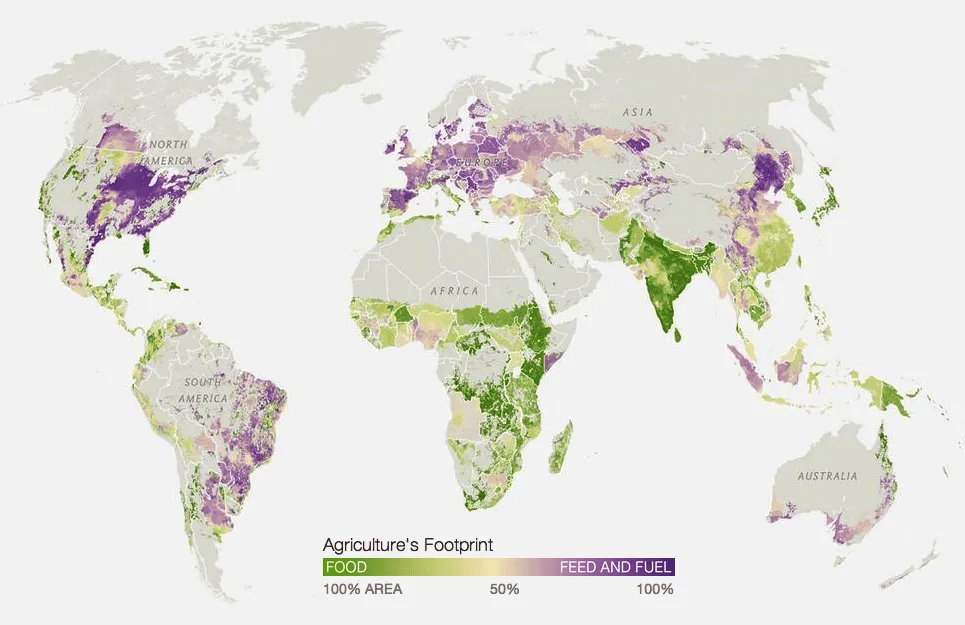



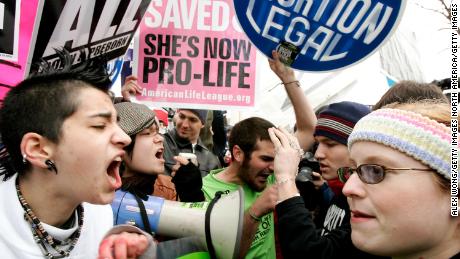


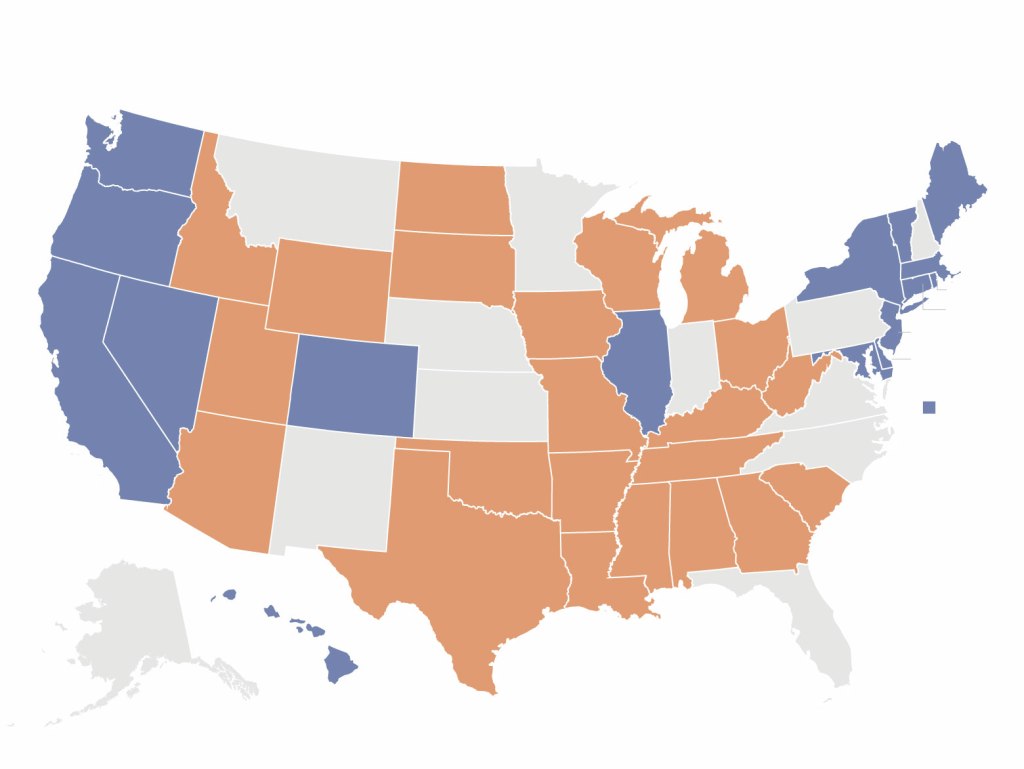




 The Root of the Matter Blog
