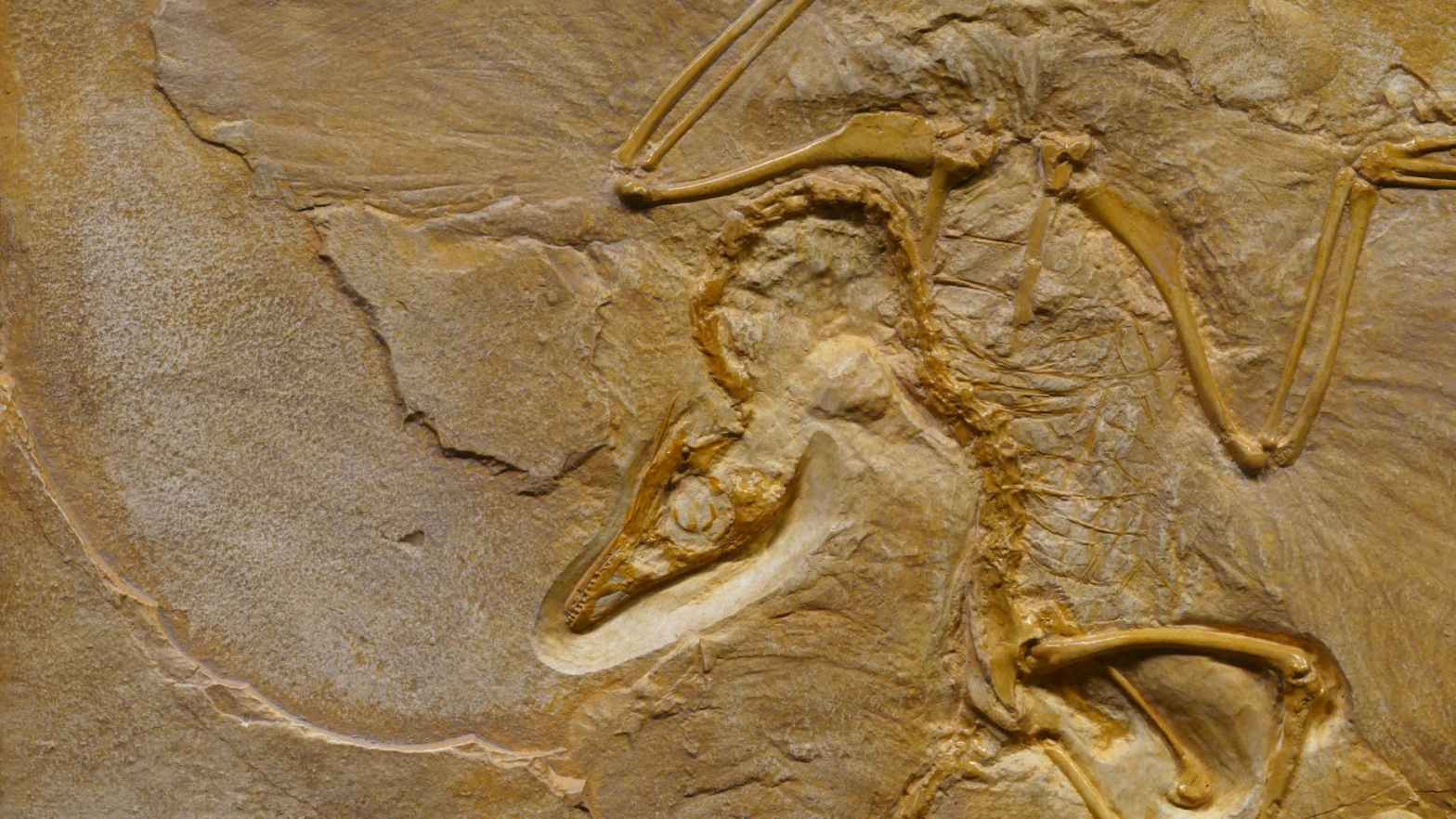
I have been meaning to write a blog post on the errors of creationism and the sensibility of evolution. To this end, I tweaked my Facebook algorithm recently to be able read and understand the creationist view explaining how God made it all and that only atheists believe in evolution. I was very impressed by the depth of the scientific knowledge of the speakers and the passion behind their arguments. Over time, I started to list the fundamental concepts behind the messages that I was reading or watching. There were quite a few arguments that were being made, such as that no intermediate fossils have been found that can seamlessly connect “evolved” species; or that evolution was an untestable hypothesis and not a proven law of nature; or that the second law of thermodynamics prohibits the increased complexity of life.
I pulled my resources together and planned this blog post. But as I looked at the complexity and length of the things I was reading, I just got tired thinking about all the hundreds of arguments that I would have to counter. I gave up. Too hard. Then, as I was cleaning out some old files today, I stumbled on an article that I had cut and saved from 2002 about this very subject. It was called “15 Answers to Creationist Nonsense.” As I looked it over, the author, John Rennie, had addressed every one of the fundamental creationist concepts that I had written down. Fantastic. I no longer had to write a long blog from scratch. I could just point to a 24-year-old very well written article that shows the arguments creationists are using today are just recycled arguments from the past. They have nothing new and they have been rejected for a long time.
What I am going to do today is send you to that article from the Scientific American. You should read those arguments first, and then I will add several more of my own.
For those readers who may not know who we are referring to when we say “creationist”, here is a quick intro. The hardline positions of 6-day creationists are that Good created the world and all lifeforms about 6,000 years ago, as per Genesis 1. Sometime after that, a huge flood covered the earth, and all the animals were saved in a huge boat. This flood gave rise to all the geologic layers that we are familiar with. Since the late 1800s this view has conflicted with mainstream science about the origin of the universe, the geology of the earth and the creation/evolution of plants and animals.
I will start this section by explaining my own position, a view held by many Christians in the sciences.
- I offer an alternative to 6-day creationism. It is the view that I, and many other Christians in the sciences, hold called Theistic Evolution. We hold to the Two-Book view of science and faith. Galileo is said to have remarked that the Bible teaches how to go to heaven while Nature teaches how the heavens go. Science has been pretty good at explaining how the heavens go and how animals evolve. We should turn to the Bible to learn about who God is and how we should live. We should not be turning to the Bible for scientific explanations.
- Science is an awkward fit in the Bible. Much ink has been spilled over the meaning of “day” in Genesis and can it be stretched to cover millions of years of creation. Also, much debate has circled around the order of creation in the six days and how that matched current science. My own thought on this is that these are great moral teachings but poor science. Here is my somewhat snarky view. I think that the whole Bible is true, while some of it actually happened. CS Lewis is known to have remarked that much of the Bible is “true myth”, that is stories to believe in, learn from, and follow, but may or may not have actually happened. As a Christian, I believe that Jesus actually rose from the dead. However, I do not consider that a belief in a physical Adam is necessary to appreciate the lessons taught there.
- Science as a tool of discovery of physical truths is flawed in some regards but it is the best way we have to explain physical phenomenon. One of my favorite podcasts is Skeptoid. Check it out. Every week the author debunks yet one more conspiracy theory or ghost story. Things that were once not explainable can now be explained. Or take a very current example of an unknown: dark matter and dark energy. These are known to exist but cannot currently be explained by science. Are scientists wringing their hands and in despair because they can’t explain these things. No! They know the answer is out there. They just keep working at it. Or closer to home, another example: how did life start? Well, we really don’t know. We have some working hypotheses, but no one is fretting. We just keep chipping away at it. We don’t have to invoke God, just because we can’t currently explain it. This is how science works.
I want to now add to the points that Mr. Rennie made in his article. Here are some statements made by creationists and my response to them.
- The are many things that science can’t explain that make room for a God Hypothesis. This is the mainstay of Intelligent Design and irreproducible complexity. These contentions fall into the “God-of-the Gaps” problem. The general idea is that many things that cannot currently be explained by science can possibly be explained by divine intervention. This is very weak ground to stand on. Ever since serious science as a real thing started in the Middle Ages, many questionable and unexplainable things have been explained by advancing science. To stand on the ground of unexplainable things for the foundation of faith is a precarious and rapidly shrinking foothold.
- Carbon dating is inaccurate. Therefore, we don’t know how old things are. Carbon dating is part of a larger field called radiometric dating. These methods rely on the known decay rate of radioactive elements in archeological samples to find out how old they are. Currently there are 20 or more radiometric dating techniques in use. In addition, radiometric dating itself is part of a larger field called chronological dating. Approximately 50 non-radiometric methods fall in this category. These methods include references to the geological stratum, the known reversals of the magnetic poles, dating of tree rings, and known transformation of minerals by fire.
The point is that there are now many ways to date a sample. Usually, good archeologists who are well funded will use two or more methods to date something. Over years of research, the quirks of these methods have been ironed out and matched against each other. This is one of the biggest problems for creationists to overcome because in their view the whole world was created about 6,000 years ago. Reliably dating a fossil to 3 million years ago creates difficulties for them.
- DNA contains “junk DNA” that evolutionists don’t know how to interpret. Obviously, another God-of-the-gaps problem. The “essentially complete” DNA sequence of humans was announced in 2003. Understanding this “junk” DNA has been slowly unfolding, as it does in science. The sequences of many plants and animals have been completed since then. I believe that this information is the coup de gras of creationism. With this rapidly expanding information, biologists have been able to accurately map the order and sequence of evolution including the branching points and common ancestors.
- Methodological naturalism (MN) is an atheistic invention to exclude God from the creation story. This will take some unpacking. MN is the philosophical view that all-natural phenomenon, such as the sun rising or cell division, can be explained by natural explainable causes without reverting to divine intervention. The basic understanding that all natural things have a natural explanation has been part of science since the beginning. Scientists have a very strong basic belief that the world has uniformly consistent physical laws that we can rely on. And since they are reliable, we can investigate this physical world and be confident that our findings will hold true over space and time. One of the attractions of science as a field is that we are uncovering universal physical truths.
However, creationists insist that God has intervened supernaturally in the creation of the world, and especially of plants and animals, apart from natural explanations. This is just not science. We could find another name for this field, but it is not science. Some prefer the name, “creation science”, but that is akin to phrases like “illegal police” or “nonviolent army.”
Interestingly, the creationist view has been slowly developing cracks where they have become divided in their views and where science seems to have prevailed. Here are several ways the 6-day creationists have yielded ground.
- Creationists have become divided on how to reconcile Genesis 1 and current science. Here are some subgroups and their understandings.
- Gap creationists accept the scientific age of the planet and consider that plants and animals were created by a combination of God and microevolution but still insist on a global flood.
- Progressive creationists believe that humans were made directly by God, but other lifeforms evolved under the direct supervision of God, but no global flood.
- Intelligent design proponents believe in numerous divine interventions in evolution to create the most complex of organs and creatures.
- Theistic evolutionists fully accept the scientific view of the creation of life and of evolution while insisting that God had planned it all along and was behind everything.
Here are a few other places where creationists are in retreat. This list will probably grow with mounting evidence.
- Even the most conservative creationist today seems to accept microevolution, the idea that small changes in form can occur over relatively short periods of time. The changing beaks of birds on the Galapagos Islands seems to be convincing. The widely varying breeds of dogs is another example.
- Many creationists seem to now accept that Neanderthals were real humans created by God and worthy of redemption.
- Most creationists, while holding a literal view of Genesis 1, seem willing to forgo other parts of what might be called Old Testament science. The ancients, including those who wrote the Hebrew Bible, had a very distinct view of the earth and heaven that was common among nearby civilizations. This included the layers of the heavens, including the waters above the heavens and waters below a flat earth. The sky above was called raqiya, or firmament. This was a solid object similar to a flat hammered sheet of metal. Few people, including creationist, still believe in this form of the cosmos while still holding to the “science” of Genesis 1.
The battle that creationists wage is across a broad range of sciences. As science grows, the battle lines grow. Creationists must win on all these fronts for their worldview to hold. Here are some of the fields in which the battle is fought.
- Geology: Creationists believe that all landforms were created in the instantaneous creation and modified by the global flood. Modern understanding of slowly moving tectonic plates differs from this view. Here is a nice link to a refutation of a creationist view of geology.
- Paleontology: Creationists believe that all animals were created at a single point in time and that fossils and extinct animals happened as a result of the flood. Current understanding is that fossils came from animals and plants that lived millions of years ago. Modern methods of dating these fossils confirm that understanding.
- Meteorology: Creationists believe that a single devastating flood covered the whole earth and created many of the current landforms. Current meteorology understands that a global flood is impossible.
- Archeology: Creationists believe that all ancient civilizations arose rather quickly from a single human couple and that all dating techniques are fallible. Modern archeology has found numerous humanoid fossils that suggest a slow evolution of Homo sapiens and that multiple dating techniques complement each other in confirming the evolutionary timeline.
- Cosmology: Creationists believe that the whole universe came into being in 6 days about 6,000 years ago. Modern cosmology, including a firm understanding of the red shift and other measuring tools, has established the age of the universe to about 13 billion years ago and the age of the earth to about 6 billion years.
- Scientific Method: Creationists, including those from the Intelligent Design group, hold to direct divine intervention in the creation of all lifeforms. Modern science holds that all-natural phenomenon, even that authored by God, can be explained by natural causes.
- Genetics: Creationists believe that all lifeforms were created instantly with the nearly exact DNA code that they have today. Modern biologists and geneticists understand that the discovered DNA codes of plants and animals spell out in considerable detail the evolutionary process that gives rise to current existing species.
- Mathematics: Creationists delight in explaining how the creation of a working enzyme from 20 random amino acids is statistically inconceivable. Evolution is currently understood to have progressed slowly through small progressive changes to existing and function lifeforms. No need to instantaneously create a new enzyme. There are much better probabilities.
- Chemistry: Creationists believe that the second law of thermodynamics, that entropy or randomness, is increasing in the universe. This is violated by a progressive evolution with increasing complexity and apparently decreasing entropy. Currently, physical chemists understand that a closed system including the burning sun (decreasing complexity and increasing entropy) and the life cycle of life-death-decay is sufficient to meet this law.
Again, I hold that creationists must win all these battle fronts for their novel theory to hold.
In summary, let me use Occam’s razor to help pull this together. Occam’s Razor is a philosophical principle that holds that the best explanation of a physical conundrum of some sort is to start with the simplest explanation and work from there. Instead of doing battle on nine scientific fronts and slowly losing ground to splinter groups and overwhelming evidence, our creationist friends should choose the coherent modern scientific view for their explanation of the world and should use the holy scriptures for what they were intended. “All scripture is given by inspiration of God, and is profitable for doctrine, for reproof, for correction, for instruction in righteousness: that the man of God may be perfect, thoroughly furnished unto all good works.” 2 Timothy 3:16-17.
 The Root of the Matter Blog